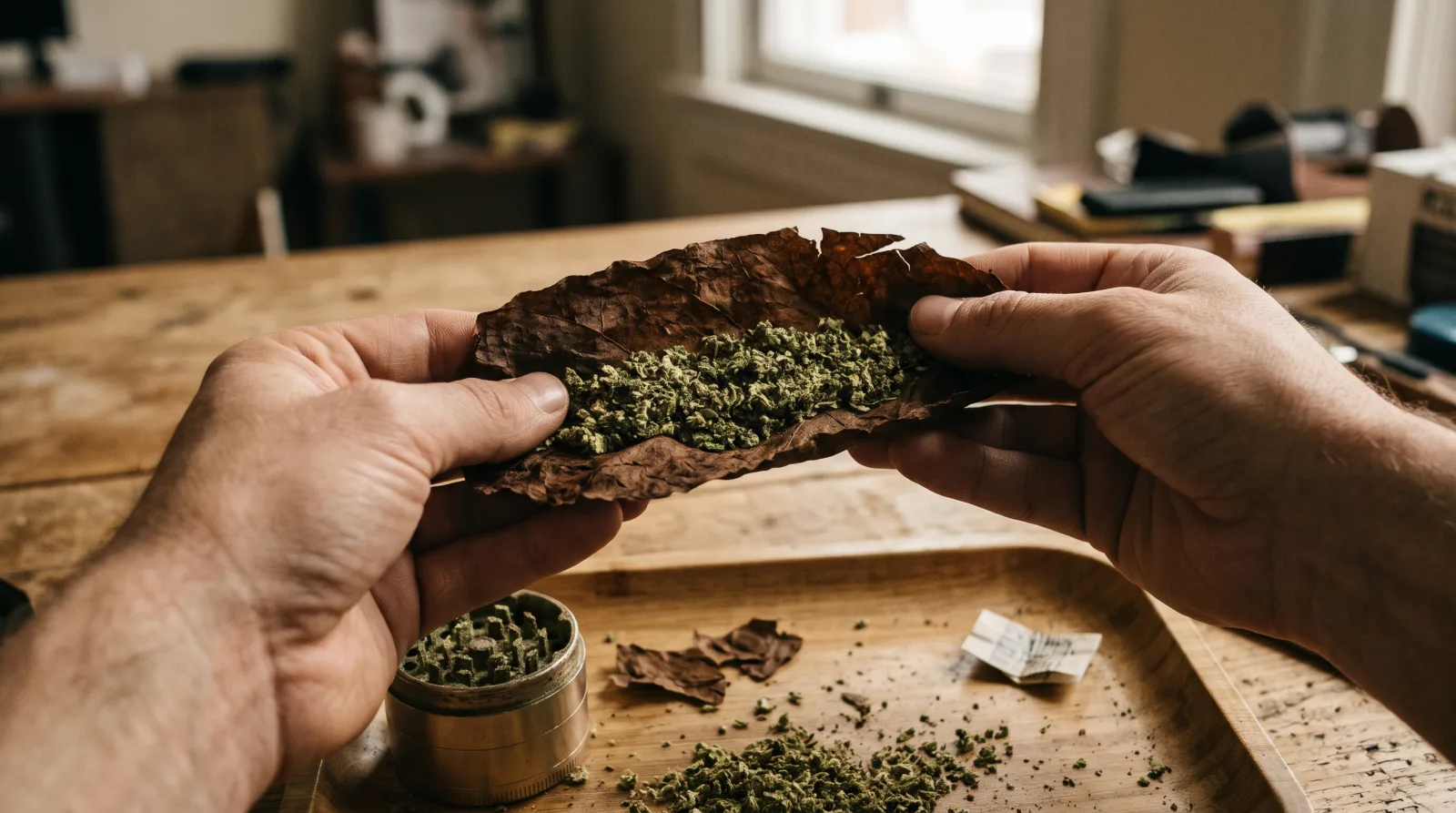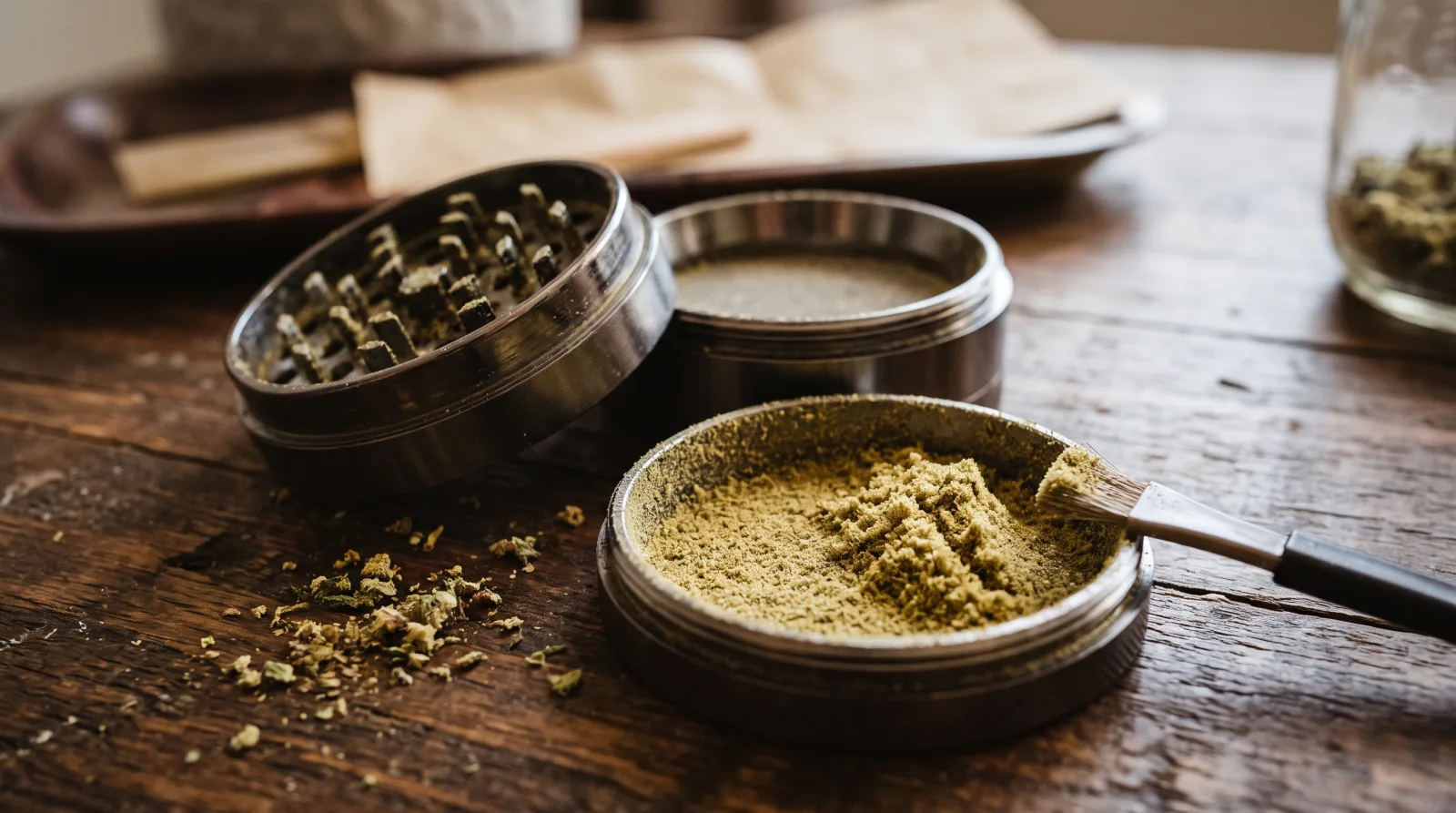
Two products. Both around 30% THC on paper. One is a joint of good flower, and the other is a distillate cart.
Ask regular consumers whether they feel the same, and most will tell you no. The joint feels rounder, more distinct, more like the strain it claims to be. The cart feels like THC.
The usual explanation is the entourage effect. It's one of the most repeated ideas in cannabis, and one of the most oversold. Here's what it means, what the science actually supports, and how to use it when you're choosing what to buy.
Quick answer: The entourage effect is the idea that cannabis compounds, including THC, other cannabinoids and terpenes, work differently together than any one does alone. It's a plausible hypothesis with some supporting evidence, not settled science. It's the main argument for choosing whole flower or live products over distillate.
What is the entourage effect?
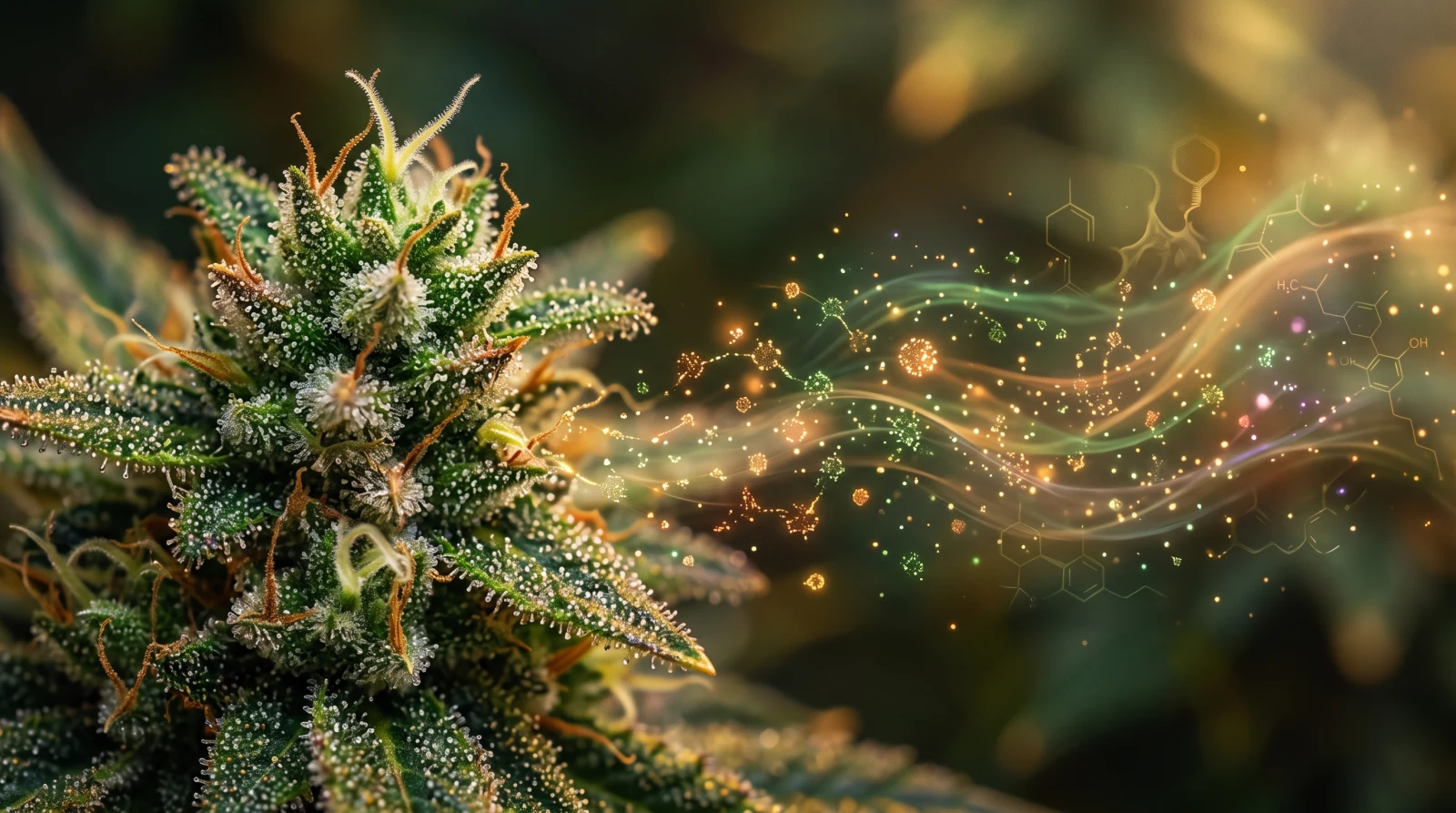
The entourage effect is the theory that the whole cannabis plant produces a different experience than THC on its own. The other compounds aren't passengers. They change how the main one lands.
Cannabis contains more than 100 cannabinoids and a long list of terpenes, the aromatic compounds behind each strain's smell. Flower delivers all of them together. Distillate, by contrast, is refined to mostly pure THC.
If the entourage effect is real, that refining step changes the experience, not just the flavour.
Where the term came from
The phrase was coined in 1998 by a team including Raphael Mechoulam, the Israeli chemist often called the father of cannabis research. Their paper wasn't about the cannabis plant at all. It described how inactive compounds in the body boosted the activity of the body's own cannabinoids.
Over the following decades, the idea was extended to the plant, largely through the work of neurologist Ethan Russo. That extension is where it became the industry's favourite talking point.
Is the entourage effect real?
Partly, probably, and not in the way most dispensary menus describe it. The honest answer is that the evidence is mixed and still developing.
Here's what research has found so far:
-
Terpenes don't seem to boost THC at its main receptors. A 2019 study from Macquarie University and the University of Sydney tested six common cannabis terpenes, including myrcene, limonene and linalool. It found they didn't change how THC activated the CB1 and CB2 receptors. The researchers concluded that any entourage effect isn't happening at that level.
-
But terpenes may act in other ways. A small 2024 Johns Hopkins study gave 20 adults vaporized THC, with and without the citrus terpene d-limonene. Adding enough limonene reduced feelings of anxiety and paranoia, without dulling THC's other effects. That's an interaction, even if it doesn't work the way menus imply.
-
Some lab results conflict. A few animal and cell studies report terpenes affecting cannabinoid receptors or pain responses. Others using similar methods found nothing. The field hasn't settled the contradictions yet.
The pattern is consistent: the strongest claims, like "myrcene makes THC hit harder," aren't well supported. The broader idea, that a full chemical profile can shape the experience, has real if limited evidence behind it.
The honest version: Whole-plant cannabis likely feels different from pure THC for several reasons, some chemical and some down to flavour and expectation. Nobody has mapped exactly how yet.
What about CBD?
CBD is the other half of the entourage conversation. The common claim is that CBD softens THC's edges. Clinical results have been inconsistent, depending heavily on dose and ratio.
If that's what you're after, balanced products are a more direct route than relying on the trace CBD in most flower. Our CBD to THC ratio guide breaks down the options.
What it means for flower, distillate and live products
This is where the theory meets the menu. Each format keeps a different amount of the original plant chemistry.
|
Format |
What's in it |
Entourage potential |
|
Flower |
THC, minor cannabinoids, full terpene profile |
Highest, as long as it's fresh and properly stored |
|
Live resin |
Extract from flash-frozen plants, high native terpenes |
High; the closest a concentrate gets to the plant |
|
Live rosin |
Solventless extract from frozen plants |
High; a premium, solventless option |
|
Distillate with botanical terpenes |
Near-pure THC plus added terpenes from non-cannabis sources |
Moderate; mimics the flavour, not the full profile |
|
Distillate with cannabis-derived terpenes |
Near-pure THC plus terpenes from cannabis |
Moderate to good; closer, still reassembled |
|
Plain distillate or isolate |
Mostly or only THC |
Lowest; a THC-forward experience |
Flower: the full profile
Flower is the original whole-plant product. Every cannabinoid and terpene the plant made is still there, which is why strains feel distinct from each other.
The catch is freshness. Terpenes evaporate as flower dries out, which is why old, dusty bud tastes flat and often feels flat too. Our guide to what terpenes are explains why storage matters.
Distillate: potency over profile
Distillate strips the plant down to THC. It's potent, consistent and affordable, which is why most carts and edibles use it.
Most distillate carts then add terpenes back for flavour, often from non-cannabis botanical sources. That can recreate the taste of a strain. Whether it recreates the experience is exactly the open question the entourage debate is about.
Live resin and live rosin: the middle path
Live products are made from plants frozen right after harvest, before drying and curing can burn off terpenes. The result keeps far more of the plant's original aroma profile than distillate.
If you want concentrate potency with a flower-like character, this is the format to try. Our explainer on live resin vs live rosin covers how the two differ.
How to shop with the entourage effect in mind
You don't need to settle the science to use it. Treat it as a reason to pay attention to the whole label, not just the THC number.
-
Check the terpenes, not just the THC. A strong terpene profile is a better sign of a rich product than a high potency number. Our guide to reading a certificate of analysis shows where to find it.
-
Pick the format for the experience you want. Distillate is great for clean, predictable THC. Live resin and flower suit people who want strain character.
-
Run your own comparison. Try a live resin cart and a distillate cart of a similar strain on different nights. Your own experience is the most relevant evidence you'll get.
-
Buy fresh, store well. Terpenes fade with heat, air and time. A rich profile only helps while it's still there.
The entourage effect isn't proven magic. It's a reasonable explanation for something many consumers notice, and a useful prompt to choose products by more than one number.
Frequently asked questions
What is the entourage effect in cannabis?
The entourage effect is the idea that cannabis compounds, including THC, other cannabinoids and terpenes, produce a different effect together than any single compound alone. It's the main reason whole-plant products are said to feel different from pure THC.
Is the entourage effect scientifically proven?
No, it's a hypothesis with mixed evidence. A 2019 study found common terpenes didn't change THC's activity at cannabinoid receptors. A 2024 Johns Hopkins study found the terpene d-limonene reduced THC-related anxiety. Researchers are still working out how and whether interactions happen.
Who came up with the entourage effect?
The term was coined in 1998 by a research team including Israeli chemist Raphael Mechoulam. It originally described compounds in the body, and was later applied to the cannabis plant, notably by neurologist Ethan Russo.
Does distillate have the entourage effect?
Plain distillate is mostly pure THC, so it has little or no entourage potential. Many distillate carts add terpenes back for flavour, but that's a reassembled profile, not the plant's original chemistry.
Is live resin better than distillate?
Live resin keeps far more of the plant's original terpenes because it's made from flash-frozen plants. People who want to strain their character often prefer it. Distillate is more consistent and usually cheaper. Which is better depends on what you want.
Do terpenes make you higher?
There's no strong evidence that terpenes increase THC's potency. Lab research suggests common terpenes don't boost THC at its main receptors. Some terpenes, like limonene, may change how THC feels, but research is early.
The bottom line on the entourage effect
The entourage effect is a reasonable idea with incomplete proof. Whole-plant cannabis probably does feel different from pure THC, but not because one terpene secretly turbocharges your high.
For shopping, the takeaway is simple. If you want clean, predictable THC, distillate does the job. If you want each strain to feel like itself, choose fresh flower or live products, and read the terpene list as carefully as the potency.
This article is general information, not medical advice. Effects vary from person to person.
Taste the difference
Live resin keeps the terpene profile that distillate strips away, giving you concentrate potency with real strain character.