Every cannabis enthusiast eventually reaches the same crossroads: you've sampled the gummies, tried the chocolates, and browsed the beverage aisle, but something about making your own edibles calls to you. Maybe it's the cost savings. Maybe it's the satisfaction of creating something yourself. Or maybe,just maybe,you're tired of edibles that feel like a lottery ticket, never quite sure if you're getting 5 mg or 50 mg of THC per serving. Making cannabutter at home solves all three problems, and contrary to what you might think, it doesn't require a chemistry degree or chef-level skills.
In Canada, where home cultivation and personal possession are legal, infusing your own butter opens up an entire world of edible possibilities while giving you complete control over potency, ingredients, and cost. The best part? You don't need top-shelf flower to make excellent cannabutter. Value buds and popcorn nugs work just as effectively, since you're extracting cannabinoids into fat rather than smoking for flavour. This guide walks you through the entire process,from selecting budget-friendly cannabis to calculating exact THC doses,so your homemade edibles deliver consistent, predictable results every single time.
Why Cannabutter Works: The Science of Fat-Soluble Cannabinoids
Before you melt your first stick of butter, it helps to understand why this infusion method has remained the gold standard for decades. THC, CBD, and other cannabinoids are fat-soluble compounds, meaning they dissolve readily in fats and oils but barely dissolve in water. When you heat cannabis in butter, the cannabinoids migrate from the plant material into the butterfat, creating a potent cooking ingredient that can be used in virtually any recipe calling for butter.
This fat-soluble property is why eating raw cannabis flower won't get you high,your digestive system can't efficiently extract cannabinoids without a fat carrier. But mix decarboxylated cannabis into melted butter, simmer it gently for a few hours, and those cannabinoids bind to the fat molecules. The result is a shelf-stable ingredient that distributes THC evenly throughout whatever you bake or cook.
The process requires two critical steps: decarboxylation and infusion. Decarboxylation converts the inactive THCa in raw flower into active THC through heat. Infusion then transfers that activated THC into the butter. Skip the decarb step, and your cannabutter will be disappointingly weak. Rush the infusion, and you'll leave potency on the table. Nail both steps, and you'll have restaurant-quality edible ingredients at a fraction of retail prices.
Smart Shopping: Why Value Flower Makes Economic Sense for Infusions
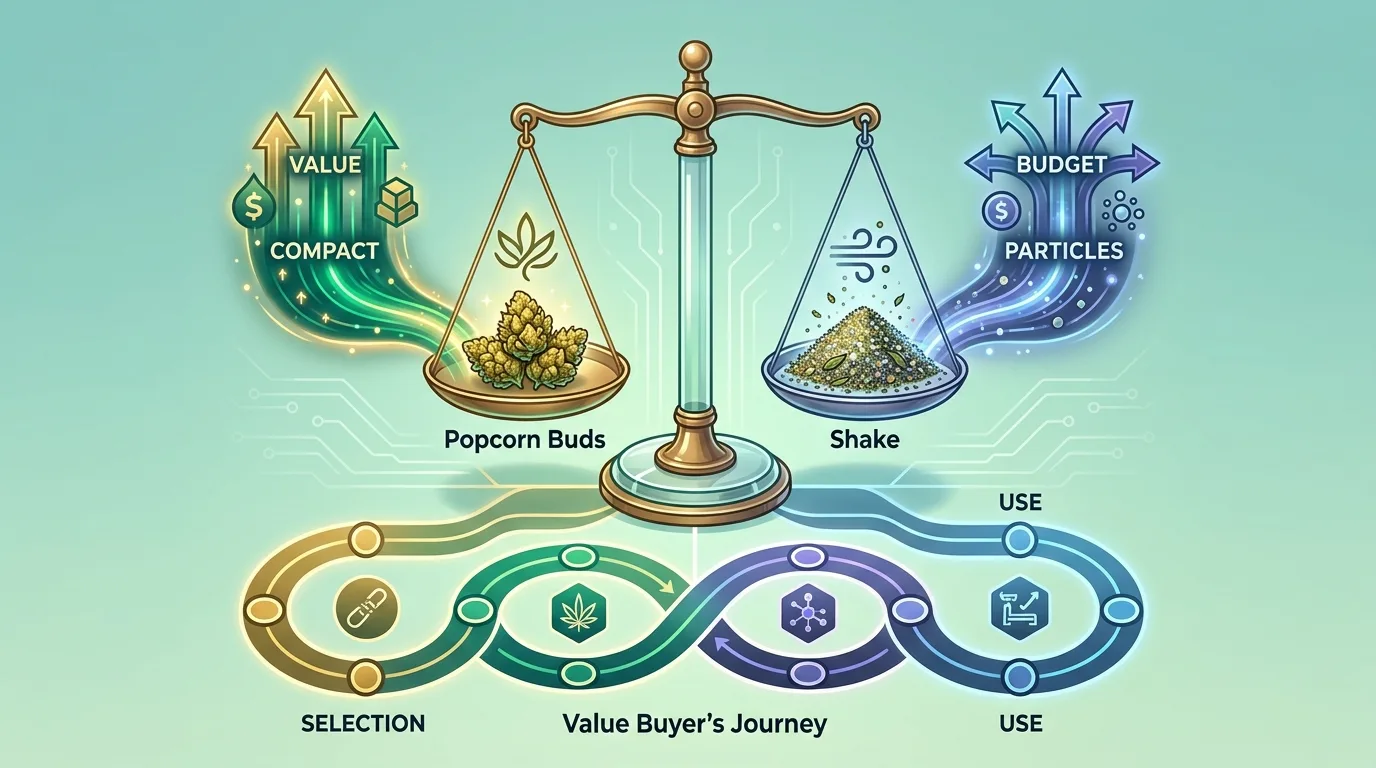
Here's the counterintuitive truth about making cannabutter: the premium flower you'd want for smoking is overkill for edibles. When you're infusing butter, you're extracting cannabinoids, not preserving terpene profiles or maximizing bag appeal. That gorgeous hand-trimmed quad with its frosty trichomes and complex nose? It will infuse butter at roughly the same THC potency as popcorn buds from the same strain at half the price.
Popcorn buds,the smaller, less visually impressive flowers from the lower branches of cannabis plants,contain the same cannabinoid content as their larger counterparts. They're cheaper because they don't photograph as well and require more handling to package. For infusion purposes, this pricing gap is pure opportunity. A quarter ounce of popcorn buds at $40 will produce cannabutter of identical potency to a quarter of top-shelf flower at $80, assuming both test at similar THC percentages.
Shake (the loose bits of flower that accumulate in packaging) can also work for cannabutter, though it requires more careful inspection. Quality shake should still smell fresh and contain visible trichomes. Avoid shake that's brown, odourless, or looks suspiciously like trim rather than broken flower pieces. The right shake at $3 to $5 per gram makes budget-friendly cannabutter economically viable.
Calculating Your Cannabis Budget
For most home cooks, a quarter ounce (7 grams) of cannabis represents the sweet spot for a first batch. This produces roughly one cup of moderately potent cannabutter,enough to test your technique and dosing without committing to a massive quantity. At $40 for value flower, plus $8 for a pound of butter, your total ingredient cost runs under $50 for cannabutter that would cost $150 or more at a legal edibles retailer when you factor in per-milligram THC pricing.
As you gain confidence, half-ounce batches (14 grams) become more economical. Many mail-order services and dispensaries offer better per-gram pricing at the half-ounce level, and a larger batch lets you freeze portion-controlled amounts for future cooking projects. The key is matching your investment to your consumption rate,there's no sense making six months' worth of cannabutter if you're still learning your ideal edible dose.
The Decarboxylation Step: Activating Your Cannabis
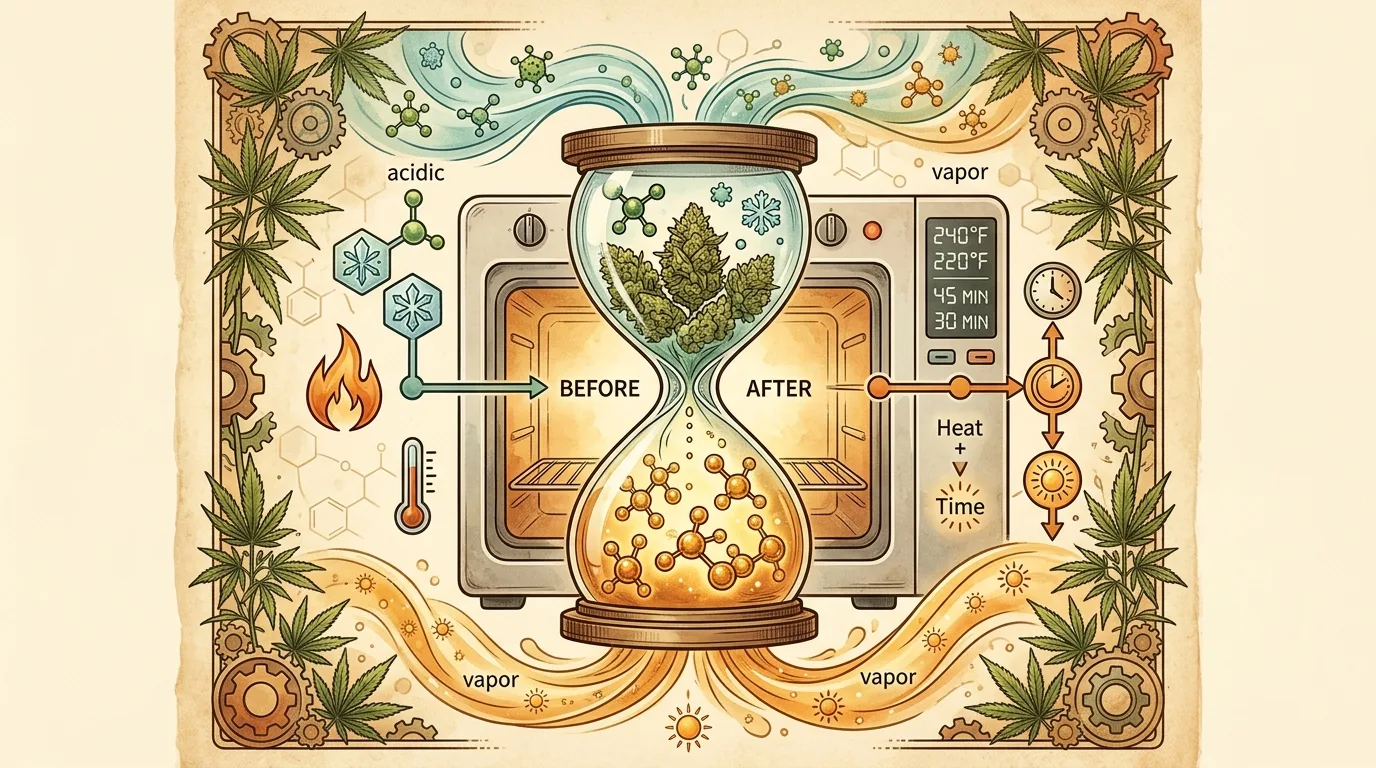
Raw cannabis contains THCa, not THC. That single letter makes all the difference,THCa is non-intoxicating until it's converted to THC through heat in a process called decarboxylation. When you smoke or vape, decarboxylation happens instantly as the flower combusts or vapourizes. For edibles, you need to decarb your cannabis separately before infusion begins.
The good news: decarboxylation is mechanically simple. Preheat your oven to 240°F (115°C). Break your cannabis into rice-sized pieces,not powder, just small chunks. Spread it in a single layer on a baking sheet lined with parchment paper. Bake for 40 minutes, gently stirring halfway through. Your kitchen will smell like cannabis; that's normal and unavoidable. The flower will turn from bright green to a slightly darker olive or brownish-green as the decarb completes.
Why 240°F for 40 minutes? This temperature range maximizes THC conversion while minimizing degradation to CBN (a cannabinoid that produces more sedative effects). Higher temperatures work faster but destroy more terpenes and risk converting too much THC to CBN. Lower temperatures require longer baking times, which can lead to uneven results. The 240°F/40-minute method hits the reliability sweet spot for home cooks.
Decarb Without the Smell
If you live in an apartment or prefer discretion, the smell of decarbing cannabis can be managed. Place your cannabis in an oven-safe bag designed for roasting (turkey bags work well) before putting it on the baking sheet. The bag contains most of the odour while allowing the decarb process to proceed normally. Some home cooks use mason jars with lightly closed lids, though this method requires careful monitoring to prevent pressure buildup.
Another option: decarb in a slow cooker set on low with the cannabis sealed in a mason jar, submerged in water. This takes 3 hours instead of 40 minutes, but produces virtually no smell and extremely even heating. The downside is the time investment and slightly more complex setup. For detailed information about why this heat activation matters, check out our guide to decarboxylation and how it transforms cannabis.
The Infusion Process: Low, Slow, and Strain
Once your cannabis is decarboxylated, the actual butter infusion becomes straightforward. You'll need a pound of butter (four sticks), one cup of water, and your freshly decarbed cannabis. The water serves a crucial purpose: it prevents the butter from scorching during the long simmer and helps filter out chlorophyll and plant material during the straining stage.
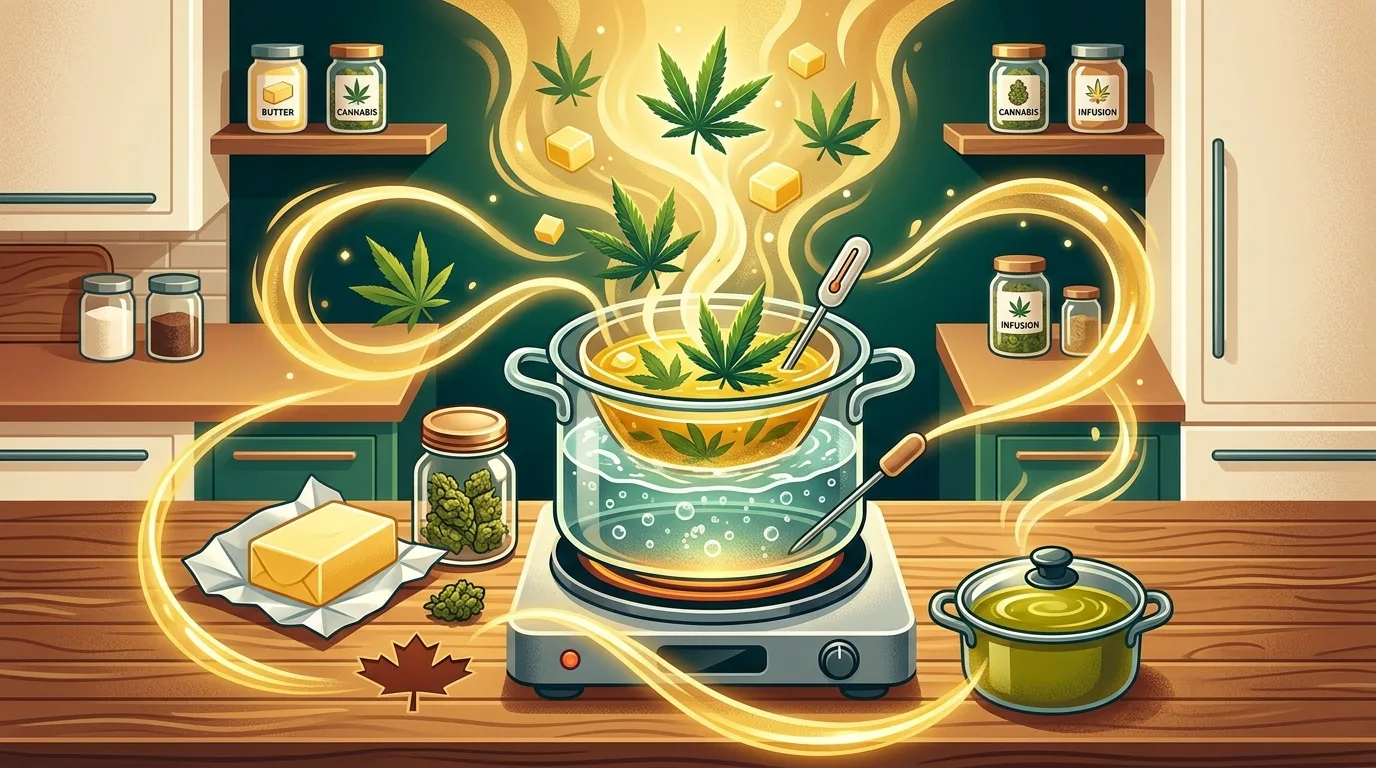
Combine the butter and water in a medium saucepan or slow cooker. Heat until the butter melts completely, then add your decarbed cannabis. Stir to ensure all plant material is submerged in the butter-water mixture. From this point, your goal is maintaining a gentle simmer,small bubbles occasionally breaking the surface, but never a rolling boil,for 2 to 3 hours.
Temperature control is critical. The ideal range is 160°F to 180°F (71°C to 82°C). Below this range, cannabinoid extraction slows dramatically. Above 200°F (93°C), you risk degrading THC and developing bitter flavours. A candy thermometer clipped to the side of your pan takes the guesswork out of the equation. Stir every 20 to 30 minutes to redistribute plant material and ensure even extraction.
Stovetop vs. Slow Cooker Methods
Both approaches work; the choice comes down to equipment and attention span. Stovetop infusion on the lowest burner setting completes in 2 to 3 hours but requires occasional monitoring to maintain temperature. A slow cooker on the low setting infuses over 4 to 6 hours with minimal supervision, making it ideal for overnight preparation or when you're multitasking around the house.
Some cannabis enthusiasts swear by sous vide precision cookers for cannabutter, sealing the butter and decarbed flower in a vacuum bag and submerging it in a water bath at exactly 185°F for 4 hours. This method produces the most consistent results and zero smell, but requires specialized equipment. For your first batch, stick with stovetop or slow cooker,they're more forgiving and don't require extra purchases.
Straining, Storing, and Shelf Life Considerations
After your infusion time completes, the mixture will look murky and smell intensely of cannabis. This is expected. Turn off the heat and let the mixture cool for 10 minutes,it should still be liquid but no longer scalding hot. Place a fine-mesh strainer over a bowl or large measuring cup and line it with cheesecloth (four layers work well) or a clean cotton t-shirt.
Pour the cannabutter mixture through the lined strainer. The plant material will collect in the cheesecloth. Once most of the liquid has filtered through, gather the cheesecloth edges and gently squeeze to extract the remaining butter. Don't twist or press too aggressively,you'll force bitter chlorophyll and plant particles through the filter. Some cannabis material should remain slightly damp; that's fine. You're aiming for efficient extraction, not bone-dry plant matter.
Cover your container and refrigerate for at least 4 hours, preferably overnight. The butter will solidify on top of the water, forming a clean disk. The water beneath it will be dark and murky,this is cannabutter's dirty secret working in your favour. All the water-soluble impurities, excess chlorophyll, and bitter compounds settle into the water layer, leaving your butter cleaner and better-tasting.
Separating and Final Storage
Once fully chilled, run a butter knife around the edge of the solidified cannabutter disk and lift it free from the water. Discard the water (it contains no cannabinoids). Pat the bottom of the butter disk with a paper towel to remove any remaining moisture. Your finished cannabutter should be greenish-gold in colour,lighter than the plant material but distinctly tinted from the chlorophyll that made it through the filter.
Store cannabutter in an airtight container in the refrigerator for up to two months, or freeze it for up to six months. For long-term storage, portion it into tablespoon-sized amounts using an ice cube tray, then transfer the frozen cubes to a freezer bag. This makes it easy to grab exactly the amount a recipe calls for without thawing your entire batch. Label everything clearly with the date and estimated potency,future you will appreciate the organization.
Potency Math: Calculating THC Per Serving
This section separates hobby cannabutter makers from people who consistently produce reliable edibles. Estimating potency lets you dose your creations accurately, avoiding both disappointingly weak edibles and accidentally intense experiences. The math requires three variables: the weight of cannabis you used, its THC percentage, and the total volume of butter you produced.
Start with the THC percentage of your starting flower. If you bought from a legal source, this appears on the package label. Let's work through an example: you used 7 grams of flower testing at 20% THC. That 20% means each gram contains 200 mg of THC (1,000 mg per gram × 0.20 = 200 mg). Seven grams contains 1,400 mg total THC (7 grams × 200 mg = 1,400 mg).
Now account for extraction efficiency. Home infusion methods typically extract 70% to 80% of available cannabinoids into the butter. Let's use 75% for our calculation. Multiply your total THC by 0.75: 1,400 mg × 0.75 = 1,050 mg of THC in your finished cannabutter. One pound of butter equals roughly 2 cups, or 32 tablespoons. Divide total THC by tablespoons: 1,050 mg ÷ 32 = 32.8 mg THC per tablespoon.
Adjusting for Your Tolerance and Goals
A single tablespoon of our example cannabutter contains about 33 mg of THC,a moderate to strong dose for most people. If you're making brownies that use 8 tablespoons of butter and cut the pan into 16 squares, each brownie contains roughly 16.5 mg THC (264 mg total ÷ 16 pieces). That's a manageable dose for experienced users and easily halved for those preferring milder effects.
Want weaker cannabutter for more flexible dosing? Use less cannabis per cup of butter. Four grams of 20% THC flower in one pound of butter produces roughly 18 mg THC per tablespoon,perfect for recipes where you want to add multiple tablespoons without overshooting your target dose. For perspective on how THC doses affect the body differently than inhalation, our article on why edibles hit differently explains the metabolic transformation that makes eaten cannabis so much more potent than smoked.
Common Mistakes and How to Avoid Them
The beauty of cannabutter is its simplicity, but a few common errors can undermine your results. First: skipping the decarboxylation step or under-decarbing your flower. Some recipes claim you can decarb during the infusion process itself. While technically true, this approach is far less reliable and usually produces weaker butter because the lower temperatures used during infusion don't efficiently convert THCa to THC. Always decarb separately in an oven where you can monitor temperature precisely.
Second mistake: using too much heat during infusion. Boiling cannabutter or letting temperatures spike above 200°F degrades THC into CBN and produces harsh, burnt flavours. If you can't maintain steady low temperatures on your stovetop, a slow cooker is a better choice. The low setting on most slow cookers hovers around 180°F to 190°F,perfect for infusion without babysitting.
Third pitfall: inadequate straining. Leaving too much plant material in your finished butter creates an unpleasant texture and grassy taste in your edibles. Multiple layers of cheesecloth or a reusable nut milk bag solve this issue. Some experienced makers strain twice,once through cheesecloth immediately after cooking, then again through a coffee filter after refrigeration, though this second strain is optional for most applications.
The Butter-to-Cannabis Ratio Question
Online recipes suggest ratios from 1:1 (one cup butter to one ounce cannabis) down to 4:1 (four cups butter to one ounce). The right ratio depends entirely on your desired potency. A 1:1 ratio produces extremely strong cannabutter,potentially 100+ mg THC per tablespoon,which can be difficult to dose accurately in baking. A 4:1 ratio yields milder butter that's more forgiving in recipes.
For first-timers, a 2:1 ratio (two cups butter to one ounce/28 grams cannabis) or the 7 grams per pound we've been using hits the sweet spot. This produces moderate potency cannabutter that's strong enough to be economical but not so concentrated that half a teaspoon sends you to the moon. As you gain experience and understand your personal dosing preferences, you can adjust future batches accordingly.
Recipe Applications: Beyond Brownies
Once you've mastered the basic technique, cannabutter becomes your gateway to an entire spectrum of infused cooking. The obvious starting point is baked goods,cookies, brownies, cakes, and muffins all incorporate butter naturally and mask the cannabis flavour reasonably well. Chocolate-based recipes work particularly well because cocoa's bitterness complements cannabis's earthy notes.
But cannabutter shines in savoury applications too. Compound butters,cannabutter mixed with herbs, garlic, or spices,turn a simple piece of toast or corn on the cob into an infused treat. Pasta with cannabutter sage sauce, cannabutter mashed potatoes, or roasted vegetables tossed in infused butter all work beautifully. The key is adding the cannabutter near the end of cooking to preserve potency, since prolonged high heat can degrade THC.
Room-temperature applications offer the most flexibility. Spread cannabutter on morning toast, stir it into coffee or hot chocolate, or dollop it onto a baked potato. Since the THC is already activated through decarboxylation, you don't need additional cooking,just melting the butter into your food delivers the full effect. For more ideas on creating infused ingredients at home, our comprehensive guide to making cannabutter explores advanced techniques and troubleshooting.
Infused Beverages with Cannabutter
Hot beverages present unique opportunities for cannabutter use. A teaspoon stirred into hot coffee, tea, or cocoa creates a faster-onset edible experience because the liquid aids digestion and absorption. The fat in the butter helps emulsify with the liquid better than you might expect, though a quick stir before drinking ensures even distribution.
Cannabis tea specifically benefits from a small amount of cannabutter or coconut oil. While steeping cannabis directly in hot water extracts some cannabinoids, most of the THC remains locked in the plant material because of water's inability to dissolve fat-soluble compounds. Adding a quarter teaspoon of cannabutter to your tea transforms it into a properly infused beverage. For a detailed breakdown of cannabis tea preparation methods, see our guide on how to make THC tea work.
Legal Considerations and Safe Consumption Practices
In Canada, making cannabutter for personal use is entirely legal, provided you use legally purchased or personally grown cannabis. The Cannabis Act allows adults to possess up to 30 grams in public and unlimited amounts at home (as long as it's stored securely away from minors). Making edibles falls under the same personal-use protections that allow Canadians to grow up to four plants per household.
What's not legal: sharing or selling your homemade cannabutter or edibles. Personal use means exactly that,making infusions for yourself and your household. Giving infused brownies to friends at a dinner party technically constitutes distribution, which remains illegal under federal law. Store all cannabutter and infused edibles in clearly labelled, child-resistant containers, ideally in a locked cabinet. The potent nature of edibles makes accidental consumption by children or pets a serious risk.
Dosing caution applies doubly to homemade edibles. Even with careful potency calculations, individual pieces can vary in THC content due to uneven mixing during baking. Start with half of your calculated dose and wait a full 90 to 120 minutes before consuming more. Edible onset is notoriously delayed compared to smoking, and overconsumption creates uncomfortable experiences that last for hours. If you're new to edibles or cannabis in general, our guide on what to do when cannabis hits too hard provides essential harm-reduction information.
Gifting Infused Products
While technically distribution, the reality of sharing homemade cannabis goods exists in a grey area. If you choose to share, do so responsibly: clearly label potency, warn recipients about delayed onset, recommend conservative dosing, and ensure everyone understands they're consuming THC. Never give edibles to anyone who doesn't explicitly consent or isn't aware they contain cannabis. Pranks involving secretly dosed food aren't funny,they're dangerous and potentially criminal.
Quality Cannabis for Your Infusion Projects
Making cannabutter starts with quality flower at the right price. Browse our selection of value buds and popcorn nugs perfect for home infusion.
Shop Cannabis for InfusionsFrequently Asked Questions About Making Cannabutter
Yes, but potency will be lower since vapourizing already extracted some THC. AVB typically retains 20-30% of original potency, so you'll need to use 3-4 times as much AVB as fresh flower to achieve similar results. Skip the decarb step since AVB is already activated. The taste will be noticeably harsher, so AVB butter works best in strongly flavoured recipes like chocolate brownies.
Colour intensity depends on infusion time, temperature, and plant material. Longer simmering and higher temperatures extract more chlorophyll, creating greener butter with a grassier taste. While this doesn't affect potency, it can impact flavour. If taste matters more than maximum extraction, reduce infusion time to 90 minutes and keep temperatures at the lower end of the range (160-170°F). The water-separation technique removes some green colour, but deeply infused butter will always retain some tint.
Refrigerated cannabutter lasts 2 months; frozen cannabutter lasts 6 months or longer. Signs of spoilage mirror regular butter: sour smell, mold growth, or significant colour change toward yellow or white (losing the green tint isn't spoilage, but a dramatic shift is). The cannabis smell should remain consistent,if it develops an off-putting or rancid odour, discard it. When in doubt, freeze portions you won't use within a month.
Absolutely. The process is identical,decarb your CBD flower at 240°F for 40 minutes, then infuse into butter using the same time and temperature guidelines. CBD butter won't produce a high but offers the therapeutic benefits of CBD in cooking. Calculate potency the same way, using the CBD percentage instead of THC percentage. Many people make separate batches of THC and CBD butter to blend custom ratios for different effects.