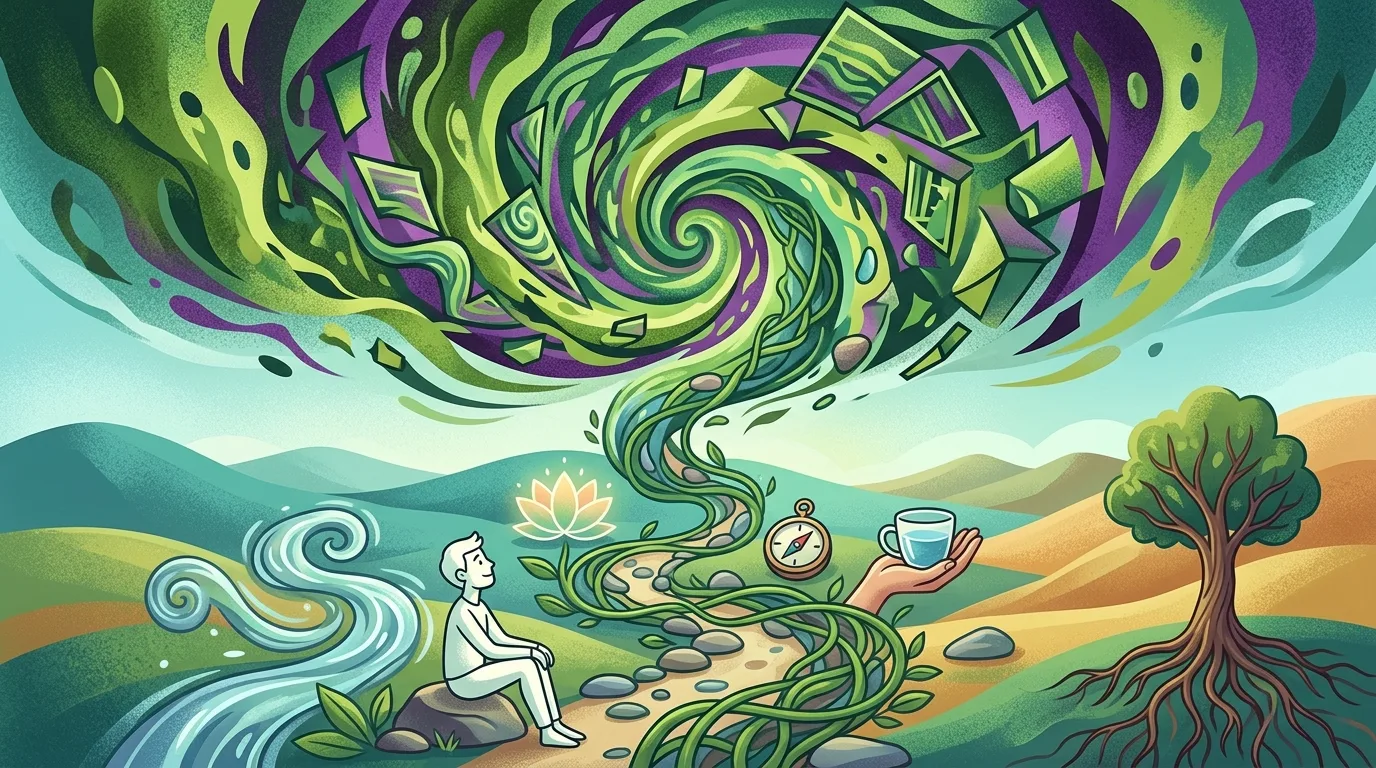
You're lying on the couch, heart hammering, room spinning slightly, regretting every decision that led to this moment. Your friend said those edibles were "pretty chill," but right now you're wondering if you need to call someone. Here's what you actually need to know: you're experiencing a cannabis overdose in the pharmacological sense, not the dangerous sense. It's called greening out, and while it feels genuinely awful, it's temporary, non-lethal, and happens to almost everyone who uses cannabis long enough. This isn't a moral failing or a medical emergency. It's uncomfortable, sure, but you're going to be completely fine in a few hours.
This guide walks through exactly what's happening in your body, the practical steps that actually help (and the folklore that doesn't), how long you'll feel this way, and the one dosing principle that prevents most green-outs before they start. Whether you're currently riding one out or researching for future reference, bookmark this page. It's the calm, honest information you need when cannabis stops being fun and starts being overwhelming.
What Greening Out Actually Means (And Why It Feels So Intense)
Greening out describes the constellation of uncomfortable symptoms that happen when you've consumed more THC than your body can comfortably process. The term comes from the pale, slightly greenish complexion people sometimes develop, though not everyone gets that particular symptom. What's universal is the profound discomfort that makes you question every life choice.
Common symptoms include dizziness or vertigo, nausea (sometimes with vomiting), anxiety or paranoia, rapid heart rate, cold sweats, disorientation, extreme fatigue, and occasionally mild hallucinations or distorted time perception. These symptoms can appear individually or cluster together in uniquely miserable combinations. They're more intense with edibles than with smoking, and they're significantly worse if you're also dealing with alcohol, caffeine, or an empty stomach.
The Pharmacology Behind the Panic
THC activates cannabinoid receptors throughout your body, including in your brain stem (which controls nausea and vomiting), your cerebellum (balance and coordination), your amygdala (anxiety and fear responses), and your cardiovascular system. At normal doses, these activations produce the effects people seek. At excessive doses, they produce effects nobody wants.
Your heart rate increases because THC causes blood vessels to dilate, and your cardiovascular system compensates by pumping faster. The dizziness comes from disrupted signals to your inner ear and cerebellum. The anxiety often stems from the physical sensations themselves, creating a feedback loop where you're anxious about feeling anxious, which makes the physical symptoms worse, which increases the anxiety.
Why You're Not in Danger (Even Though It Feels Like You Are)
Here's the critical fact that should anchor everything else in this article: there are no confirmed deaths from cannabis toxicity alone in otherwise healthy individuals. The lethal dose of THC is so astronomically high that it's functionally impossible to achieve through normal consumption methods. You cannot smoke, vape, or eat your way to a fatal cannabis overdose.
What you're experiencing is profound discomfort, not danger. Your brain stem's respiratory control centres have very few cannabinoid receptors, which is why cannabis doesn't suppress breathing the way opioids do. Your heart is beating fast, but it's not in danger of stopping or going into arrhythmia from THC alone. The panic you feel is a symptom of the green-out, not a warning sign that something catastrophic is happening.
That said, if you have a pre-existing heart condition, if you're experiencing chest pain that differs from simple rapid heartbeat, if you've mixed cannabis with other substances, or if symptoms persist beyond 12 hours, those are legitimate reasons to seek medical attention. But for the vast majority of green-outs, the appropriate response is comfort measures and patience, not an ambulance.
Immediate Steps: What Actually Helps Right Now
When you're in the thick of a green-out, you need practical interventions that address the physical symptoms and short-circuit the anxiety loop. These strategies won't sober you up, but they make the experience significantly more bearable while you wait for your body to metabolize the THC.
Find Your Safe Space and Stay There
Movement makes everything worse when you're dizzy and nauseous. Find the most comfortable place available, whether that's your bed, a couch, or even the bathroom floor if that's where you've ended up, and commit to staying there for the duration. Lie down if possible. If you're too nauseous to lie flat, prop yourself up at a 45-degree angle with pillows. If you're worried about vomiting, keep a bucket or bowl within reach and position yourself near a bathroom.
This isn't about giving up or surrendering to the experience. It's about removing variables. Every time you stand up, walk around, or try to "push through," you're asking your compromised balance and cardiovascular systems to do extra work. You're also introducing new stimuli that your overwhelmed sensory processing has to handle. Staying still in a familiar, comfortable location removes those demands and lets your body focus on processing the THC.
Hydration and Blood Sugar
Sip water slowly and consistently. Don't chug it, which can trigger nausea, but keep taking small sips every few minutes. Dehydration makes every symptom worse, and cold sweats or vomiting will dehydrate you further. If plain water feels impossible, try water with a squeeze of lemon, which some people find easier on an upset stomach.
If you can tolerate food, focus on simple carbohydrates that stabilize blood sugar without challenging your digestive system. Saltine crackers, plain toast, apple slices, or orange juice are good options. Many people report that low blood sugar amplifies green-out symptoms, and even a small amount of easily digestible food can take the edge off. However, if you're actively nauseous, don't force it. Hydration is more important than food in the first hour or two.
Temperature Regulation
You're probably experiencing temperature swings, feeling hot and sweaty one minute and cold the next. This is normal and uncomfortable. Keep a blanket nearby even if you feel hot right now, because you'll likely cycle to feeling cold within minutes. A cold, damp washcloth on your forehead, wrists, or the back of your neck can provide relief during hot phases without requiring you to get up and move around.
Some people find that a cool shower helps tremendously, while others report that the sensory input and physical effort of showering makes things worse. If you're going to try it, make it a sitting-down shower (use a shower chair or just sit on the tub floor) with lukewarm water, not cold. Don't attempt a shower if you're dizzy to the point where walking feels dangerous. There's no award for being brave here.
Sensory Management
Reduce stimulation. Turn off bright overhead lights and use dim lamps or natural light instead. If sounds feel overwhelming, use earplugs or ask others to be quiet. If silence feels worse, try gentle, familiar background noise like a fan, instrumental music, or a show you've seen a dozen times that requires no mental processing. Some people find that focusing on a fixed point helps with dizziness; others prefer closing their eyes. Experiment with what reduces the spinning sensation for you.
Avoid screens if they make you feel worse. The blue light and rapid visual movement of phones or TVs can amplify nausea and disorientation. If you're using your phone to time-check obsessively (understandable but unhelpful), set an alarm for one hour from now and then put the phone face-down across the room.
The Pepper-Corn Question: Folklore vs. Evidence
You've probably encountered the advice to chew black peppercorns or smell crushed pepper when greening out. This recommendation circulates widely in cannabis communities and has even received attention from researchers. Here's what we actually know, presented honestly without either dismissing it as nonsense or overselling it as a miracle cure.
The Theory Behind Pepper
Black pepper contains beta-caryophyllene, a terpene that acts as a cannabinoid receptor agonist. The hypothesis is that beta-caryophyllene can modulate the effects of THC by interacting with CB2 receptors, potentially reducing anxiety and providing a grounding sensory experience. Some people report that the sharp, distinctive smell and taste of pepper provides a kind of "reset" that interrupts the anxiety spiral.
There's preliminary research suggesting that beta-caryophyllene has anti-anxiety properties, and anecdotal reports from people who swear by the pepper method are abundant. However, there are zero controlled studies specifically examining black pepper as an intervention for cannabis overconsumption. The mechanism is plausible, but the evidence is entirely anecdotal.
The Practical Reality
If you have black peppercorns easily accessible and chewing them (or smelling freshly crushed pepper) sounds tolerable, there's no harm in trying. Some people find it genuinely helpful. Others report that it does absolutely nothing. A few say it made their nausea worse because adding a strong smell and taste to an already upset stomach was a bad combination.
The pepper method might work through pharmacological mechanisms, placebo effect, or simply distraction. All three of those outcomes are valid if they make you feel better. But don't scramble around your kitchen dizzy and nauseous searching for peppercorns. If they're not immediately available, the other strategies in this article are more reliably effective.
Timeline: How Long Until You Feel Normal Again
The question everyone asks while greening out is "when will this end?" The answer depends entirely on how you consumed the cannabis and how much THC you absorbed. Understanding the timeline helps because it transforms an undefined nightmare into a measurable, endurable experience.
Smoked or Vaped Cannabis
When you've overconsumed through inhalation, peak effects occur 10-30 minutes after consumption, and total duration is typically 2-4 hours from onset. If you greened out from smoking or vaping, you're likely past the worst of it within 90 minutes. You'll still feel impaired for another few hours, but the acute symptoms (dizziness, nausea, anxiety) usually start improving noticeably after that first hour and a half.
By the four-hour mark, most people report feeling significantly better, though still not quite baseline. You might be tired, slightly foggy, and dealing with a mild headache, but the spinning, sweating, and panic should have resolved. Sleep often feels impossible during the acute phase but becomes feasible once you're three to four hours in.
Edibles: The Extended Timeline
Edible green-outs are longer, more intense, and more unpredictable. THC consumed orally gets metabolized into 11-hydroxy-THC, which crosses the blood-brain barrier more effectively and produces stronger psychoactive effects. Peak effects from edibles occur anywhere from 2-4 hours after consumption, which means you might still be getting higher while you're already feeling terrible.
Total duration for edible overconsumption is typically 6-12 hours, with some residual effects lasting up to 24 hours in extreme cases. If you greened out from edibles, settle in for the long haul. You're looking at 3-4 hours of acute discomfort, followed by several more hours of moderate impairment, followed by fatigue and brain fog that might extend into the next day. This is why our article on CBD to THC ratios emphasizes starting with balanced products when you're new to edibles.
Sleep as a Fast-Forward Button
If you can sleep through a green-out, you should. Sleep won't sober you up faster, but it makes the time pass without suffering. The challenge is that anxiety and rapid heart rate make sleep difficult during the acute phase. If you're 2-3 hours in and starting to feel slightly less terrible, that's often the window where sleep becomes possible. Take it if you can. Many people report waking up 4-6 hours later feeling slightly groggy but essentially recovered.
What Doesn't Help (And Might Make Things Worse)
When you're desperate for relief, you'll consider almost anything. Here are the interventions that either don't work or actively make the situation worse, so you can avoid wasting energy on them.
Trying to Force Yourself Sober
Taking a cold shower to "shock yourself awake," doing jumping jacks to "burn it off," or drinking coffee to counteract the impairment doesn't work. THC is fat-soluble and already in your system; you can't sweat it out, metabolize it faster through exercise, or override its effects with stimulants. These approaches just add cardiovascular stress and sensory overwhelm to an already overwhelmed system. The coffee particularly backfires because caffeine amplifies anxiety and increases heart rate, both of which are already problematic during a green-out.
Adding More Substances
Don't drink alcohol to "calm your nerves." Don't take any medication you wouldn't normally take without researching interactions first. Don't try another drug to counterbalance the effects. Every additional substance creates more variables and more risk. The exception is if you have a prescription anti-anxiety medication you take regularly under a doctor's supervision; in that case, follow your normal protocol.
CBD is sometimes suggested as a way to counteract THC's effects, and there's preliminary evidence that CBD can modulate some aspects of THC intoxication. However, taking CBD during an active green-out is unlikely to produce rapid relief, and if you're already nauseous, trying to consume more cannabis products isn't appealing. CBD is better used preventatively, by choosing products with balanced CBD to THC ratios from the start.
Eating Heavily
While light, simple foods can help stabilize blood sugar, eating a full meal when you're nauseous is a recipe for vomiting. Your digestive system is already compromised. Don't challenge it with heavy, fatty, or spicy foods. If you're going to eat, stick to bland, easily digestible options in small quantities.
Prevention: The One Dosing Rule That Prevents Most Green-Outs
This article is primarily about managing a green-out once it's happening, but one paragraph on prevention is warranted because the majority of green-outs are completely avoidable with proper dosing.
The rule is simple: start low, go slow, and wait the full duration before redosing. For inhalation, that means taking one or two puffs and waiting 15 minutes to assess effects before consuming more. For edibles, it means starting with 2.5-5mg THC and waiting a full 2-3 hours before even considering whether you need more. The vast majority of green-outs happen because people redose before the initial dose has peaked, creating a stacking effect where multiple doses hit simultaneously.
If you're trying a new product, especially something high-potency like concentrates or infused pre-rolls, treat it like a first-time experience regardless of your general tolerance. Our guide to microdosing THC covers low-dose strategies that prioritize control over intensity.
When to Actually Seek Medical Help
The reassurance throughout this article that green-outs aren't dangerous assumes you're an otherwise healthy person who consumed cannabis and nothing else. There are situations where medical evaluation is appropriate, and you should know what they are.
Seek medical attention if you experience chest pain that differs from the expected rapid heartbeat (sharp, radiating, or crushing pain), difficulty breathing beyond the normal slight breathlessness, persistent vomiting that prevents you from staying hydrated, loss of consciousness or inability to be roused, symptoms that persist longer than 12 hours without any improvement, or if you've mixed cannabis with other drugs or significant amounts of alcohol and can't be certain of what you've consumed.
Also seek help if you're experiencing a psychiatric emergency that goes beyond anxiety, such as psychosis, severe dissociation, or self-harm ideation. While rare, cannabis can trigger acute psychiatric episodes in vulnerable individuals, and those require professional intervention.
If you do need to seek medical care, be honest about what you've consumed. Healthcare providers cannot provide optimal care without accurate information, and in Canada, cannabis consumption is legal. You're not going to be arrested for telling an ER doctor you ate too much of an edible.
Supporting Someone Else Through a Green-Out
If you're reading this because someone you're with is greening out, your role is to provide calm, non-judgmental support while monitoring for any signs that medical intervention is needed. Keep them in a safe location where they can't fall or injure themselves. Offer water and simple foods, but don't force either. Reduce stimulation by turning down lights and noise. Reassure them repeatedly that what they're experiencing is temporary and non-dangerous.
Don't leave them alone, especially for the first 1-2 hours. Check in verbally every 15-20 minutes to ensure they're still responsive and not getting worse. If they're vomiting, help them get to a bathroom or position them on their side so they don't aspirate. Keep track of how long symptoms have been present so you have accurate information if you need to make a medical decision.
What they don't need is judgment, stories about how much you can handle, or suggestions that they're overreacting. Green-outs feel genuinely terrible to the person experiencing them. Your job is to be the calm, stable presence that helps them get through it.
The Morning After: Recovery and Reflection
Once the acute green-out has passed, you're likely to feel exhausted, slightly foggy, and possibly dealing with a mild headache. This is normal and should resolve within 24 hours. Continue hydrating, eat regular meals, and get extra rest if you need it. Some people report heightened anxiety for a day or two following a severe green-out; this too passes.
When you're feeling better, reflect on what happened. Was it a dosing error? A new product you underestimated? An empty stomach? Bad timing with alcohol or stress? Most green-outs have identifiable causes, and understanding yours helps you avoid a repeat experience. This isn't about self-blame; it's about gathering data. Almost every regular cannabis user has at least one green-out story, usually early in their consumption journey when they're still learning their tolerance and proper dosing. It's an extremely common experience that doesn't define your relationship with cannabis.
If you find yourself repeatedly greening out despite following dosing guidelines, that's worth examining. Some people are particularly sensitive to THC and do better with lower doses, longer intervals between uses, or products with higher CBD content. Our article on tolerance breaks discusses how regular use patterns affect your response to cannabis and when moderation strategies might be appropriate.
No. There are no confirmed deaths from cannabis toxicity alone in otherwise healthy individuals. While greening out feels intensely uncomfortable and can produce scary physical symptoms like rapid heart rate and dizziness, it is not medically dangerous. The lethal dose of THC is so high that it's functionally impossible to achieve through normal consumption. You will feel terrible for several hours, but you will be completely fine once your body metabolizes the THC.
Duration depends on consumption method. For smoked or vaped cannabis, acute symptoms typically last 2-4 hours with noticeable improvement after 90 minutes. For edibles, expect 6-12 hours of effects with 3-4 hours of acute discomfort. Residual grogginess and fatigue can extend up to 24 hours in severe cases. Sleep significantly shortens the perceived duration by allowing you to wait out the worst hours unconscious.
Find a comfortable, safe place and stay there. Lie down or prop yourself up if you're nauseous. Sip water slowly and consistently. Eat simple carbohydrates if you can tolerate food. Reduce stimulation by dimming lights and minimizing noise. Remind yourself repeatedly that this is temporary and you are not in danger. If you can sleep, do so. Most importantly, stay calm and wait it out. The symptoms will pass as your body processes the THC.
The evidence is mixed. Black pepper contains beta-caryophyllene, a terpene that theoretically could modulate THC effects, and many people report that chewing peppercorns or smelling crushed pepper helps reduce anxiety. However, there are no controlled studies confirming this, and the evidence is entirely anecdotal. Some people find it helpful, others report no effect, and a few say it worsens nausea. If you have pepper easily accessible and want to try it, there's no harm. If you don't, focus on hydration, rest, and reducing stimulation instead.
Most green-outs do not require medical attention and resolve on their own within several hours. However, seek medical care if you experience chest pain that differs from simple rapid heartbeat, difficulty breathing, persistent vomiting that prevents hydration, loss of consciousness, symptoms lasting longer than 12 hours without improvement, or if you've mixed cannabis with other substances. If you have a pre-existing heart condition or are experiencing a psychiatric crisis beyond simple anxiety, those also warrant medical evaluation.
When you consume THC orally, your liver metabolizes it into 11-hydroxy-THC, which is more potent and crosses the blood-brain barrier more effectively than delta-9-THC from smoking. Edibles also have delayed, unpredictable onset (1-3 hours), making it easy to redose before the first dose peaks. This creates a stacking effect where multiple doses hit simultaneously. The result is longer-lasting, more intense effects that are harder to predict and control. This is why edible green-outs typically last 6-12 hours compared to 2-4 hours for inhalation.
Final Thoughts: Uncomfortable, Temporary, and Non-Dangerous
If you're reading this while actively greening out, here's the core message one more time: what you're experiencing is deeply uncomfortable but completely non-dangerous. You consumed more THC than your body can comfortably process, and your system is overwhelmed. The symptoms you're feeling, physical sensations and psychological distress, will pass as your body metabolizes the cannabis. You will be fine. This experience will end.
Focus on the basics: hydration, rest, reduced stimulation, and patience. Don't fight the experience or try to force yourself sober. Don't add more substances. Don't spiral into catastrophic thinking about what this means or how long it will last. Just breathe, stay safe, and wait. In a few hours, you'll be telling this story with a mixture of relief and slight embarrassment, the way everyone who's gone through this does.