
When you're shopping for cannabis on a budget, two words show up everywhere: popcorn buds and shake. They're both significantly cheaper than full-size premium flower, but they're not remotely the same product. For value shoppers across Ottawa, Gatineau and Toronto, understanding this distinction isn't just trivia. It's the difference between stretching your dollar on fully potent, intact cannabis and gambling on a bag of unknown fragments.
Popcorn buds are simply smaller versions of the same cannabis flower you'd pay premium prices for. They grow lower on the plant, receive less light, and end up marble-sized instead of golf-ball-sized. But they contain the same genetics, the same trichomes, and the same cannabinoid profile as their bigger siblings. Shake, on the other hand, is the collection of loose leaf fragments, broken bits, and sugar leaf pieces that accumulate at the bottom of containers during handling and transport. These are fundamentally different products that happen to occupy the same discount shelf, and conflating them does a disservice to both budget-conscious buyers and quality popcorn offerings.
What Popcorn Buds Actually Are (And Why They're Cheaper)
Popcorn buds get their name from their size, typically ranging from the diameter of a kernel to that of a small marble. They develop on the lower branches of the cannabis plant, in areas where the canopy blocks direct light from reaching them. While top colas receive intense illumination and grow large, dense flowers, these lower-growth buds remain compact.
The key fact value buyers need to understand: popcorn buds are complete, intact flowers. They have their own trichome coverage, their own bud structure, and their own cannabinoid content. When cultivators trim a plant, they don't sort buds by potency or quality genetics. They sort by size and visual appeal. The biggest, most photogenic nugs become AAAA flower. The medium-sized ones might be AAA or AA. The small but fully formed flowers become popcorn.
Why Popcorn Costs Less
The price difference has nothing to do with potency testing or cannabinoid degradation. Popcorn buds cost less for three straightforward reasons. First, appearance matters in cannabis retail. Customers shopping for premium flower expect large, visually impressive buds. Popcorn doesn't photograph well for marketing purposes. Second, weight distribution affects pricing psychology. A customer buying 3.5 grams wants to see a few substantial nugs in the jar, not a dozen tiny ones, even if the total weight and quality are identical. Third, popcorn sometimes includes slightly more visible stem content by ratio, though the difference is marginal since small buds naturally have proportionally less stem than large ones.
What popcorn doesn't cost less for: reduced THC percentage, older harvest dates, inferior genetics, or compromised terpene profiles. A popcorn bud of Tom Ford Pink Kush contains the same chemical profile as a premium-sized nug from the same plant and harvest batch.
The Potency Reality Check
Labouratory testing consistently shows minimal THC variation between popcorn and premium sizes from the same strain and batch. The difference typically falls within standard testing variance (±2-3%), meaning it's not a meaningful chemical distinction. What does vary slightly is trichome density per visible surface area. Larger buds sometimes display more dramatic trichome frosting because they have more exposed surface to showcase it. But when ground and consumed, the cannabinoid content per gram remains essentially equivalent.
For consumers who grind their flower anyway (which includes most joint rollers, pipe users and vapourizer owners), popcorn offers identical functionality to premium at a fraction of the price. You're not sacrificing effect. You're sacrificing Instagram appeal.
What Shake Actually Is (And What It Isn't)
Shake occupies a more complicated position in the cannabis value hierarchy. The term refers to the small fragments, loose leaf particles and plant material bits that break off from larger buds during handling, packaging and transport. Open any jar of cannabis, and you'll notice some loose material settling at the bottom. That's shake. Scale it up to commercial production, and you end up with significant quantities.
The critical question every shake buyer should ask: where did this material come from? That question has two very different answers depending on the source.
Single-Strain Shake vs Mixed Shake
Single-strain shake comes from one specific cultivar. When a processor packages pounds of a particular strain, the fragments that break off are collected, screened to remove excessive stems, and sold as that strain's shake. This material retains the original genetics and a substantial portion of the cannabinoid profile, though it loses some trichomes during the breaking and handling process. It's genuine cannabis flower that simply didn't maintain structural integrity.
Mixed shake, sometimes called "mystery shake" or "blend shake," combines fragments from multiple strains. This might include trim from different harvests, the bottom-of-bag contents from various strains, and floor sweepings from processing facilities. The THC content becomes unpredictable, the flavour profile becomes muddled, and the effect becomes a genetic lottery. Some retailers are transparent about this. Others are not.
The Ontario and Quebec cannabis markets have seen both types. Understanding cannabis quality grades helps identify which category you're buying into, but with shake, the grading system often doesn't apply because the material predates quality sorting.
What Shake Loses During Processing
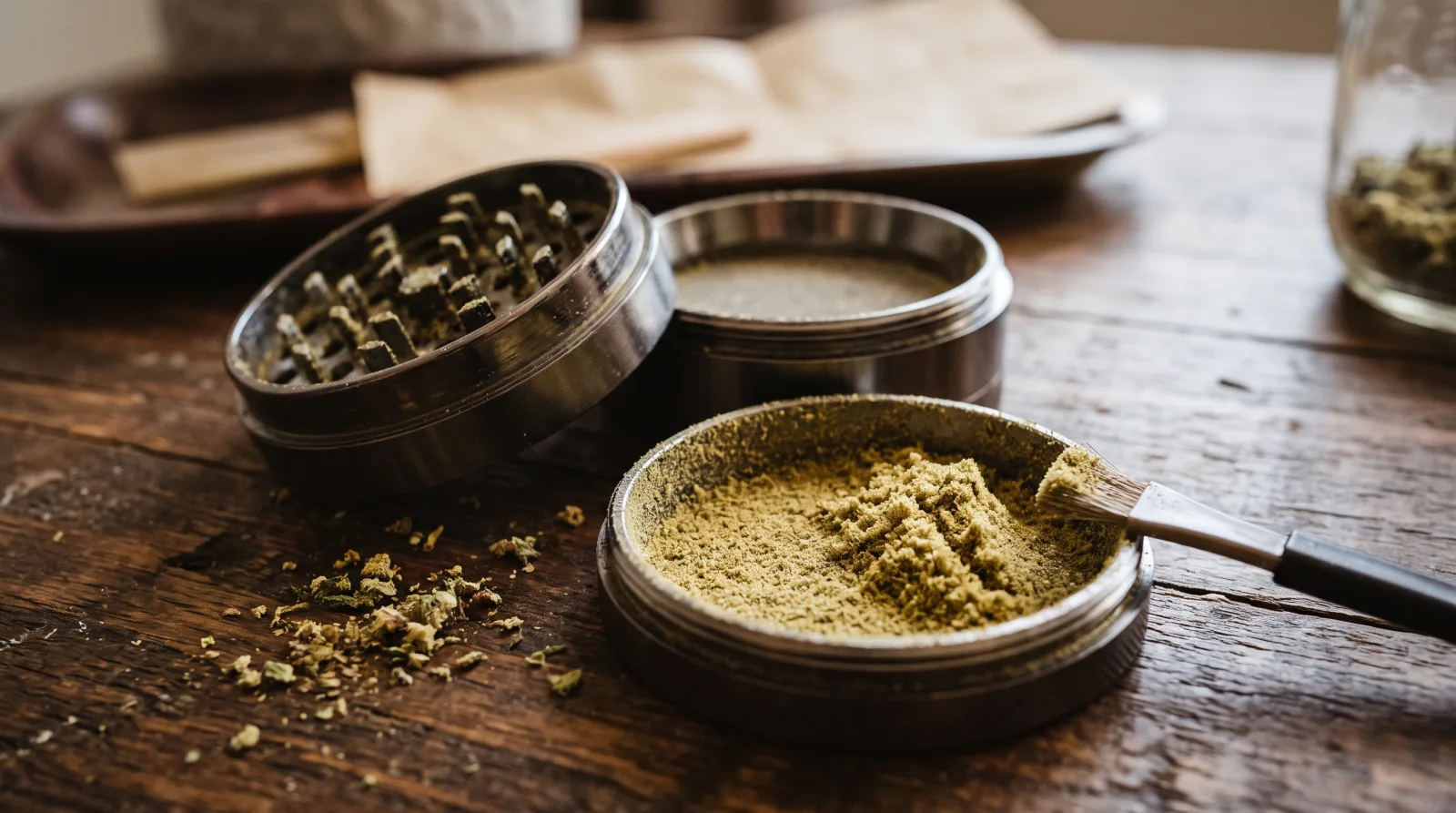
When cannabis buds break apart, they lose trichomes. Those resinous glands that contain cannabinoids and terpenes are fragile. Mechanical agitation, temperature fluctuation and repeated handling cause them to detach. They don't disappear (many end up as kief), but they no longer coat the plant material you're purchasing. A study examining trichome retention in shake versus intact flower found that shake typically retains 60-75% of the original trichome coverage, with the remaining 25-40% lost to mechanical separation.
Terpenes are even more volatile. These aromatic compounds evaporate when exposed to air and light. Shake, with its increased surface area and longer exposure time, experiences accelerated terpene loss. The result is cannabis that may still contain reasonable THC levels but delivers a harsher, less flavourful experience with a less nuanced effect profile. Terpenes significantly influence the cannabis experience beyond just smell, affecting onset speed, effect character and entourage effect strength.
The Price-to-Value Equation: When Each Option Makes Sense
Every cannabis consumer has different priorities. Price per gram matters, but so does consistency, potency, flavour and reliability. Here's how popcorn buds and shake stack up across the metrics that actually affect your experience.
Cost Per Session Comparison
Let's use realistic Ottawa market pricing. Premium AAAA flower costs approximately $8-12 per gram. Popcorn from the same genetics runs $5-7 per gram. Clean single-strain shake costs $3-5 per gram. Mixed shake can drop to $2-4 per gram.
For a 0.5-gram joint, you're spending $4-6 on premium, $2.50-3.50 on popcorn, or $1.50-2.50 on shake. That's meaningful savings, but only if the experience delivers. A popcorn joint at $3 that produces the same effect as a $5 premium joint represents genuine value. A $2 shake joint that requires two sessions to reach the same effect actually costs $4 in practice, negating the savings and wasting your time.
When Popcorn Buds Are the Smart Choice
Popcorn makes economic sense for regular consumers who prioritize reliability. If you smoke daily, use cannabis for consistent medical relief, or care about flavour and terpene profiles, popcorn delivers premium genetics at mid-tier pricing. You're getting verified strain characteristics, predictable effects, and intact flower structure. The only sacrifice is visual appeal and perhaps slight variation in density.
Popcorn also suits consumers who make edibles or infusions. Since you're decarboxylating and extracting cannabinoids anyway, bud size becomes completely irrelevant. A gram of popcorn produces the same milligrams of THC in your cannabutter as a gram of premium flower, but costs 30-40% less. For extraction purposes, popcorn is objectively the better financial decision.
When Shake Might Work
Clean, single-strain shake has limited but legitimate use cases. If you're rolling numerous joints for a social gathering where flavour isn't the priority, shake gets the job done cheaply. If you're experimenting with strains you haven't tried before and want to sample effects without committing to larger quantities, shake provides an affordable entry point. If you're making quick edibles where you're adding so many other flavours that cannabis taste becomes secondary, shake works fine.
Mixed shake, however, has almost no defensible use case for discerning consumers. The unpredictability defeats the purpose of strain selection. The degraded terpene profile compromises flavour. The unknown origin raises quality control questions. Unless you're litreally just seeking THC delivery with zero concern for experience quality, mixed shake represents false economy.
How to Identify Quality Within Each Category
Not all popcorn is created equal, and shake quality varies dramatically. Whether you're shopping online through same-day delivery in Ottawa or browsing options in Gatineau, these visual and olfactory cues help you separate value from poor quality.
Evaluating Popcorn Bud Quality
Quality popcorn should look like miniature versions of premium flower. Check for visible trichome coverage. Even on small buds, you should see crystalline resin glands coating the surface. The colour should be vibrant, with the strain's characteristic hues (purple for indica-dominant strains, lighter green for sativas, orange or red pistils where applicable). The structure should be intact, meaning recognizable bud formation rather than compressed leaf material.
Smell reveals everything about freshness and terpene retention. Quality popcorn produces a strong, strain-specific aroma when you open the container. If it smells like hay, grass or nothing at all, the terpenes have degraded. That signals either old product or improper storage. Moisture content matters too. Popcorn should have slight give when squeezed, not crumble to dust (too dry) or feel spongy (too moist). Proper cure produces popcorn that breaks apart cleanly without turning to powder.
Shake Red Flags and Green Lights
Quality shake maintains colour consistency. If you're buying what's labelled single-strain shake, the material should show uniform hue. Mixed colours indicate mixed genetics, which means mixed effects and possibly mixed harvest dates. Excessive stem content is a red flag. Some stem fragments are inevitable in shake, but if more than 20% of the visible material is woody brown stems, you're paying cannabis prices for structural plant matter that contains minimal cannabinoids.
Seed presence is an absolute dealbreaker. Cannabis seeds develop when female plants get pollinated, which dramatically reduces cannabinoid production as the plant diverts energy to seed formation. If you spot seeds in shake, that entire batch came from substandard growing conditions or hermaphrodite plants. Pass immediately.
The smell test applies equally to shake. Quality shake still produces aroma. It won't be as pungent as intact buds because of terpene loss, but it should register as clearly cannabis-scented. Chemical smells, ammonia notes or complete absence of smell all indicate problems with cure, storage or source material.
Usage Scenarios and Preparation Differences
How you consume cannabis changes which option serves you better. Popcorn and shake perform differently across consumption methods, and understanding those differences helps you match product to purpose.
Rolling and Smoking Applications
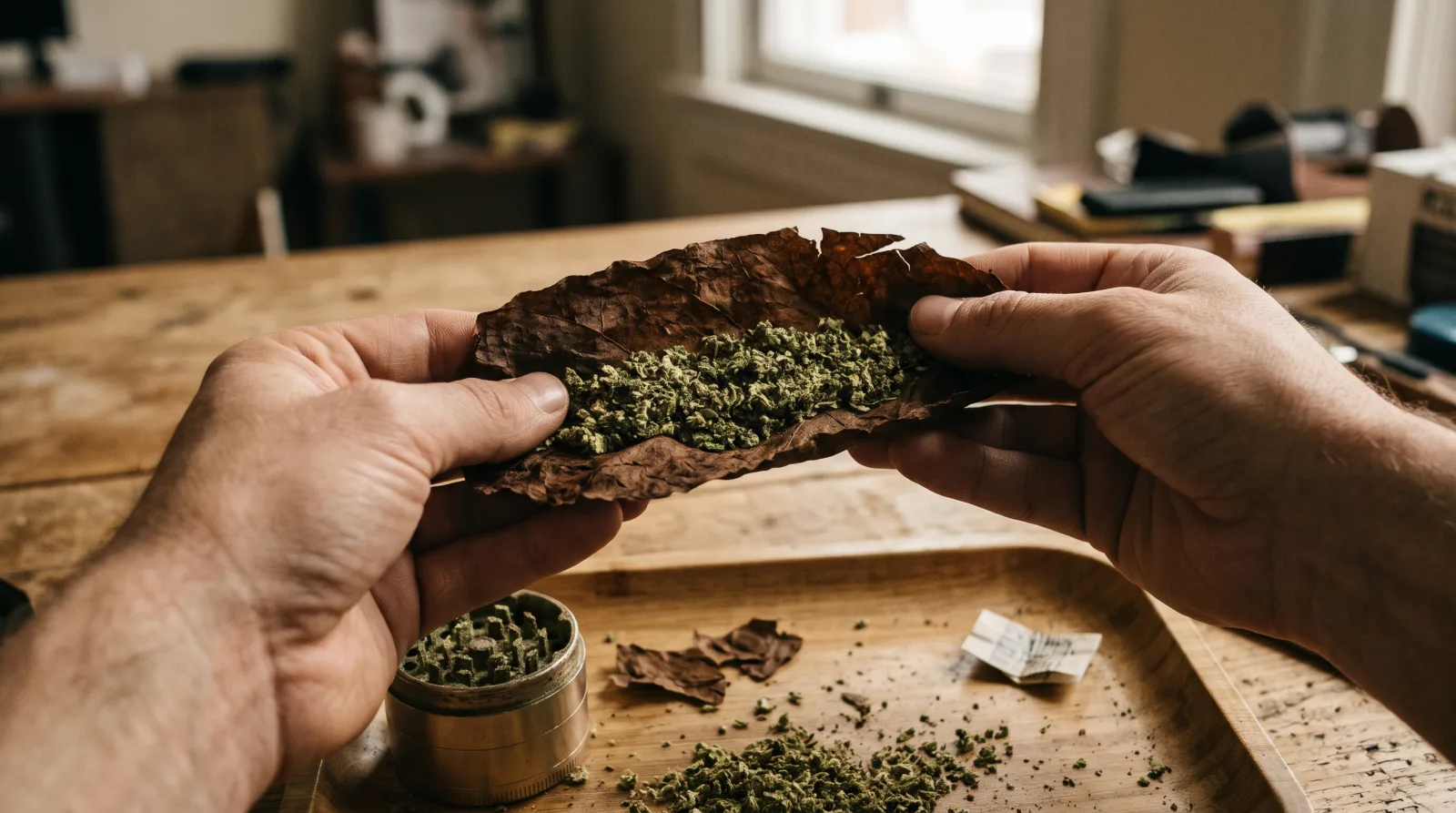
For joints and blunts, popcorn requires grinding just like premium flower. The smaller size actually makes it slightly easier to break down by hand if you're without a grinder, though a proper grinder still produces the most consistent texture. The resulting ground cannabis has the same consistency as premium, so it rolls identically. The burn quality matches premium flower when properly cured. Choosing the right wrap matters more than whether you're using popcorn or premium inside it.
Shake requires less preparation since it's already broken down, but that's not necessarily an advantage. Pre-broken cannabis has been oxidizing longer. It may contain stem fragments you'll need to remove manually. The particle size is often inconsistent, with some pieces being nearly powder and others being small chunks, which creates uneven burning. Joints rolled with shake tend to canoe (burn unevenly down one side) more frequently than those rolled with freshly ground flower.
Vapourizer Performance Comparison
Vapourizers, both portable and desktop models, perform best with consistently ground, properly cured flower. Popcorn excels here because it grinds to the fluffy, even texture vapourizers need for optimal airflow and heat distribution. The trichome retention means you're volatilizing a full terpene and cannabinoid spectrum, producing flavourful vapour clouds and efficient extraction.
Shake performs poorly in vapourizers. The inconsistent particle size creates airflow problems. The reduced trichome content means less vapour production and muted flavour. The accelerated drying means shake is often too dry for vapourizers, which prefer slightly moist flower that releases vapour gradually rather than combusting instantly. If vapourizing is your primary consumption method, shake is almost always the wrong choice regardless of price savings.
Edible and Extract Production
This is where popcorn absolutely dominates. Decarboxylation and infusion processes extract cannabinoids from plant material regardless of bud size. A gram of 22% THC popcorn produces the same 220mg of total THC as a gram of 22% premium flower. Since you're transforming the cannabis into butter, oil or tincture anyway, the structural integrity and visual appeal become completely irrelevant.
The math is straightforward: if premium flower costs $10/gram and popcorn costs $6/gram, and you're making a batch of cannabutter that requires 28 grams, you save $112 by choosing popcorn with zero compromise to the final edible potency. For anyone doing regular edible production, popcorn represents the most cost-effective source of cannabinoids available.
Shake can work for extractions if you're buying clean, single-strain material and adjusting for potentially lower potency. However, the stem content becomes problematic. Stems contain minimal cannabinoids but occupy weight you're paying for. If shake is 20% stems by weight and you buy 28 grams at $4/gram, you've spent $22.40 on stems that contribute almost nothing to your infusion. You've actually purchased 22.4 grams of usable material, bringing the real cost to $5/gram, which erodes much of the savings versus popcorn.
Storage Considerations and Longevity
How long your cannabis maintains potency and flavour depends partly on its starting condition. Popcorn and shake age differently, which affects how you should buy and store them.
Shelf Life Expectations
Properly stored popcorn buds retain potency and terpenes for 6-12 months when kept in airtight containers away from light and heat. The intact trichomes remain attached to the bud structure, and the cannabinoids inside those trichomes stay protected from oxidation. While terpene profiles do gradually diminish over time, the degradation happens slowly enough that even six-month-old popcorn can deliver a quality experience.
Shake degrades faster because it's already compromised. The increased surface area accelerates oxidation. The detached trichomes have already been lost. The terpenes have had extended exposure to air. Fresh shake (meaning recently packaged from recently harvested cannabis) can work adequately, but shake that's been sitting for months becomes progressively harsher and less potent. If you're buying shake, buy small quantities you'll consume within 2-4 weeks, not ounces you'll stretch over months.
Storage Best Practices by Product Type
Store popcorn exactly as you'd store premium flower. Use glass jars with airtight seals, not plastic bags that allow air exchange. Keep containers in cool, dark locations. Consider humidity control packs (Boveda or Integra) to maintain 58-62% relative humidity, which preserves terpenes and prevents overdrying. Proper moisture management matters more for long-term quality than the original bud size ever did.
For shake, minimize storage time rather than optimizing storage conditions. The product is already degraded, so elaborate preservation efforts fight a losing battle. If you must store shake for more than a week or two, use the same airtight glass container approach, but accept that you're slowing decline rather than preventing it. Smell your shake before each use. If the aroma has faded significantly, the cannabinoid profile has likely degraded too.
Making the Decision: A Framework for Budget Cannabis Buyers
The popcorn versus shake decision shouldn't be one-size-fits-all. Your consumption patterns, quality standards and budget constraints create a unique equation. Here's how to solve it for your specific situation.
The Daily Consumer's Calculation
If you consume cannabis daily for medical relief, stress management or simple enjoyment, consistency matters more than maximum savings. Daily use means you're purchasing regularly anyway, so buying popcorn in moderate quantities (14-28 grams at a time) locks in reliable quality at reasonable prices. The slightly higher cost versus shake pays dividends in predictable effects, maintained flavour and zero guesswork about what you're consuming.
Your monthly cannabis budget determines the grade of popcorn, not whether you should accept shake. A consumer spending $200 monthly can choose between premium popcorn from top genetics or larger volumes of mid-tier popcorn. Both beat shake for consistent daily use. A consumer spending $100 monthly might need to shift toward bulk popcorn purchases rather than mixed genetics, but the popcorn category still offers better value than gambling on inconsistent shake.
The Occasional User's Approach
Occasional consumers (1-2 times weekly) face different math. Smaller total volumes mean per-gram pricing hits harder, but slower consumption rates also mean you can afford to prioritize quality. Buying 7 grams of quality popcorn that lasts a month delivers better per-session experiences than buying 14 grams of shake at half the price but compromised quality.
For occasional users, the biggest risk isn't cost. It's buying too much of either product and having it degrade before you finish it. A $40 investment in 7 grams of popcorn you'll actually enjoy beats a $25 investment in 14 grams of shake that gets progressively harsher as it sits in your drawer for eight weeks.
The Special Occasion Stance
Some consumers want both options for different purposes. Premium or AAAA flower for special sessions, popcorn for daily use, and potentially clean single-strain shake for quick pre-rolls when convenience trumps experience. This tiered approach optimizes spending across use cases rather than forcing every session into the same product category.
The risk here is rationalization. Don't convince yourself that shake "works fine" for routine use just because you're saving premium flower for weekends. If your daily sessions matter (and for most consumers they do), your daily cannabis should be reliable. Reserve shake for genuinely low-priority applications, not as a default option you're settling for to preserve your premium stash.
Looking for verified quality popcorn options? Browse our selection of small-format cannabis from premium genetics at prices that make sense for value-focused buyers. All products ship same-day across Ottawa, Gatineau and Ontario-wide.
No. Popcorn buds from the same plant and harvest batch contain essentially the same THC percentage as larger buds. Labouratory testing shows variation typically within 2-3%, which falls within standard testing margins. The size difference comes from reduced light exposure during growth, not reduced cannabinoid production. When ground and consumed, popcorn delivers equivalent potency to premium-sized flower from the same genetics.
Shake costs less because it's material that broke off during handling rather than intact flower. It has reduced trichome coverage (losing 25-40% during mechanical separation), diminished terpene content from extended air exposure, and often includes stem fragments that add weight without adding cannabinoids. Mixed shake also combines unknown strains from different harvests, making effects unpredictable. The lower price reflects genuinely reduced quality, not just cosmetic differences like with popcorn.
In blind testing, most consumers cannot reliably distinguish between properly cured popcorn and premium flower from the same strain and harvest. The experience,flavour, effect profile, smoothness,depends on genetics, terpene retention, cure quality and freshness, not bud size. Visual appeal differs obviously, but the actual smoking or vaping experience remains equivalent when you're comparing the same cannabis genetics at different sizes.
Shake is not intentionally ground cannabis. It's the collection of fragments that naturally break off from buds during handling, transport and storage. This includes small leaf pieces, broken bud sections, and trichomes that detached during mechanical agitation. Quality shake comes from a single strain and retains some potency. Low-quality shake mixes multiple strains, includes excessive stems, and may contain floor sweepings from processing facilities. It's structurally different from freshly ground intact flower.
Popcorn actually represents the optimal choice for edible production. Decarboxylation and infusion extract cannabinoids regardless of bud size, meaning a gram of 20% THC popcorn produces identical milligrams of activated THC as a gram of 20% premium flower. Since you're transforming the cannabis chemically anyway, the intact structure and visual appeal of premium buds provide zero advantage. Popcorn delivers the same edible potency at 30-40% cost savings, making it objectively the smarter choice for cannabutter, oils and tinctures.