
If you've ever tried sprinkling raw weed into a brownie batter or steeping unprocessed flower in tea and wondered why you felt nothing, the answer is simple: cannabis doesn't work in food until you heat it first. This process, called decarboxylation, is the single most important step in making edibles at home, and it's the difference between a potent infusion and a complete waste of good flower.
Raw cannabis contains THCA and CBDA, the acidic precursors to THC and CBD. These molecules are non-intoxicating. Only when you apply heat at the right temperature for the right duration do these compounds lose a carboxyl group (hence "decarboxylation") and become the psychoactive cannabinoids that produce edible effects. Whether you're making cannabutter, tinctures or baked goods, decarbing your flower correctly is mandatory. This guide will walk you through why it matters, how to do it in a standard oven, ideal times and temperatures for different cannabinoids, and the common mistakes that ruin batches.
Why Raw Cannabis Doesn't Get You High When You Eat It
The chemistry is surprisingly straightforward. Fresh cannabis flower is packed with THCA (tetrahydrocannabinolic acid) and CBDA (cannabidiolic acid). These acidic cannabinoids have their own properties, some therapeutic benefits in raw form, but they do not produce the euphoria or body effects associated with THC.
When you smoke or vapourize cannabis, the heat of combustion or vapourization instantly decarboxylates the THCA into THC. That's why smoking works. But when you cook with raw flower, you're adding THCA to your food, and typical baking or simmering temperatures either aren't hot enough or aren't sustained long enough to complete the conversion. You end up with an expensive, weedy-tasting cookie that does nothing.
Decarboxylation removes a carbon dioxide molecule (CO₂) from the THCA structure, turning it into THC. This happens at around 220-240°F (105-115°C) over 30-45 minutes. The same process converts CBDA into CBD. Without this step, your edibles are biologically inert from a psychoactive standpoint.
The Science Behind the Carboxyl Group
THCA has an extra carboxyl group (COOH) attached to its molecular structure. This group makes the molecule larger and prevents it from binding efficiently to CB1 receptors in your brain and body. When heat breaks that bond and releases CO₂, the resulting THC molecule is smaller, lipophilic (fat-soluble) and ready to cross the blood-brain barrier when consumed orally.
This is also why storing cannabis in hot environments or leaving it in sunlight for months can slowly degrade THCA into THC, though never as completely or predictably as controlled oven decarboxylation. Light, air and time can all nudge the process, but intentional heat application is the only reliable method for home cooks.
Oven Decarboxylation Method: Step-by-Step Instructions
The standard home method uses a kitchen oven. It's simple, repeatable and requires no special equipment beyond what most Canadians already own. Here's the process that consistently delivers full cannabinoid activation without burning your flower.
Equipment You'll Need
- Standard kitchen oven (conventional or convection)
- Baking sheet with a rimmed edge
- Parchment paper (not wax paper, which can smoke)
- Oven thermometer (highly recommended for accuracy)
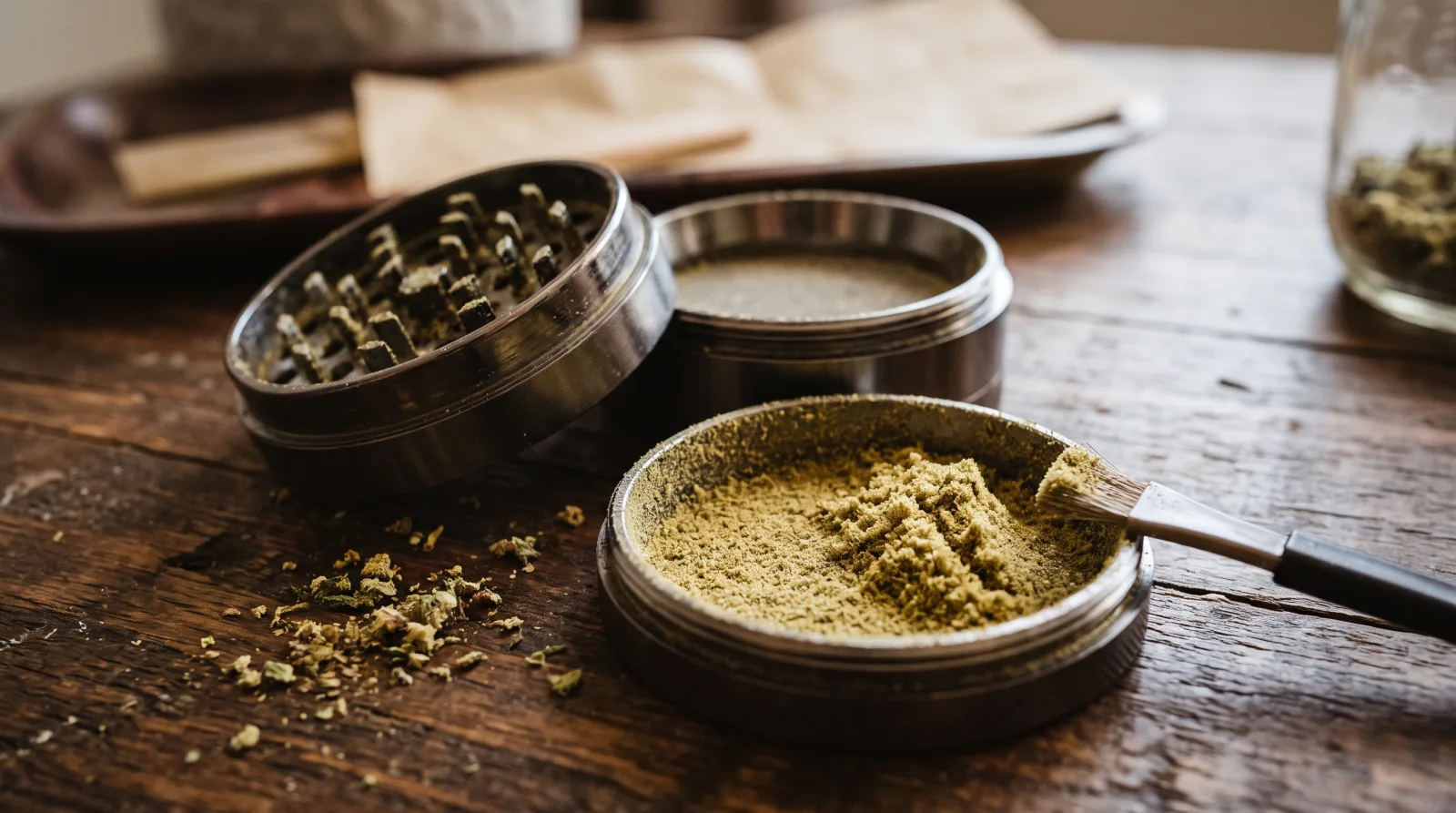
- Grinder or fingers for breaking up buds
- Airtight container for storage after decarbing
The Process
Preheat your oven to 240°F (115°C). Use an oven thermometer to verify the actual temperature, as many ovens run 10-25°F off their display setting. Break your cannabis into small, popcorn-sized pieces using a grinder or your fingers. You don't want powder, just evenly broken flower to ensure consistent heat exposure.
Spread the broken flower in a single layer on a parchment-lined baking sheet. Avoid overlap or clumps. Slide the sheet into the centre rack of the preheated oven and set a timer for 40 minutes. You'll notice the flower change colour from bright green to a toasted, golden-brown hue. The room will smell strongly of cannabis, so plan accordingly if discretion matters.
After 40 minutes, remove the sheet and let it cool completely before handling. The decarbed flower is now activated and ready to be infused into butter, oil or used directly in recipes. Store any unused decarbed cannabis in an airtight glass jar away from light and heat.
Convection Ovens vs Conventional
Convection ovens circulate hot air, which can speed decarboxylation and create more even heating. If you're using convection, drop the temperature by 10-15°F (to around 225°F / 107°C) and reduce the time to 30-35 minutes. Check halfway through and rotate the pan if one side appears darker than the other.
Conventional ovens have hot spots and temperature swings, which is why the oven thermometer is critical. If your oven runs hot, you risk scorching the flower and degrading THC into CBN, a less psychoactive cannabinoid that produces sedation rather than euphoria.
Optimal Temperatures and Times for Different Cannabinoids
While 240°F for 40 minutes is the gold standard for THC-focused decarboxylation, different cannabinoids convert at slightly different rates. If you're targeting CBD, CBG or preserving specific terpenes, you can adjust your protocol.
THC Decarboxylation: 220-240°F for 30-45 Minutes
This range maximizes THCA-to-THC conversion while minimizing degradation into CBN. Lower temperatures (220°F / 104°C) require longer times (45-50 minutes) but preserve more terpenes, resulting in a more aromatic and flavourful final product. Higher temperatures (240°F / 115°C) complete the conversion faster but evaporate volatile terpenes like limonene and myrcene.
For most home cooks making cannabutter or brownies, 240°F for 40 minutes offers the best balance of potency and efficiency. If you're working with high-end flower and want to preserve flavour, try 220°F for 45 minutes instead.
CBD Decarboxylation: 240-250°F for 60-90 Minutes
CBDA converts more slowly than THCA. If you're using a CBD-rich strain and want to maximize non-psychoactive cannabinoid content, extend the bake time to 60-75 minutes at 240°F. Some protocols go as high as 250°F for 90 minutes, though this risks terpene loss and begins to edge into THC degradation if any is present.
CBD flower is increasingly popular for making non-intoxicating edibles, tinctures and topicals. The longer decarb time is necessary to ensure full activation.
CBG and Minor Cannabinoids
Cannabigerol (CBG) and cannabinol (CBN) have their own decarboxylation curves, but they're rarely the primary target in home cooking. CBG-rich flower can be decarbed using the standard THC protocol. CBN is often a degradation product of THC, so if you're aiming for a sedative edible, slightly higher temperatures (250°F) or longer times (50+ minutes) can gently push some THC into CBN territory.
Understanding how heat affects cannabinoid profiles is especially useful when pairing decarbed flower with other ingredients. If you're making a cannabutter recipe for sleep aids, a longer, hotter decarb followed by a slow simmer can tilt the cannabinoid balance toward CBN.
Common Decarboxylation Mistakes and How to Avoid Them
Even experienced home cooks make errors that reduce potency or waste expensive flower. Here are the most frequent mistakes and their fixes.
1. Skipping the Oven Thermometer
Trusting your oven's digital display is the #1 mistake. Most consumer ovens are inaccurate by 15-30°F, and many cycle on and off, creating temperature swings. A $10 oven thermometer eliminates guesswork. Place it on the rack next to your baking sheet and adjust the dial until the thermometer reads 240°F. You might need to set your oven to 225°F or 255°F to hit the target.
2. Grinding Too Fine
Powdered cannabis has more surface area exposed to heat, which sounds good but actually increases the risk of burning and uneven decarboxylation. Powder can also scorch on the edges of your baking sheet. Stick to popcorn-sized chunks or a coarse grind. Save the fine grind for pre-rolls or vapourizers.
3. Overcrowding the Baking Sheet
Piling flower in a thick layer creates hot spots and uneven heat distribution. Some pieces will be fully decarbed while others remain raw. Always use a single layer. If you're processing a large batch, use multiple baking sheets or work in batches.
4. Opening the Oven Door Repeatedly
Every time you crack the door to check on your flower, the temperature drops 25-50°F and extends the total time required. Set your timer, trust the process and only open the door once at the halfway point if you absolutely need to rotate the pan. Resist the urge to peek.
5. Not Letting It Cool Before Handling
Hot decarbed cannabis is fragile, sticky and loses terpenes rapidly when disturbed. Let the baking sheet cool to room temperature before transferring the flower. This also prevents moisture buildup if you're storing it immediately after decarbing.
6. Using Wet or Uncured Flower
Freshly harvested or improperly dried cannabis still contains residual moisture. This water content interferes with decarboxylation and can cause uneven heating. Always use properly cured, dry flower. If your buds feel spongy or damp, let them dry for a few more days before decarbing.
What Happens If You Decarb at the Wrong Temperature?
Temperature precision matters because the window between incomplete conversion and cannabinoid degradation is narrow. Understanding what happens at different heat levels helps you troubleshoot failed batches.
Too Low: 180-210°F (82-99°C)
At these temperatures, THCA begins to convert to THC, but the process is glacially slow. You'd need 90+ minutes to approach full activation, and even then, some THCA will remain. The result is weak edibles with unpredictable potency. Some home cooks try low-and-slow methods to preserve terpenes, but unless you're willing to monitor for hours, this approach isn't practical.
Just Right: 220-245°F (104-118°C)
This is the sweet spot. THCA converts efficiently, terpene loss is moderate and the flower doesn't scorch. Most published research and lab tests confirm that this range delivers 90-95% decarboxylation within 30-45 minutes. For home edibles, this is the target zone.
Too High: 250°F+ (121°C+)
Above 250°F, you're entering risky territory. THC begins to degrade into CBN at an accelerated rate. Terpenes evaporate rapidly, leaving your flower with a burnt, acrid aroma. The edges of your baking sheet may char, and the final product will be noticeably weaker. If you accidentally set your oven to 300°F or higher, you'll lose significant potency within 20 minutes.
CBN has its place, especially for sleep-focused edibles, but unintentional degradation is a waste. If you're aiming for CBN, better to decarb properly first, then apply additional heat during the infusion stage.
Decarbing for Different Edible Recipes: Timing Considerations
Not all edibles require the same decarboxylation approach. Recipes that involve further cooking, like brownies or cookies, will continue to apply heat to your cannabis. Recipes with no additional heat, like no-bake truffles or cold tinctures, rely entirely on oven decarboxylation.
Recipes with Additional Baking (Brownies, Cookies)
If your recipe calls for 350°F baking after adding cannabutter, you can afford a slightly shorter decarb, around 30-35 minutes at 240°F. The baking process will finish the conversion. However, this is risky if you're not precise, because overbaking the final product can degrade THC. Most experts recommend full decarboxylation in the oven first, then brief baking times for the edible itself.
No-Bake or Cold Infusions
For recipes like chocolate truffles, gummies or alcohol tinctures where no further heat is applied, your oven decarb is the only activation step. Go the full 40-45 minutes at 240°F to ensure complete conversion. There's no safety net here, underdone flower means weak edibles.
Stovetop Infusions (Cannabutter, Cannabis Oil)
When making cannabutter, you'll simmer the decarbed flower in butter and water for 2-4 hours. This low, sustained heat (around 180-200°F) won't further decarboxylate THCA, it's too low. That's why pre-decarbing in the oven is mandatory. The stovetop simmer extracts the already-activated THC into the fat, it doesn't create it.
Some online guides claim you can skip the oven and decarb during the butter simmer. This is technically possible if you raise the temperature to 240°F and hold it for 45 minutes, but butter and water boil at 212°F under normal pressure, making true decarboxylation impossible on a stovetop without specialized equipment. Always decarb first, then infuse.
Decarboxylation in Commercial Edibles: How the Industry Does It
Licenced producers and commercial edible manufacturers use precision equipment, industrial ovens with programmable temperature curves, vacuum ovens that decarb under reduced pressure to preserve terpenes, or closed-loop systems that capture and reintroduce volatile compounds. These methods achieve 98%+ decarboxylation with minimal terpene loss.
For home cooks, this level of precision isn't realistic, but understanding the industry standard helps set expectations. A well-executed home oven decarb will get you 90-95% activation, which is more than enough for potent edibles. The remaining 5-10% THCA won't meaningfully impact your experience.
Commercial edibles also undergo lab testing to verify cannabinoid content post-decarboxylation. When you buy a 10mg THC gummy from a dispensary, you're getting exactly 10mg because the manufacturer decarbed, infused and tested the batch. Home edibles are harder to dose precisely, which is why starting with a known quantity of flower and calculating expected THC content is important.
Calculating THC in Your Decarbed Flower
If you start with 1 gram of flower testing at 20% THCA, you have 200mg of THCA. Decarboxylation converts THCA to THC at a ratio of about 0.877 (due to the lost carboxyl group's molecular weight). So 200mg THCA becomes roughly 175mg THC after decarbing. If you infuse that into 1 cup of butter, each tablespoon contains approximately 11mg THC (175mg ÷ 16 tablespoons).
This math assumes 100% extraction efficiency, which is optimistic. Realistically, home infusions capture 60-80% of available THC. Adjust your estimates downward and always start with a small test dose.
Storage and Shelf Life of Decarbed Cannabis
Once decarboxylated, cannabis is chemically different from raw flower. It's more stable in some ways (THCA won't degrade back into raw form) but also more vulnerable to oxidation. Store decarbed flower in an airtight glass jar in a cool, dark place. Light and air exposure will slowly convert THC into CBN over weeks and months.
Properly stored decarbed cannabis retains potency for 6-12 months. After a year, expect noticeable degradation. If you're batch-processing flower for future use, consider vacuum-sealing portions and freezing them. Freezing halts oxidation and extends shelf life to 18+ months.
Never store decarbed flower in plastic bags or containers. Cannabinoids can leach into some plastics, and static cling causes trichome loss. Glass is always best.
Alternatives to Oven Decarboxylation: Do They Work?
Several alternative methods exist, each with trade-offs. None are as reliable or accessible as the oven method, but they're worth understanding.
Sous Vide Decarboxylation
Vacuum-sealing flower in a bag and immersing it in a water bath set to 203°F for 90 minutes can achieve full decarboxylation with minimal terpene loss. The sealed environment traps volatile compounds. This method is popular among culinary-focused home cooks but requires a sous vide circulator and produces a strong cannabis odour when you open the bag.
Instant Pot or Pressure Cooker
Some guides suggest decarbing under pressure at lower temperatures. The science here is murky. Pressure affects boiling points but doesn't change the fundamental chemistry of THCA conversion. You still need sustained heat at 220-240°F, which most pressure cookers can't hold steadily. This method is inconsistent and not recommended.
Microwave
Don't. Microwaves heat unevenly, create hot spots that burn some pieces while leaving others raw and offer no temperature control. You'll waste your flower. This is a myth that refuses to die online.
Stovetop Skillet
Theoretically possible if you can maintain 240°F in a dry pan, but in practice, skillets overshoot or undershoot temperature constantly. Stirring the flower helps, but it's tedious and imprecise. Only attempt this if you have a calibrated infrared thermometer and a lot of patience.
Connecting Decarboxylation to the Bigger Picture of Home Edibles
Decarboxylation isn't the end of the process, it's the foundation. Once you've activated your cannabinoids, the next step is infusion. Whether you're making cannabutter, cannabis-infused coconut oil or alcohol tinctures, decarbed flower is your starting point.
The two-step approach (decarb, then infuse) gives you control over each variable. You can verify that decarboxylation happened correctly before committing your flower to a butter batch. If you skip the oven and try to decarb during infusion, you're juggling too many variables at once and increasing the chances of failure.
This is also why understanding edible dosing matters. Once you've made cannabutter or oil, calculating per-serving THC content becomes critical. Decarboxylation gives you the activated THC, but infusion and portioning determine how much ends up in each brownie or cookie.
For Canadians buying flower for home edibles, choosing the right starting material matters. High-THC strains like Pink Death Star or gas-forward indicas deliver more milligrams per gram, making them cost-effective for infusion projects. Knowing your flower's tested THC percentage (if available) or using 15-20% as a conservative estimate helps with dose calculations.
Frequently Asked Questions About Decarboxylation
Slow cookers don't reach the necessary 220-240°F range. Most max out at 200-210°F on high, which is too low for efficient THCA conversion. You'd need to run it for several hours, and even then, results would be inconsistent. Stick to the oven.
Some terpene loss is inevitable because these compounds are volatile and evaporate at temperatures below THC activation. Lower temperatures (220°F) and shorter times (30-35 minutes) preserve more terpenes, but you'll sacrifice some decarboxylation efficiency. There's always a trade-off between potency and flavour.
Visual cues help but aren't definitive. Fully decarbed flower turns golden-brown or light tan, and the texture becomes drier and more brittle. If it's still bright green, it's underdone. If it's dark brown or black, it's overdone. The colour change is your best visual indicator, but only experience and testing will confirm full activation.
When you smoke or vape, combustion or vapourizer heat instantly decarboxylates THCA into THC as you inhale. You don't need to pre-decarb flower for smoking. For edibles, there's no combustion, so you must decarb in an oven first to activate the cannabinoids before cooking them into food.