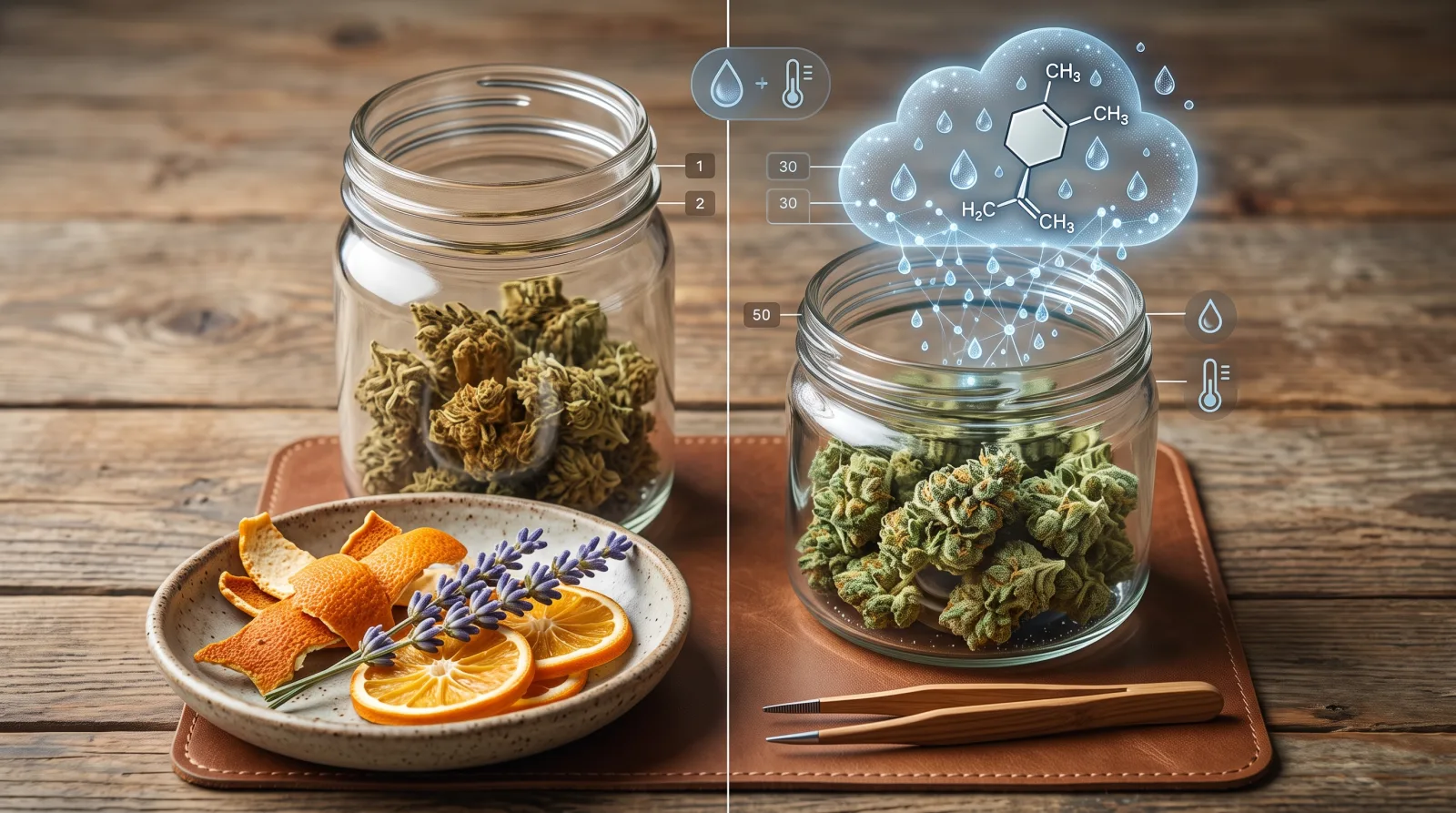
You've finally cracked open that jar or bag, ready to roll up, and the first thing you notice is the crunch. Your cannabis has turned into a brittle, crumbly mess that's harsher than sandpaper on the throat. Whether it's a forgotten stash, poor storage, or a dry product from the start, bone-dry weed is a problem every cannabis consumer faces eventually. The good news? You can rehydrate dry weed and bring it back to a smokeable state. The honest news? You can restore moisture, but you can't resurrect lost terpenes or reverse oxidation damage. This guide walks through every proven rehydration method, what each one can and cannot fix, and why preventing dryness in the first place beats any rescue attempt.
Dry cannabis isn't just a texture problem. When flower loses moisture, it becomes harsh, loses flavour complexity, and burns faster than properly cured bud. The terpenes that give each strain its signature aroma and effects are volatile compounds that evaporate alongside water content. Once they're gone, no rehydration technique will bring them back. But if your weed went dry recently and still retains some aromatic character, the right rehydration approach can make it significantly more pleasant to consume. Here's how to do it without creating mould, over-softening your stash, or wasting what's left of those precious cannabinoids.
Why Cannabis Dries Out (And What You Actually Lose)
Cannabis flower contains between 10-12% moisture when properly cured. This moisture level keeps the plant material pliable, preserves terpene content, and ensures a smooth burn. When humidity drops below this range, the flower becomes brittle. When it climbs above 12%, you risk mould growth. Storage conditions dictate everything: exposure to air, heat, light, and low humidity all accelerate moisture loss.
The compounds you lose when weed dries out fall into two categories. Moisture content is straightforward water that can be replaced through rehydration. Terpenes are aromatic oils that evaporate at relatively low temperatures, typically between 70-160°C depending on the specific terpene. Once myrcene, limonene, pinene, and other flavour molecules have volatilized, they're gone. THC and CBD are more stable than terpenes, so dry weed usually retains most of its cannabinoid potency even if it tastes like straw and hits like a rake to the throat.
The Timeline of Drying
Understanding how fast cannabis dries helps you catch the problem early. In typical home storage conditions (around 20°C and 40-50% relative humidity), properly cured flower starts losing noticeable moisture within two to three weeks if stored in a non-airtight container. By the six-week mark without humidity control, most strains become uncomfortably dry. In hot, arid climates or during Canadian winter heating season when indoor air drops below 30% humidity, this timeline compresses dramatically. Some consumers find their stash has gone from perfect to parched in under ten days.
The terpene loss timeline overlaps but extends slightly beyond moisture loss. The most volatile terpenes like myrcene begin evaporating immediately upon harvest, which is why proper curing matters. Once your flower is in your hands, those remaining terpenes continue their slow escape, accelerating when moisture drops and containers aren't sealed. By the time your weed feels bone-dry, you've likely lost 40-60% of the terpene profile that was present when you first opened the package.
Humidity Packs: The Gold Standard Rehydration Method
Two-way humidity control packs have become the default solution for cannabis storage and rehydration. Brands like Boveda and Integra offer small sachets that maintain specific relative humidity levels, typically 58% or 62% for cannabis. These packs contain a salt solution that either absorbs or releases moisture depending on the surrounding environment, creating a stable humidity zone inside your storage container.
The process is simple but not instant. Place your dry cannabis in an airtight jar, add an appropriately sized humidity pack (usually one 8g pack per ounce of flower), seal the container, and wait. Most moderately dry weed rebounds noticeably within 24 hours. Severely desiccated flower may need 3-5 days to fully rehydrate. Check daily by opening the jar and gently squeezing a bud. When it feels springy rather than crunchy and the stems bend instead of snapping, you're back in the target moisture range.
Choosing the Right Humidity Level
The 62% versus 58% debate comes down to personal preference and intended use. 62% RH packs restore flower to a slightly softer, stickier consistency that many consumers prefer for rolling joints and blunts. The extra moisture makes the flower easier to handle and creates a slower, more even burn. 58% RH packs produce a drier final texture that works well for vapourizers and grinders, as the flower breaks apart more easily without gumming up equipment. For rehydration purposes, either works. If you're reviving very dry weed and plan to store it long-term, starting with 62% and potentially switching to 58% after a week gives you more control.
What Humidity Packs Can and Cannot Fix
Humidity packs excel at restoring moisture content and improving texture. They bring harsh, brittle weed back to a smokeable state with minimal effort and near-zero risk of over-hydration or contamination. What they cannot do is restore lost terpenes. If your weed smelled like citrus or pine when fresh but now barely has any aroma, a humidity pack will make it less harsh but won't bring back that terpene profile. The improvement you'll notice is primarily in smoothness and burn quality, not flavour intensity. For many consumers, that's enough to turn unpleasant weed into acceptable weed, which is precisely the point of rehydration.
The other limitation is speed. Humidity packs work through passive vapour exchange, which means they're slow. If you need your dry weed smokeable tonight, not next week, this method won't help. For planned rehydration and ongoing storage, however, nothing beats the control and safety of a quality humidity pack. Once your flower reaches the target moisture level, the pack continues maintaining it indefinitely, preventing the drying problem from recurring as long as the sachet stays active (typically 2-4 months depending on conditions).
The Citrus Peel Method: Fast but Risky
Before humidity packs became widely available, the citrus peel trick was the go-to rehydration technique. The concept is straightforward: place a fresh piece of orange, lemon, or lime peel in your cannabis container, seal it, and let the peel's moisture transfer to the flower. Within a few hours, dry weed absorbs enough humidity to become pliable again. The method works because citrus peels contain substantial water content and release it readily in an enclosed space.
The execution requires careful attention. Use only the outer zest layer of the peel, avoiding the white pith which can impart bitter flavours. The peel should not touch the cannabis directly; place it on a small piece of parchment paper or use a container with a divider. Check every 2-3 hours, as this process moves quickly. Remove the peel as soon as your flower feels appropriately moist, which is usually within 4-8 hours for moderately dry weed. Leaving the peel in too long risks mould growth and can saturate your cannabis with citrus flavour that overwhelms the strain's natural terpenes.
Why This Method Has Fallen Out of Favour
The citrus peel approach carries risks that humidity packs don't. Fresh organic material introduces potential contaminants and creates an environment where mould spores can thrive if moisture levels climb too high. Cannabis sitting above 65% relative humidity for extended periods becomes susceptible to botrytis and other moulds, which are far worse than dry weed. The technique also requires active monitoring. You can't set it and forget it like a humidity pack. For consumers who need quick rehydration before tonight's session, it's still useful. For anyone who values their stash and wants predictable results, modern humidity control has made the peel method obsolete except in emergencies.
Alternative Rehydration Methods: What Works and What Doesn't
Beyond humidity packs and citrus peels, cannabis consumers have experimented with dozens of DIY rehydration techniques. Some have merit in specific situations; others create more problems than they solve. Understanding the logic and risks behind each approach helps you make informed decisions when your preferred method isn't available.
The Lettuce or Bread Slice Approach
Similar to citrus peels, placing a piece of fresh lettuce or bread in your container can rehydrate cannabis through moisture transfer. Clean lettuce leaves work slightly better than bread because they're less likely to introduce sugars or starches that might promote bacterial growth. The same risks apply: direct contact should be avoided, monitoring is essential, and removal timing is critical. This method makes sense only if you litreally have no other option and need results within hours. The moisture transfer is less controlled than citrus peels and significantly riskier than any purpose-built solution.
The Damp Paper Towel in a Bag
Some guides recommend placing dry weed in a sealed bag with a lightly dampened paper towel. In theory, the paper towel releases moisture gradually. In practice, this method is difficult to calibrate and frequently results in either insufficient hydration or dangerous over-saturation. Paper towels can also transfer ink residues or bleaching agents to your cannabis. If you're going to use an improvised moisture source, citrus peel is safer and more effective. The paper towel method gets a firm "don't" recommendation from experienced consumers.
The Apple Slice Variation
Apple slices function identically to citrus peels with one key difference: apples impart less flavour to the cannabis. For consumers who want moisture without the citrus aroma, a small apple wedge placed on parchment paper in the jar works well. The same timing applies, typically 4-8 hours with regular checks. The lower acidity of apples compared to citrus means slightly less risk of pH changes affecting your flower, though the practical difference is minimal if you're removing the moisture source promptly. Some consumers report that apple slices work faster than citrus, possibly due to higher water content in the specific varieties used.
When evaluating any alternative method, ask yourself: Does this approach give me control over the moisture level? Can I monitor progress easily? Am I introducing contaminants or unwanted flavours? And most importantly, will this potentially damage my stash worse than leaving it dry? If the answers don't favour the technique, it's worth waiting for a proper humidity pack or accepting that your weed will smoke harsh rather than risking mould or contamination from improvised solutions.
What Rehydration Cannot Restore (And Why Prevention Matters More)
The honest reality of cannabis rehydration is that you're applying damage control, not restoration. Bringing moisture back to dry flower improves the smoking experience measurably, but it doesn't return the bud to its original state. The terpenes that evaporated during the drying process are gone permanently. That means the complex flavour profile, aromatic intensity, and subtle effect nuances provided by those terpenes won't come back no matter how perfectly you rehydrate.
Similarly, rehydration cannot reverse oxidation. THC slowly degrades into CBN (cannabinol) when exposed to oxygen and light over time. If your dry weed sat in a poorly sealed container for months, some THC conversion has already occurred. The sedative effects of CBN differ from THC's psychoactive effects, potentially changing how the flower makes you feel. Moisture restoration doesn't affect this chemical process. You're working with aged cannabis that has a different cannabinoid profile than when it was fresh, regardless of how well you rehydrate it.
The Prevention-First Philosophy
Every rehydration technique is a workaround for a problem that proper storage prevents. Airtight glass jars paired with humidity control packs maintain cannabis in optimal condition for months without requiring rescue interventions. The initial investment in quality storage containers and a handful of humidity packs costs less than most cannabis purchases and protects every future purchase from drying out. When you understand what rehydration can and cannot fix, the motivation to prevent dryness in the first place becomes clear.
For consumers buying in bulk to maximize value, proper storage isn't optional. Quantity buyers splitting ounces or quarters into multiple smaller jars, each with its own humidity pack, ensure every portion stays fresh until consumed. This approach prevents the scenario where the last eighth of your bulk purchase has turned to dust by the time you get to it. Prevention through proper storage also preserves the full terpene profile and cannabinoid potency you paid for, making it the superior strategy compared to any rehydration method.
Step-by-Step Rehydration Protocol for Best Results
If you're facing dry cannabis and need to restore it to smokeable condition, following a systematic approach minimizes risks and maximizes results. This protocol combines speed where needed with safety at every step, giving you the best possible outcome whether you're using humidity packs or an alternative method.
Assessment Phase
Begin by evaluating your cannabis honestly. How dry is it, and how long has it been in this condition? Recently dried flower that still has some aromatic presence responds well to any rehydration technique. Extremely desiccated weed that crumbles to powder and has no smell indicates severe terpene loss. Rehydration will improve harshness, but expectations should be modest. Old, dry cannabis that's been sitting for six months or more likely has cannabinoid degradation alongside moisture loss. Rehydrating might not be worth the effort compared to replacing it with fresh flower that hasn't oxidized.
Check for any signs of contamination or mould that developed before the flower dried out. Small white or grey fuzzy spots, musty odours, or unusual discoloration indicate problems that rehydration will worsen, not solve. Contaminated cannabis should be discarded regardless of moisture content. If your flower looks clean but is simply dry and harsh, proceed with rehydration.
Method Selection and Setup
Choose your rehydration approach based on timing needs and available materials. For planned rehydration where you have days to work with, humidity packs deliver the safest, most controlled results. Place your dry cannabis in a clean glass jar sized appropriately to the quantity. One 8g Boveda or Integra pack handles up to 28 grams of flower. Add the pack, seal the jar completely, and store in a cool, dark location. Check after 24 hours by opening the jar and gently testing a bud's flexibility.
For emergency same-day rehydration, the citrus peel method works if executed carefully. Select a fresh organic orange or lemon, wash the exterior, and cut a piece of peel roughly 2-3 inches square. Remove most of the white pith from the interior side. Place the peel on a small piece of clean parchment paper inside your jar, positioned so it cannot touch the cannabis. Seal the jar and check every 2-3 hours. When buds feel springy rather than brittle, remove the peel immediately.
Monitoring and Adjustment
Whether using humidity packs or alternative methods, regular checking prevents over-hydration. For humidity packs, daily checks suffice after the initial 24-hour mark. For citrus peels or other organic materials, every 2-3 hours is necessary. The target feel is springy but not wet or sticky. Stems should bend before breaking rather than snapping immediately. The exterior of the buds should feel dry to the touch even though the interior has absorbed moisture.
If your flower reaches the right texture before a humidity pack stops releasing moisture, that's normal. The pack will now maintain rather than continue adding humidity, which is exactly what you want. If using a citrus peel and your weed still feels too dry after 8 hours, replace the old peel with a fresh piece rather than leaving the original in longer. Old peel dries out and stops transferring moisture effectively while increasing contamination risk as it sits.
Post-Rehydration Storage
Once your cannabis has returned to proper moisture levels, maintaining those levels prevents repeating the drying cycle. Keep a humidity pack in your storage jar permanently if you plan to consume the flower over several weeks. Replace packs when they become rigid rather than pliable, which indicates they've exhausted their moisture-regulating capacity. Store jars in cool, dark locations away from heat sources and direct sunlight.
For consumers who learned this lesson the hard way and want to prevent future problems, understanding how terpenes work reinforces why proper storage matters from the moment you receive your order. Those aromatic compounds are what separate good weed from harsh, flavourless weed, and protecting them requires controlling moisture, light, heat, and air exposure from day one.
Advanced Considerations for Cannabis Rehydration
Different Products, Different Approaches
Not all cannabis products respond to rehydration equally. Whole flower buds are the ideal candidate for moisture restoration because their structure allows even water distribution throughout the plant material. Pre-ground cannabis rehydrates faster due to increased surface area but also risks clumping and uneven moisture distribution. If you're rehydrating shake or pre-ground weed, use humidity packs exclusively and extend checking intervals, as ground material can go from perfect to oversaturated quickly.
Trim and sugar leaves dry out faster than dense buds and absorb moisture more rapidly during rehydration. They require less time and closer monitoring regardless of method used. Concentrates like shatter and wax don't dry out in the traditional sense but can become brittle and difficult to work with in low humidity. For these products, storage in silicone containers in a moderately humid environment (40-50% RH) maintains workable consistency without requiring active rehydration.
Temperature's Role in the Process
Room temperature significantly affects rehydration speed and safety. Warmer environments accelerate moisture transfer but also increase mould risk. The optimal rehydration temperature sits between 18-22°C, matching typical home comfort levels. Attempting to speed the process by placing your jar in a warm location (near a heater or in direct sunlight) is counterproductive. Heat degrades cannabinoids and terpenes while creating ideal conditions for contamination. Cold temperatures slow rehydration but don't pose additional risks. If you're rehydrating in winter and your storage area is cooler than usual, simply extend your expected timeline by a day or two.
Quantity Scaling
Small quantities (under 3.5 grams) rehydrate faster than large amounts because moisture distributes through less material. If you're working with an ounce or more, consider dividing it into multiple smaller jars with individual humidity packs rather than trying to rehydrate everything in one large container. This approach ensures even moisture distribution and allows you to access portions of your stash without repeatedly exposing the entire amount to air each time you open the jar.
When to Accept Dry Weed and Move On
Sometimes rehydration isn't worth the effort. If your cannabis has been sitting dry for six months or longer and has zero aromatic character remaining, the terpene loss is complete. Rehydrating will make it less harsh but won't restore any enjoyable qualities. The question becomes whether smoking or vaping essentially flavourless weed is preferable to replacing it. For most consumers, the answer is replacement, especially given current cannabis market pricing where quality flower is readily accessible.
Severely oxidized cannabis that's turned brown or lost most of its visual vibrancy has undergone significant THC degradation. While technically still consumable after rehydration, the altered cannabinoid profile means it won't deliver the effects you're expecting. If you purchased premium AAAA flower expecting strong, clear effects and it's been sitting dry long enough to oxidize heavily, rehydrating it won't return it to quad status. You're better off writing off the loss and applying the storage lessons to future purchases.
Contaminated weed should never be rehydrated. Any visible mould, unusual odours, or signs of pest damage mean the cannabis should be discarded regardless of moisture content. Attempting to salvage contaminated product by rehydrating it will only accelerate whatever contamination is present, potentially creating health risks. When in doubt, throw it out and start fresh with proper storage practices to prevent repeating the mistake.
Frequently Asked Questions About Rehydrating Cannabis
Most moderately dry cannabis shows noticeable improvement within 24 hours when using a 58% or 62% humidity pack in a sealed container. Severely desiccated flower may require 3-5 days to fully rehydrate. Check daily by gently squeezing a bud. When it feels springy rather than brittle and stems bend before snapping, rehydration is complete. The process is gradual but delivers consistent, controlled results.
This method is not recommended due to contamination risks and difficulty controlling moisture levels. Damp paper towels can transfer chemicals, inks, or excessive moisture to your cannabis, potentially promoting mould growth or damaging the flower further. If you need emergency rehydration without humidity packs, citrus peel on parchment paper is safer and more effective than paper towels.
No. Rehydration restores moisture content but cannot resurrect terpenes that have already evaporated. If your cannabis has lost its aromatic profile, rehydrating will improve texture and harshness but won't bring back the original smell or flavour intensity. The improvement you'll notice is primarily in smoothness and burn quality rather than terpene-related characteristics.
Over-hydrated cannabis feels wet or sticky to the touch and may clump together when handled. The exterior of properly rehydrated flower should feel dry even though the interior has absorbed moisture. If you can squeeze visible moisture from a bud or it leaves dampness on your fingers, it's too wet and should be left open to air out for several hours before resealing with humidity control.
Yes. THC and CBD remain relatively stable during the drying process, so rehydrated cannabis retains most of its cannabinoid potency. The primary issue with dry weed is harshness and terpene loss affecting flavour and subtle effects, not total THC degradation. Rehydrating makes dry weed more pleasant to consume without significantly changing its potency.