Walk into any conversation about Canadian cannabis and you'll hear buyers toss around terms like "quads" and "trips" as casually as discussing the weather. But what do these labels actually mean when you're staring at two jars of flower that look nearly identical, yet one costs $60 more per ounce? The short answer: quads (AAAA) and trips (AAA) represent Canada's top two tiers of cannabis quality, differentiated by bag appeal, trichome density, cure quality, and nose. The longer answer requires unpacking the specific visual cues, aromatic signatures, and smoke characteristics that separate premium from ultra-premium, because understanding these distinctions will either save you money or justify spending it.
This guide breaks down quads versus trips using the actual vocabulary Toronto buyers use when evaluating flower. We'll compare them side-by-side across appearance, scent profile, smoking experience, and price-per-session economics, then deliver the honest verdict that most budtenders won't: when you roll it up and light it, the gap between quality tiers shrinks considerably. For many consumers, especially those who prioritize value over Instagram-worthy nugs, trips deliver 85-90% of the quad experience at 60-70% of the cost.
What "Quads" and "Trips" Actually Mean in Canadian Cannabis Slang
The grading system behind quads and trips originated in British Columbia's legacy market, where growers and brokers needed shorthand to communicate flower quality before customers could see or smell the product. The "A" system evolved as a practical solution: more A's meant higher quality across multiple factors including appearance, potency, cure, and terpene preservation. Today, the system persists in Canada's legal and grey markets because it efficiently communicates expectations without requiring paragraph-long descriptions.
Quads (AAAA or "quad A") represents the pinnacle of commercial cannabis cultivation. These are meticulously grown batches featuring dense trichome coverage, vibrant colours, perfectly executed cures, and aromatic profiles so pronounced you can smell them through proper storage. Quads typically come from small-batch craft growers who hand-trim, slow-dry in climate-controlled environments, and cure for minimum three weeks. Think of quads as the craft beer of cannabis: small production runs, attention to detail at every stage, and price points that reflect the labour intensity.
Trips (AAA or "trip A") occupy the sweet spot between premium and ultra-premium. Trip-grade flower still exhibits strong bag appeal, good trichome density, and respectable terpene profiles, but might show minor imperfections that disqualify it from quad status: slightly looser bud structure, a few more visible stems, or a cure that's good rather than exceptional. Trips often come from mid-sized operations that maintain quality standards while achieving economies of scale. Many experienced consumers consider trips the best value proposition in Canadian cannabis, delivering satisfying experiences without the quad price premium.
The Grading Criteria Behind the Letter System
While no official regulatory body governs the A-grade system, seasoned buyers and sellers evaluate flower across five consistent criteria. Visual appeal examines bud structure (dense versus fluffy), colour vibrancy, trichome coverage, and the presence of orange or purple hues. Aroma intensity measures how pronounced and complex the terpene profile smells, from first whiff to extended nose examination. Trim quality assesses how cleanly sugar leaves were removed and whether excess stem remains. Cure quality evaluates moisture content, whether buds snap or bend, and absence of harsh chlorophyll taste. Potency and effects consider THC levels, terpene synergy, and reported consumer experiences.
Quads must excel across all five criteria simultaneously. A single weakness,say, gorgeous looks but muted nose,typically drops flower to trip grade regardless of other strengths. Trips can show excellence in three or four categories while displaying acceptable performance in the remaining areas. This explains why some trips smoke better than certain quads: if terpene preservation and cure quality are excellent but trim work is merely good, the experience may surpass a visually stunning quad with mediocre terpene content.
Regional Variations and Market Context
The quad-trip classification system varies slightly across Canadian markets. In British Columbia, where the system originated, grading standards remain strictest,BC buyers expect quads to be absolutely flawless. Ontario markets tend toward slightly more lenient quad classifications, particularly in Toronto's competitive delivery scene where marketing pressure pushes flower toward higher grades. Quebec consumers often focus more on francophone terms like "qualité supérieure" but recognize the A-system when shopping cross-province.
Understanding this context matters because a quad from one source might grade as a strong trip from another. Reputable vendors acknowledge this inconsistency by providing detailed product photos and honest descriptions rather than relying solely on letter grades. When evaluating what weed grades cost in Toronto, smart buyers look beyond the label to actual product characteristics and vendor reputation.
Visual Comparison: What Your Eyes Tell You About Quality
The first quality checkpoint happens before you even open the jar. When comparing quads to trips side-by-side, visual differences become apparent within seconds,though understanding what you're actually seeing requires knowing where to look.
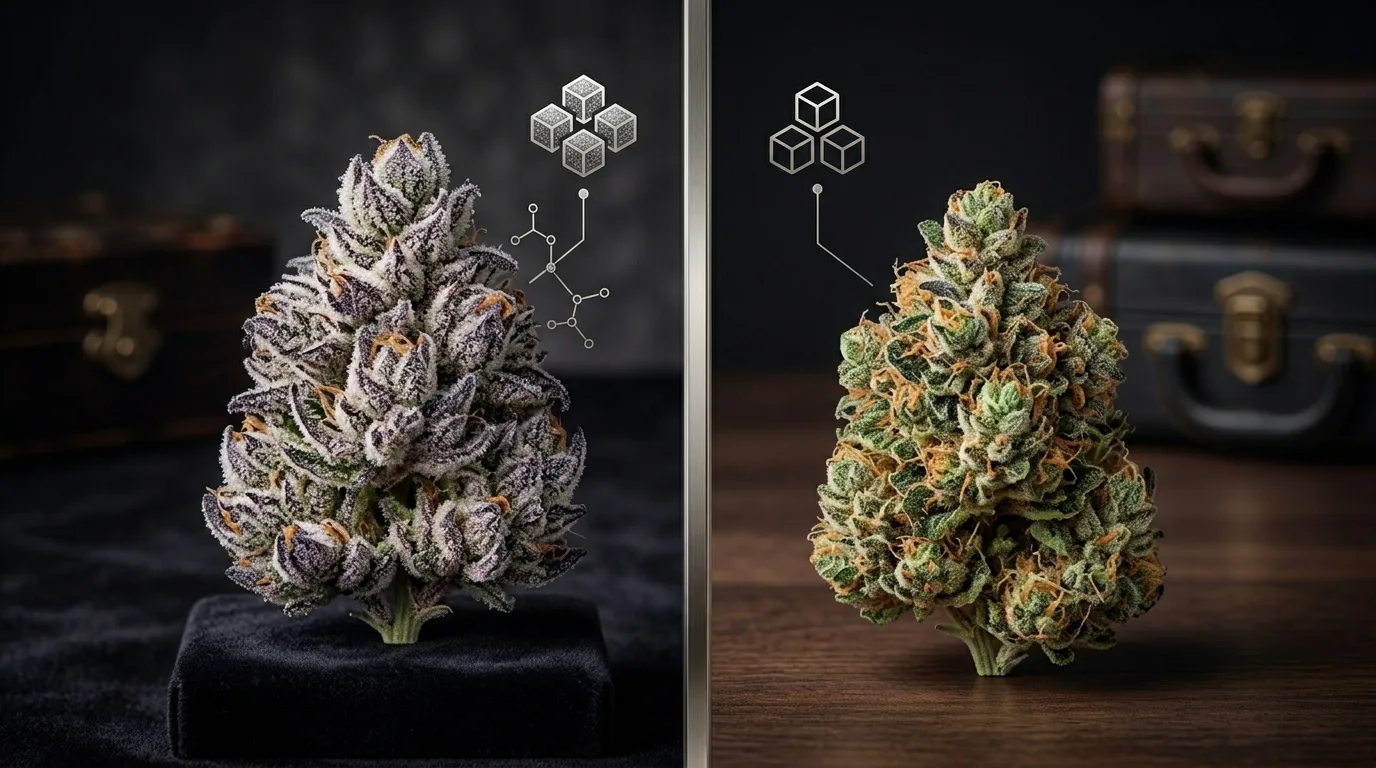
Bud structure and density separate tiers immediately. Quad-grade flower exhibits tight, compact bud structure where calyxes stack densely along the stem. When you squeeze a quad nug gently, it resists compression before slowly springing back, indicating proper moisture retention and structural integrity. Trip buds often show slightly airier structure, particularly toward the bottom of larger colas. They're still well-formed and dense compared to lower grades, but lack the rock-solid compactness of true quads. This structural difference affects more than aesthetics,denser buds typically indicate better environmental control during flowering and more efficient use of growing space.
Trichome coverage provides the most reliable visual quality indicator. Quads appear frosted or sugar-dusted across the entire visible surface, including stems and small interior leaves. Under magnification or bright light, you'll see trichome heads sitting atop stalks like tiny mushrooms, with milky-white to amber colouring indicating peak harvest timing. Trip cannabis shows good trichome coverage across major surfaces but may display patches where coverage thins, particularly on lower bud sections or interior surfaces. The trichomes themselves might appear slightly less uniform in size and maturity.
Colour, Pistils, and Bag Appeal Details
Quad cannabis frequently showcases vibrant colour contrasts: deep forest greens against bright orange pistils, or purple phenotypes with striking violet-black hues. These colours result from genetic expression combined with precise environmental control,temperature fluctuations at specific flowering stages, optimal nutrient ratios, and harvest timing that captures peak colouration. The pistils (those orange or red hairs) on quads typically show rich saturation and curl naturally into the bud structure rather than appearing wilted or brown.
Trip-grade flower displays attractive colouring but might show less dramatic contrast or slightly faded pistils. The greens lean toward single-tone rather than multi-hued, and purple genetics may appear more subdued. These differences don't indicate inferior genetics,they often reflect minor environmental variations during growth or slightly different harvest timing. A trip can still be beautiful; it simply lacks the "stop-you-in-your-tracks" visual impact that defines quad territory.
Trim Quality and Sugar Leaves
The precision of trim work separates craft attention from commercial efficiency. Quads receive meticulous hand-trimming where technicians remove all fan leaves and most sugar leaves while preserving trichome-covered surfaces. You'll see clean bud structure without protruding stems or leaf fragments. The negative space between calyxes appears defined rather than obscured by plant material. This level of trim work is labour-intensive and time-consuming, directly contributing to quad pricing.
Trips typically show competent but less obsessive trim work. You might spot a few sugar leaves left intact, particularly small ones heavily coated with trichomes where removing them would sacrifice too many trichomes. Stem visibility increases slightly. Some buyers actually prefer this "less is more" trim approach, arguing that sugar leaves contain terpenes and cannabinoids worth preserving. The practical impact on smoking experience is minimal if you break buds by hand rather than grinding, as you'll naturally separate excess leaf material during preparation.
Nose and Terpene Profile: Where Quads Pull Away
If visual inspection provides the first quality checkpoint, aromatic evaluation delivers the second,and often more revealing,assessment. The nose separates good weed from great weed more reliably than any other single factor, because terpene preservation directly indicates proper cultivation, harvest timing, drying, and curing practices.
When you crack open a jar of true quad cannabis, the aroma hits immediately: a complex bouquet that evolves as you smell deeper. Initial top notes might be citrus, gas, or pine; mid-level scents could reveal berry, earth, or spice; base notes often include subtle funk, cream, or skunk. This layered aromatic complexity comes from preserving multiple terpenes at high concentrations,limonene, myrcene, caryophyllene, pinene, linalool,which survive the cultivation-to-consumption journey intact. The smell permeates properly sealed containers and lingers on your fingers after handling buds.
Trip-grade cannabis smells good and clearly identifiable,you'll recognize the dominant terpene profile within seconds. What trips typically lack is that multi-layered complexity where the nose keeps revealing new dimensions. The scent might lean heavily toward a single note: very piney or distinctly gassy, without the supporting cast of secondary and tertiary aromatics. This doesn't mean trips smell weak; rather, they present a more straightforward terpene story compared to the novel-length aromatic narrative quads deliver.
How Cure Quality Impacts Aroma
The cure stage makes or breaks terpene preservation. After harvest and initial drying, cannabis requires weeks-long curing in controlled humidity environments (typically 58-62% RH) where remaining chlorophyll breaks down while terpenes and cannabinoids stabilize. Quads undergo extended cures lasting four to eight weeks, often in sealed containers that get "burped" daily to release moisture and gases. This patient process yields flower that smells exactly like the living plant at peak ripeness: vibrant, complex, and true to genetics.
Trips receive adequate but shorter cures, typically two to four weeks. The flower smells pleasant and strain-accurate but may retain subtle hints of hay or grass,telltale signs of residual chlorophyll. Some trips get rushed to market before the cure fully completes, sacrificing aromatic refinement for faster inventory turnover. The practical difference: quad aroma remains stable or improves during the first month of storage, while trip aroma may fade faster or never quite reach its potential peak.
Strain-Specific Considerations
Certain genetics naturally produce louder terpene profiles than others, complicating quad-versus-trip comparisons. A trip-grade gas strain like Gas Face might smell more pungent than a quad of a naturally subtle strain like Blue Dream. This genetic variability means you can't judge quality by aroma volume alone,you need to evaluate whether the flower expresses its genetic potential fully.
Indica-dominant strains typically showcase earthy, gassy, or sweet profiles where quality differences appear subtle. Sativa-dominant varieties with citrus or tropical notes reveal quality gaps more obviously, as delicate terpenes like terpinolene or ocimene degrade easily during suboptimal processing. Hybrid strains offer middle ground where both quad and trip grades can shine, though quads will still present more aromatic depth when genetics allow.
Smoking Experience: Does the Difference Justify the Price?
Here's where theory meets practice and marketing meets reality. After visual inspection and aromatic evaluation suggest quality differences, the smoke test determines whether those differences translate into meaningfully better experiences worth paying premium prices to access.
Combustion quality and smoothness provide immediate feedback about cure and flush quality. Quads burn clean with white or light grey ash, indicating thorough nutrient flushing before harvest and complete chlorophyll breakdown during curing. The smoke feels smooth rather than harsh, expanding in your lungs without triggering coughing fits. Each hit delivers full flavour that matches the pre-combustion aroma,what you smell is what you taste. The joint or bowl burns evenly without running or canoeing, and resinous oils coat the paper or glass gradually rather than immediately.
Trips smoke well but might show minor imperfections that become apparent during a full session. The ash might trend toward salt-and-pepper grey rather than pure white. You might notice slight harshness on deep inhales, suggesting residual chlorophyll or minerals. The flavour profile remains present but may taste slightly muted compared to the pre-smoke nose. The burn quality stays even but might require more frequent relighting. These aren't dealbreakers,trips still deliver satisfying smoke sessions,but side-by-side comparisons reveal why quads command premiums.
Effects and Duration: The Subjective Quality Measure
Effects represent the most subjective quality dimension because individual endocannabinoid systems, tolerance levels, consumption methods, and set/setting variables all influence experiences. That said, patterns emerge when comparing quads to trips across multiple sessions and users.
Quad cannabis tends to deliver more nuanced effects that develop in distinct phases rather than hitting all at once. The entourage effect,synergy between cannabinoids, terpenes, and flavonoids,manifests more clearly in well-preserved flower. You might notice initial cerebral effects followed by body relaxation, or vice versa depending on strain type. The peak lasts longer and the comedown feels gentler. Multiple consumers report needing slightly less quad flower to achieve desired effects compared to trips, though this advantage diminishes with high-tolerance daily users.
Trip-grade cannabis produces reliable effects that match strain descriptions without the layered complexity quads offer. An indica trip will relax you; a sativa trip will energize. But the experience might feel more one-dimensional,relaxation without the preceding creative phase, or energy without the subsequent body buzz. Duration and intensity typically require consuming slightly more material to match quad experiences. For occasional users or those with moderate tolerance, these differences remain minor. Daily consumers with elevated tolerance notice the gap more clearly.
Vapourization Versus Combustion Quality
Quality differences between quads and trips become most apparent through vapourization, which reveals terpene preservation and cure quality without combustion's masking effects. When vapourizing quads at optimal temperatures (350-385°F), you'll taste distinct flavour layers through multiple draws: initial terpene-forward hits, mid-session balanced profiles, and end-session deeper cannabinoid extraction. The vapour production remains consistent and the spent material browns evenly.
Trips vapourize satisfactorily but produce less dramatic flavour evolution. The taste might peak quickly then fade, or present single-note flavour throughout the session. Vapour production can vary more between hits. These differences matter primarily to flavour-focused consumers using desktop or high-end portable vapourizers. For those combusting or using basic vape pens, the distinction shrinks considerably.
Price-Per-Session Economics: The Value Calculation
Now we arrive at the crucial question: does the quality gap between quads and trips justify the price premium Toronto consumers actually pay? The math requires honest assessment of consumption patterns and what aspects of the experience you value most.
In Toronto's current market, quad-grade ounces typically cost $180-$280, with exotic or limited strains pushing toward $300-$350. Trip-grade ounces run $120-$180, placing them squarely in the value-premium sweet spot. That creates a $60-$100 price gap per ounce,enough to matter when consuming regularly. Breaking down to per-gram costs: quads run $6.40-$10 per gram while trips cost $4.30-$6.40 per gram. For reference on broader market context, check out how much an ounce of weed costs in Toronto across all quality tiers.
The session-based value calculation reveals why trips often represent better value. If a typical smoking session uses 0.5 grams, quad sessions cost $3.20-$5 versus trip sessions at $2.15-$3.20. That's roughly $1-$2 difference per session. Over a month with daily use (30 sessions), you're looking at $30-$60 in additional costs for quads. The question becomes: do the enhanced bag appeal, deeper terpene profile, smoother smoke, and potentially more nuanced effects justify spending that extra $30-$60 monthly?
When Quads Make Sense
Certain use cases justify quad pricing despite the premium. Special occasions deserve special flower,celebrations, sharing with discerning friends, or treating yourself after major life events. Low-frequency consumers who buy once monthly and make an ounce last get more value from quads since they're not buying constantly. Collectors and connoisseurs who prioritize experiencing peak expressions of genetics find quads worthwhile. Medical users requiring specific terpene profiles for targeted therapeutic effects benefit from quad-level preservation.
Quads also shine when appearance and aroma matter beyond personal consumption. If you're photographing cannabis content, showing flower to friends, or simply enjoy the sensory pleasure of handling and smelling premium flower, quads deliver experiences trips can't match. The Instagram-worthiness factor is real,quads look and smell impressive enough to justify their existence beyond just getting high.
When Trips Deliver Better Value
For most regular consumers, trips hit the sweet spot of quality-to-cost ratio. Daily users consuming multiple grams per day benefit from trip pricing while maintaining satisfying experiences. Budget-conscious consumers stretching limited cannabis funds get more sessions per dollar with trips. Those who mainly combust rather than vapourize won't fully appreciate quad-level terpene preservation anyway. Tolerance-adjusted users who need quantity over marginal quality gains choose trips strategically.
Trips make particular sense when you're making edibles, pre-rolls, or extracts where you won't directly experience the bag appeal and aromatic complexity that justify quad pricing. Why pay for perfection you're about to grind up and cook? Similarly, if you're rolling blunts with tobacco wraps or flavoured papers that mask subtle terpene notes, trips provide all the cannabinoids you need without the wasted premium.
The Honest Verdict: Rolled Up, the Gap Shrinks
After evaluating quads versus trips across appearance, aroma, smoking quality, effects, and economics, the conclusion that most online dispensaries won't tell you outright: when you break it down and light it up, the quality gap narrows considerably. Yes, quads look more impressive in the jar and smell more complex before consumption. But once combustion begins, most of those expensive terpenes burn away immediately. The smoothness advantage exists but isn't dramatic. The effects differ but not always enough to justify 40-60% higher costs.
This doesn't mean quads are overpriced or that trips are "just as good." Rather, the value proposition shifts based on how you consume and what aspects of the experience you prioritize. If pre-consumption sensory pleasure, absolute smoothness, and peak genetic expression matter deeply to you, quads deliver. If you focus primarily on reliable effects and good flavour while maximizing budget efficiency, trips satisfy beautifully.
The smartest approach: maintain both quality tiers in your rotation. Buy quads for special occasions, weekend sessions, or when treating yourself. Stock trips for daily use, sharing with casual friends, or making concentrates and edibles. This strategy lets you experience the full spectrum of Canadian cannabis quality without breaking the budget or sacrificing consistent access to good flower.
Quality Consistency Matters More Than Letter Grades
One final consideration that trumps the quad-versus-trip debate: vendor consistency and honesty. A vendor selling reliable, accurately-graded trips provides more value than one pushing inflated quads that smoke like AA. Before obsessing over letter grades, evaluate the source. Do they provide detailed product photos? Do customer reviews confirm claimed quality levels? Do they admit when batches run smaller or less impressive than usual?
Reputable vendors understand that trust builds repeat business better than hype. They'll tell you when the current quad batch absolutely slaps versus when it's merely very good. They'll admit when trips overperform their grade or when you should wait for the next restock. This transparency matters more than arbitrary A-counts because it ensures you get what you actually pay for. When shopping Toronto cannabis delivery services, prioritize vendors demonstrating this honesty through detailed descriptions, abundant photography, and responsive customer service.
Frequently Asked Questions About Quads vs Trips
AAAA (quads) exhibit superior bag appeal with denser buds, heavier trichome coverage, more vibrant colours, and stronger aromatic profiles compared to AAA (trips). Quads undergo more meticulous cultivation, longer cures, and hand-trimming that preserves terpenes better. Trips maintain good visual appeal and pleasant aromas but show minor imperfections like slightly looser structure, less dramatic colouring, or simpler terpene profiles. When smoked, quads typically burn cleaner with whiter ash and smoother flavour, while trips smoke well but may show subtle harshness. The effects gap is smaller than the visual gap,both deliver satisfying experiences, though quads may produce more nuanced, layered effects.
For most regular consumers, AAA trips deliver better value because they provide 85-90% of the quad experience at 60-70% of the price. The extra cost for AAAA makes sense for special occasions, low-frequency buyers, connoisseurs prioritizing peak genetics, and anyone who values bag appeal and complex terpene profiles highly. Daily consumers and budget-conscious buyers typically benefit more from AAA pricing while maintaining satisfying quality. The value calculation depends on whether you prioritize marginal quality improvements or maximizing sessions per dollar spent.
Genuine quads display several telltale characteristics: extremely dense bud structure, full trichome coverage even on stems and interior surfaces, vibrant multi-toned colouring, immediately noticeable complex aroma through sealed packaging, and pristine hand-trimming with no visible stems or excess leaf. When broken open, true quads remain sticky and aromatic rather than dry or muted. Upon smoking, look for pure white ash, smooth flavour matching the pre-smoke nose, and even burning without harshness. Most importantly, evaluate vendor reputation through customer reviews and their willingness to provide detailed product photos before purchase.
Not necessarily,THC percentage alone doesn't determine A-grade ratings. Both quads and trips can test anywhere from 18-30%+ THC depending on genetics. The quality designation reflects overall flower characteristics including bag appeal, terpene preservation, cure quality, and trim work rather than just cannabinoid content.