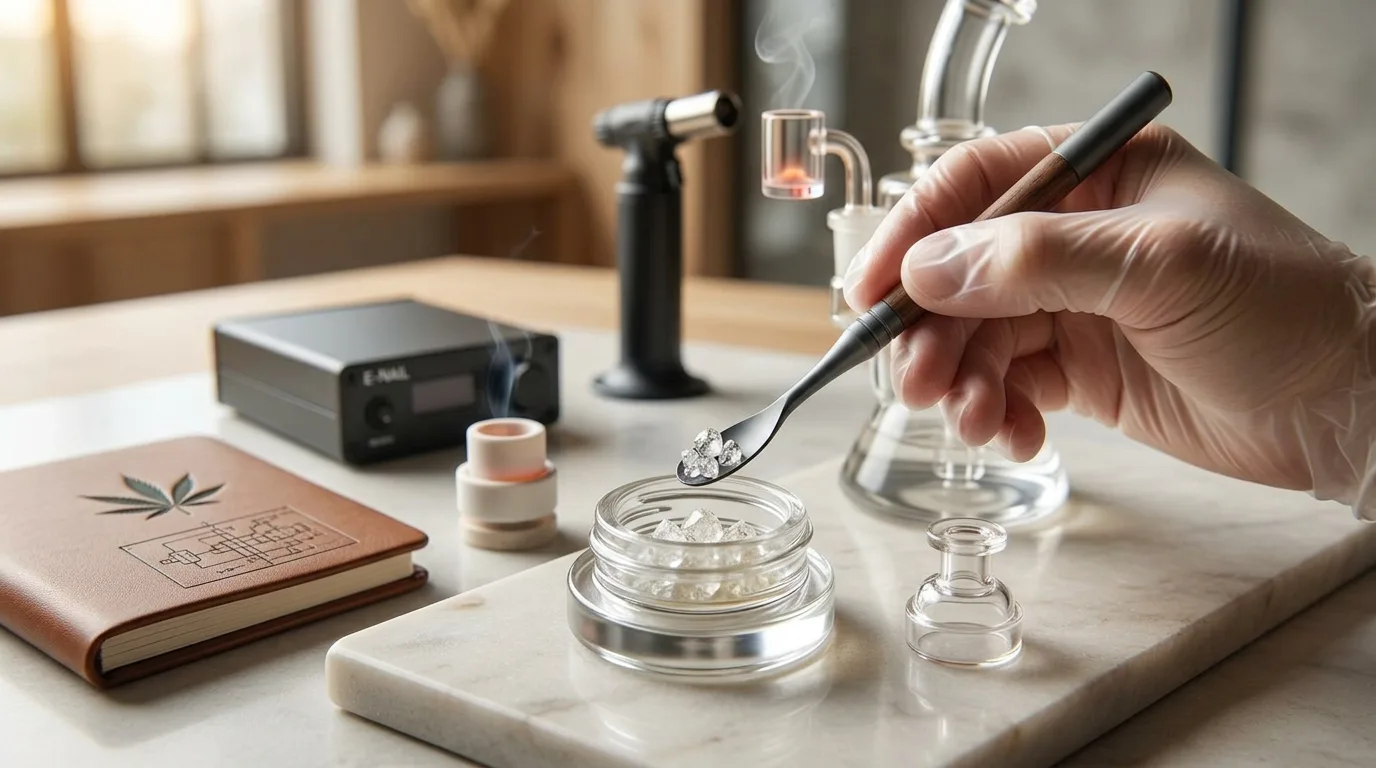
If you've been dabbing long enough to know the difference between a cold start and a hot dab, THC diamonds represent the next frontier in concentrate consumption. But here's what nobody mentions in the excitement over 99% purity: diamonds require a completely different approach than the shatter or budder you're used to. You can't just scoop a rice-grain-sized chunk onto a red-hot banger and expect good results. The crystalline structure, extreme potency, and frequent pairing with high-terpene sauce demand adjustments to every variable,portion size, temperature, technique, and timing.
This is not your first dab. You already own a torch, understand carb cap function, and know what low-temp means in theory. What follows is the technical execution that separates a harsh, wasteful diamond dab from the smooth, full-spectrum experience these concentrates are capable of delivering. We'll cover crumb-sized dosing, actual temperature ranges, how to handle sauce separation, and the specific mistakes that experienced dabbers make when they approach diamonds with shatter habits.
Understanding What Makes Diamonds Different to Dab
THC diamonds aren't just "stronger concentrates." The crystalline THCA structure and typical sauce pairing create handling and vapourization characteristics that diverge sharply from amorphous concentrates. When you understand these material differences, the technique adjustments make immediate sense.
Crystalline THCA vs. Amorphous Concentrates
THCA diamonds are solid crystals,litreal geometric structures at the molecular level. Unlike shatter, budder, or crumble, which are amorphous (without organized structure), diamonds don't melt uniformly. They sublime and decarboxylate in a specific temperature range. Too hot, and you're burning THCA before it converts to THC. Too cool, and you're left with unvaporized crystal residue in your banger.
The crystalline formation also means diamonds lack the terpene content of whole-plant extracts. Pure THCA crystals are nearly flavourless and deliver an effect profile that some users describe as one-dimensional. This is precisely why most diamonds come packaged in high-terpene extract (HTE) sauce,to reintroduce the entourage effect that raw crystals lack.
The Sauce Component and Why It Matters
When you open a jar of diamonds, you typically find crystals suspended in or sitting beneath a viscous, terpene-rich liquid. This sauce isn't filler,it's the flavour and entourage carrier. The ratio of diamonds to sauce varies by product and producer, but the presence of both components creates a dabbing challenge: do you take them together or separately?
Many experienced consumers stir the jar before each dab to coat crystals in sauce, creating a more balanced experience. Others intentionally separate them, taking pure crystal dabs for maximum potency or pure sauce dabs for flavour. Both approaches work, but they require different portion sizes and temperature targets.
Potency Implications for Dosing
A typical shatter dab might be 70-80% THC. Diamonds push 95-99% THCA. After decarboxylation (the heat conversion that activates THC), you're vapourizing near-absolute cannabinoid. This means your standard rice-grain dab is now delivering 20-30% more active THC than you're accustomed to. For context, a dab that looks "normal" can easily contain 40-60mg of THC,a dose that would floor most consumers if eaten as an edible.
The experienced-consumer trap is assuming tolerance scales linearly. It doesn't. The ceiling effect of cannabinoids means that at a certain point, more THC doesn't increase the high,it just increases side effects like anxiety, racing heart, or the dreaded "dab sweats." Diamonds push you into that zone faster than any other concentrate format.
Equipment Setup: What Actually Matters for Diamonds
You likely already own the core tools, but diamonds reward specific equipment choices that aren't critical for softer concentrates. Small adjustments to your rig setup make the difference between clean vapourization and wasted product.
Banger Material and Heat Retention
Quartz bangers are standard, but not all quartz performs equally with diamonds. Thick-bottom bangers (2.5mm+ base thickness) retain heat more evenly and allow for the gradual temperature drop that diamonds need. Thin bangers cool too quickly, leaving unvaporized crystal residue. If you're still using a thin-walled nail from your shatter days, you'll struggle with diamonds.
Ceramic and titanium nails work, but each has quirks. Ceramic holds low temps well but cracks under rapid thermal cycling. Titanium heats fast but requires obsessive temperature monitoring,the margin for error is narrow with diamonds. Most diamond enthusiasts settle on a quality quartz banger and learn its specific heat curve.
Temperature Measurement Tools
Guessing temperatures by glow colour doesn't cut it with diamonds. The ideal vapourization range for THCA is 500-550°F, which is cooler than most dabbers run for shatter. A few seconds of misjudgment means either burnt terps or wasted product.
Infrared thermometers or temp-reader devices that clamp onto your banger provide objective data. After heating your banger to glowing, you let it cool to the target range, then drop your dab. Over time, you learn the exact cool-down duration for your specific torch and banger combination, but a thermometer eliminates guesswork during the learning curve.
Carb Cap Function and Airflow
Carb caps aren't optional for diamonds,they're load-bearing equipment. The restricted airflow and pressure reduction inside a capped banger lower the effective vapourization temperature, letting you extract cannabinoids at lower heat. This is critical for preserving terpenes in the sauce component and preventing harsh hits.
Directional carb caps that create a vortex airflow pattern help distribute heat across crystalline chunks that don't melt uniformly. If your cap just sits flat and seals, you're leaving potency on the table. The swirling airflow keeps vapour moving and encourages even vapourization of both crystals and sauce.
Portion Size and Preparation: The Crumb Principle
This is where experienced dabbers make their first mistake: they eyeball a "normal" dab and don't account for the potency jump. With diamonds, portion control isn't about restraint,it's about pharmacology.
What "Crumb-Sized" Actually Means
A proper diamond dab for most experienced consumers is roughly the size of a match head or smaller,a litreal crumb if the crystal breaks cleanly. Held in your palm, it should barely be visible. This feels insultingly small to anyone who's been taking standard concentrate dabs, but the math is unforgiving: a 3mm crystal chunk can easily contain 25-35mg of THCA.
If you're combining crystal and sauce, the portion might look slightly larger because sauce is less dense, but the active cannabinoid load remains the same. Many consumers find that their "comfortable" diamond dab is 40-50% smaller by volume than their standard shatter dab.
Separating Diamonds from Sauce
Most diamond products arrive with crystals and sauce separated or settling into layers. To prepare a balanced dab, use your dab tool to gently stir the jar, coating crystals in sauce. This creates a mixture where each dab pulls both components proportionally.
If you prefer to isolate them, it's easier to scoop sauce-free crystals from the top or pull pure sauce from the bottom edges. Some consumers do this intentionally,crystals for maximum effect, sauce for flavour during tolerance breaks. The key is deliberate choice, not random scooping that gives you unpredictable ratios.
Breaking Larger Crystals
Large diamonds are impressive but impractical for single dabs. Use your dab tool to apply pressure at crystal edges, breaking off smaller fragments. Don't crush them into powder,you want intact crumbs that vapourize cleanly, not dust that burns. If a crystal resists breaking, warm your tool slightly with the torch (away from the crystal) to help it cleave along natural fracture lines.
Store broken fragments in the same jar so they remain coated in sauce. Dry crystals exposed to air can lose the little terpene content they've absorbed and become harsher to dab.
The Low-Temperature Dab Technique for Diamonds
Temperature control is everything with diamonds. The technique that worked for your last gram of shatter will waste product and deliver a harsh experience here. This is the step-by-step execution that experienced consumers actually use.
Heat and Cool-Down Timing
Heat your quartz banger until it glows faintly orange,this typically takes 20-30 seconds with a standard torch. Then start your timer and let it cool. For most thick-bottom bangers, the target 500-550°F range arrives 35-50 seconds after you stop heating. This varies by banger thickness and ambient temperature, which is why a thermometer eliminates guesswork during your first dozen dabs.
The cooling phase is non-negotiable. Red-hot or even visibly glowing bangers will combust terpenes instantly and give you the classic "dab cough" that experienced consumers are trying to avoid. You want the banger hot enough to vapourize THCA, but cool enough to preserve the sauce terps.
Dropping the Dab and Immediate Capping
Once your banger reaches temp, use your dab tool to drop the crystal-sauce mixture onto the banger floor, not the walls. Immediately place your carb cap and begin a slow, steady inhale. Don't pull hard,gentle, controlled airflow gives the vapour time to form and prevents you from yanking unvaporized material through the rig.
With diamonds, you'll notice the vapourization happens in stages. The sauce vapourizes first, releasing terpenes and creating immediate flavour. The crystals sublime more slowly, producing dense, potent vapour. If you rush the inhale, you miss the crystal vapourization and waste half your dab.
Stirring and Secondary Vapourization
Here's the technique that separates casual from experienced diamond dabbers: mid-dab stirring. After your initial inhale, lift the carb cap briefly and use your tool to stir any remaining crystal fragments, spreading them across the hot banger surface. Re-cap immediately and take a second inhale.
This ensures complete vapourization of crystals that didn't make full contact on the first drop. It also prevents the "puddle waste" problem where unvaporized concentrate pools in the banger and burns during your next heat cycle, creating residue buildup.
The Cold-Start Alternative
Cold-start (reverse) dabbing works exceptionally well with diamonds. Load your dab into a room-temperature banger, place the carb cap, then apply heat while inhaling slowly. You're watching for the first wisps of vapour,the moment you see them, stop heating and continue your inhale. This method guarantees you never overshoot the temperature and allows for extremely precise control.
The downside is that cold-starting requires more attention and practice to master consistent results. It's ideal for consumers who've struggled with traditional timing methods or who want maximum terpene preservation.
Common Mistakes Experienced Dabbers Make with Diamonds
You know how to dab. But diamonds punish assumptions that worked fine with other concentrates. These are the errors that show up in online forums and friend groups,the mistakes that experienced consumers make precisely because they're experienced.
Treating Diamonds Like Shatter (The Potency Miscalculation)
This is the number-one rookie error by veterans: assuming your shatter tolerance transfers directly. It doesn't. A standard-sized dab of 99% THCA diamonds delivers 20-40% more active THC than the same volume of 70% shatter. The result is the classic "I took too much" experience,sweating, anxiety, racing heart, couch-lock, or the need to lie down.
Your cannabinoid receptors don't care about your pride. Start with embarrassingly small portions (match-head size) for your first few diamond sessions and scale up only if the effect is underwhelming. Most consumers find their sweet spot is significantly smaller than expected.
Running Too Hot and Burning Terpenes
Diamonds can technically vapourize at higher temps, but you'll lose the entire point of the sauce component. Temperatures above 600°F combust terpenes, leaving you with a harsh, flavourless hit and a wasted premium product. If your diamonds taste like burnt hair or make you cough violently, you're running too hot,period.
The irony is that experienced dabbers often develop high-temp habits with shatter, which is more forgiving. Diamonds demand a return to low-temp discipline. Use a thermometer for your first dozen sessions until you internalize what 500-550°F looks and feels like with your specific setup.
Ignoring the Sauce-to-Crystal Ratio
Not all diamond products have the same ratio, and failing to account for this causes inconsistent experiences. A jar that's 70% crystal and 30% sauce requires different handling than one that's 50/50. Stir before every dab to maintain ratio consistency, or track which products require separated handling.
Some consumers make the mistake of using all the sauce first (because it's easier to scoop), leaving them with dry crystals for the second half of the jar. This creates harsh dabs and one-dimensional effects. Discipline here means better experiences throughout the product's lifespan.
Inadequate Banger Cleaning Between Sessions
Diamonds leave more residue than softer concentrates because the crystalline structure doesn't vapourize as uniformly. Letting this residue accumulate between dabs creates a buildup that burns at lower temps, producing harsh, off-flavour hits that contaminate future dabs.
Q-tip your banger immediately after each dab while it's still warm,not hot. One dry swab to remove bulk residue, one ISO-dampened swab to clean remaining film. This 15-second habit prevents the "permanently chazzed banger" that ruins future diamond sessions and forces expensive equipment replacement.
Optimizing the Diamond Dab Experience
Once you've mastered the technical fundamentals, these advanced considerations separate good diamond dabs from exceptional ones. This is the domain of enthusiasts who've moved past "getting high" into appreciating the craft.
Pairing Diamonds with Complementary Concentrates
Because pure THCA lacks terpene complexity, some consumers combine diamonds with small amounts of live resin or terp sauce in the same dab. This creates a custom cannabinoid-to-terpene ratio that you can't buy pre-made. The live resin contributes flavour and entourage compounds; the diamonds contribute raw potency.
The technique: scoop a crumb of diamond, then touch your dab tool to a separate jar of live resin to pick up a small amount. The combined dab delivers both power and complexity. Experiment with ratios,most consumers settle around 70% diamond, 30% resin for balanced effects.
Timing Diamonds for Maximum Effect
Because of their extreme potency, diamonds work best when your tolerance is relatively low,first thing in the morning, or after a 12+ hour break. Using them as your fourth or fifth dab of the day yields diminishing returns. Your receptors are already saturated; the additional THC doesn't increase the high proportionally.
Strategic timing also means considering what you need from the session. Diamonds deliver peak effects within 5-10 minutes and tend to produce a more cerebral, focused high than full-spectrum concentrates. For creative work, problem-solving, or activities requiring engagement, they can outperform indica-heavy sauces. For sleep or deep relaxation, pairing diamonds with a high-terpene indica concentrate creates better results.
Hydration and Environment Management
High-potency dabs dehydrate you faster than flower or edibles. The combination of heat exposure, deep inhalation, and cannabinoid effects on saliva production means you need water before, during, and after diamond sessions. Keep a large glass within reach,you'll need it.
Environment also matters more than with lower-potency methods. A 50mg diamond dab in a hot, poorly ventilated room amplifies negative side effects. Cool temperatures, good airflow, and a comfortable seated position prevent the "dab sweats" and disorientation that can accompany high-dose sessions.
Documenting Your Technique Variables
Experienced consumers who want consistency track their technique variables in a simple notebook or phone app: product name, dab size (in mm or mg if you have a scale), banger cool-down time, effect quality, and duration. After a dozen documented sessions, patterns emerge that tell you exactly what works for your biology and setup.
This sounds obsessive, but it's the difference between random good sessions and reliable technique. You'll discover that Brand X's diamonds need 5 seconds more cool-down than Brand Y's, or that morning dabs need to be 30% smaller than evening ones for equivalent effects.
Troubleshooting Poor Diamond Dab Experiences
Even with correct technique, you'll encounter problems. Here's how to diagnose and fix the most common diamond-specific issues that trip up experienced consumers.
Harsh, Cough-Inducing Hits
If your diamond dabs make you cough violently despite proper portion size, temperature is almost always the culprit. You're either running too hot (above 600°F), or your banger has accumulated residue that's combusting. Try these corrections in order: extend your cool-down time by 10 seconds, deep-clean your banger with ISO and heat cycling to remove buildup, verify your temp with a thermometer. Harshness is never normal with properly executed low-temp dabs.
Weak or Underwhelming Effects
Paradoxically, this can indicate you took too much, not too little. Above a certain THC threshold, your body's cannabinoid receptors can't process additional input effectively,you plateau rather than climb. If your diamond dabs feel weaker than expected, try cutting your portion size in half for the next session. Many consumers report stronger, clearer effects from smaller, properly vapourized dabs than from large, partially wasted ones.
Alternatively, receptor saturation from frequent use means you need a tolerance break, not a bigger dab. Diamonds can't overcome fundamental biology.
Leftover Puddle or Residue in Banger
Unvaporized material pooling in your banger indicates insufficient heat or poor distribution. Solutions: confirm you're hitting the proper temp range with a thermometer, use a directional carb cap to improve vapour circulation, implement mid-dab stirring to spread crystals across the hot surface. If you're still leaving puddles with confirmed temps, your dab size is too large for your banger's heat capacity,go smaller or upgrade to a thicker-bottom banger.
One-Dimensional or "Empty" High
If your diamond dabs feel potent but lack the richness or complexity you expect from cannabis, you're experiencing the terpene-deficiency problem. Pure THCA crystals deliver cannabinoid effects without the entourage compounds that create full-spectrum experiences. Fix this by ensuring you're scooping sauce with every crystal dab, or intentionally pairing diamonds with terpene-rich concentrates like live resin.
This isn't a technique problem,it's a product selection issue. Some diamond products are crystal-heavy by design. If sauce ratios matter to you, choose products specifically marketed as "diamonds in sauce" with visible liquid content.
Safety and Responsible Consumption
This section isn't filler,extreme-potency concentrates deserve specific safety considerations that don't apply to flower or lower-concentration extracts.
Know Your Limits and Have an Exit Plan
A 60mg diamond dab can push even experienced consumers into uncomfortable territory. Before your session, establish your setting and have a plan if effects become overwhelming. This means: comfortable environment, snacks and water within reach, no obligations for the next 3-4 hours, and access to CBD if you keep it on hand (CBD can moderate THC's effects).
If you over-dab, the standard protocols apply: hydrate, eat something, lie down in a cool, dark room, and remember that you're not in danger,you're just uncomfortably high. It will pass in 1-2 hours.
Avoid Mixing with Alcohol or Other Substances
Diamonds alone are already pushing your system hard. Combining them with alcohol, stimulants, or other psychoactive substances compounds effects unpredictably and can trigger anxiety, nausea, or dangerous impairment. If you're going to consume alcohol, wait at least 3 hours after your diamond dab and start with minimal quantities.
Driving and Operating Equipment
This should be obvious, but high-potency concentrates impair coordination, reaction time, and judgment for 3-6 hours after consumption,longer than most flower sessions. Do not drive, operate machinery, or engage in activities requiring full cognitive function during this window. Tolerance doesn't make you sober; it just makes impairment feel more normal.
Canadian law treats cannabis impairment seriously, and consuming products from legal sources doesn't protect you from DUI charges. Plan your sessions around your schedule accordingly.
For consumers exploring concentrates beyond diamonds, understanding the full spectrum of extraction formats helps optimize your arsenal. THC diamonds represent the purity extreme.