When you see "95% THC" printed on a package of flower or a cartridge, your first question should be: is that even possible? With most cannabis products, the answer is no. Marketing teams love to print high numbers, and consumers love to believe them, but plant matter has physical limits. Even the most potent flower tops out around 35% THC by dry weight, and most extracts hover between 60% and 85%. So when someone shows you a jar of crystalline rocks labelled "99.9% THCa," your skepticism is justified. Except this time, they're telling the truth.
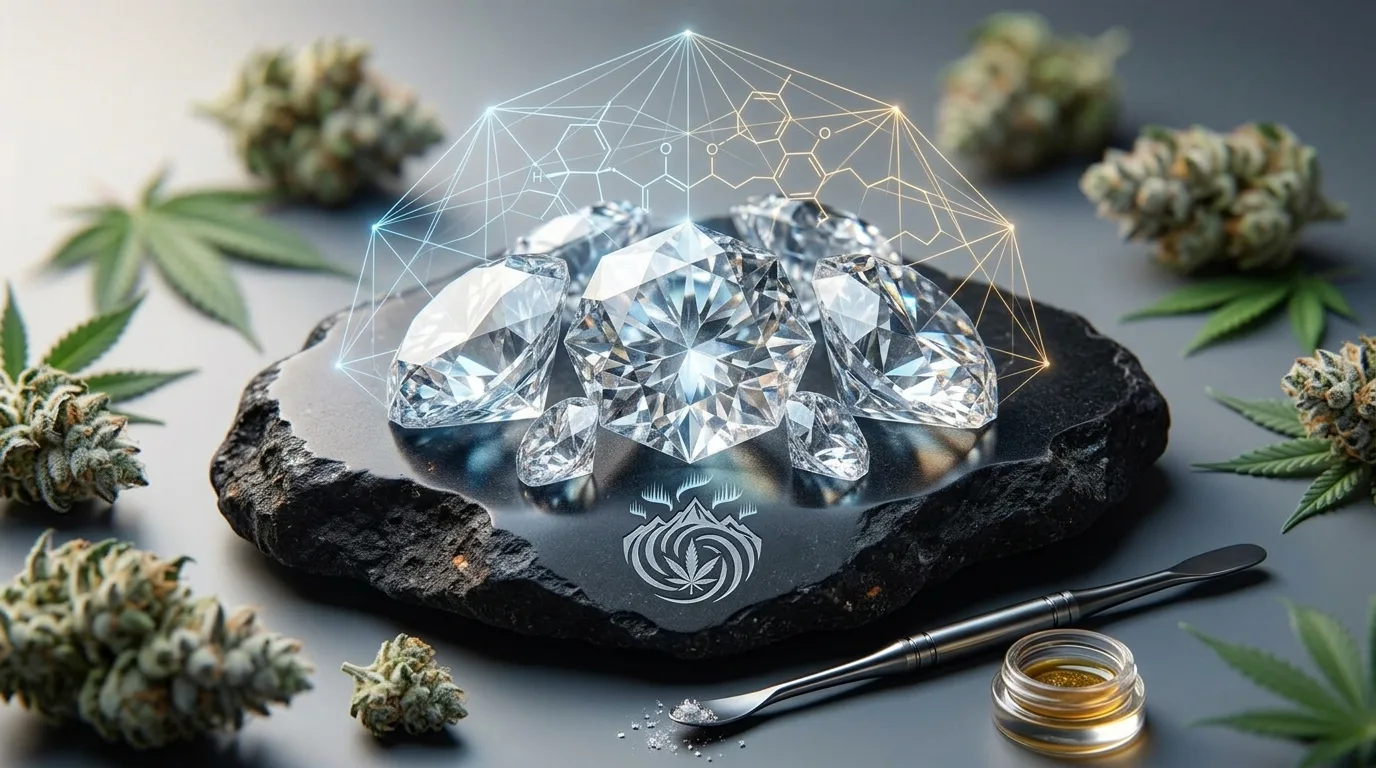
THC diamonds, also called THCa crystalline or THC crystals, are one of the only cannabis products where near-100% potency numbers are chemically accurate. These translucent, faceted chunks aren't marketing hype. They're the result of a specific extraction and crystallization process that isolates cannabinoid molecules from everything else in the plant: terpenes, lipids, chlorophyll, and even other cannabinoids. What you're left with is pure THCa in its crystalline form, the same way salt or sugar form crystals when dissolved compounds precipitate out of solution. And just like table salt is nearly 100% sodium chloride, properly made THC diamonds can reach 99% or higher THCa content.
What Makes THC Diamonds Different From Every Other Concentrate
To understand what THC diamonds actually are, you need to understand the distinction between an extract and an isolate. Most cannabis concentrates are extracts: they pull the good stuff out of the plant, but they keep a mix of cannabinoids, terpenes, and minor compounds together. Shatter, wax, budder, live resin, and even rosin are all extracts. They concentrate cannabinoids compared to flower, but they're still complex mixtures.
THC diamonds are an isolate. The process doesn't just concentrate THC. It separates it. The result is a singular compound in its purest possible form. If you were to send a diamond to a lab, the chromatography report would show one massive peak for THCa and almost nothing else. No CBD, no CBG, no terpenes unless they've been added back in later. Just crystallized THCa, row after row of identical molecules stacked in a lattice structure visible to the naked eye.
The Science Behind Crystallization
THCa crystalline forms through a process called fractional crystallization, borrowed from chemistry labs and pharmaceutical production. After initial extraction using a solvent like butane or ethanol, the crude oil undergoes a series of refinement steps: winterization to remove fats and waxes, filtration to eliminate plant particulates, and then controlled evaporation or temperature manipulation in a pressure vessel. As the solution becomes supersaturated with THCa, molecules begin to bond together in repeating patterns, forming visible crystals over days or weeks.
The process requires patience and precision. If the temperature drops too quickly or the solvent evaporates too fast, you get powder or sugar instead of large diamonds. Commercial producers use specialized equipment to control pressure, temperature, and agitation, allowing crystals to grow slowly into the chunky, faceted formations consumers recognize. Some batches produce crystals the size of a grain of rice, others grow to the size of a fingernail. The larger the crystal, the longer the process took, and usually the purer the final product.
Why the Numbers Are Real This Time
When a flower label says "32% THC," that number includes all the plant matter: cellulose, water weight, chlorophyll, hundreds of other compounds. The actual THC molecules make up less than a third of what you're weighing. But when a diamond label says "99% THCa," you're weighing almost nothing but THCa molecules. There's no plant matter left to dilute the number. The crystal is the cannabinoid.
This is the one category where a 90s potency claim is chemically legitimate, and it's important to understand what that means practically. A single 100mg piece of 99% THCa diamond contains roughly 99mg of THCa, which converts to about 87mg of active THC when heated. Compare that to 100mg of flower at 25% THC, which contains 25mg of THC plus 75mg of plant matter. The concentration difference is real, measurable, and significant for dosing.
THCa vs THC: Why Diamonds Don't Get You High Until You Heat Them
Here's the part that confuses most first-time buyers: THC diamonds are not THC. They're THCa, the acidic precursor to THC that exists in raw cannabis plants. THCa and THC are almost identical molecules, just one carboxyl group apart, but that tiny difference changes everything about how they interact with your body. THCa is non-intoxicating. You could eat a gram of pure THCa diamonds and feel nothing beyond maybe some mild anti-inflammatory effects.
THC, the compound that binds to CB1 receptors in your brain and produces euphoria, only forms when you apply heat. The process is called decarboxylation: heat energy breaks the carboxyl group off the THCa molecule, converting it into THC. This happens every time you smoke flower, vapourize oil, or dab concentrates. The lighter, the torch, the heating element, they're all performing the same chemical transformation.
Decarboxylation in Plain English
When you heat THCa to around 220-250°F (105-120°C), the molecule becomes unstable. The carboxyl group (COOH) breaks away, releasing it as CO2 gas, and what's left behind is THC. This happens rapidly at dabbing temperatures (500-700°F) and more slowly at lower vapourization temperatures. It's the same reason you have to bake cannabis butter before using it in edibles. Raw flower won't get you high because the THCa hasn't converted yet.
In the context of diamonds, this means your consumption method matters. Dabbing them on a hot nail instantly converts the THCa to THC, which vapourizes and enters your lungs. Vapourizing them at controlled temperatures does the same thing more gently. But if you tried to sprinkle diamond powder on food without heating it first, you'd waste your money. The THCa would pass through your system unconverted and inactive.
The 87% Conversion Rate
THCa doesn't convert to THC at a 1:1 ratio. The molecular weight difference means 100mg of THCa becomes roughly 87.7mg of THC after decarboxylation. The missing 12.3% is the mass of the carboxyl group that breaks off as CO2. This is why lab reports on raw flower list both "Total THC" (the amount you'd get after heating) and "THCa" (the amount currently present). For diamonds labelled 99% THCa, the effective THC content after dabbing is around 87%.
Even at 87%, that's still far more concentrated than any other form of cannabis you can buy. It's more than twice as potent as most shatter or wax, three times as potent as strong flower, and vastly more concentrated than edibles by weight. This extreme potency is exactly why diamonds appeal to experienced consumers and medical patients, but it's also why they require respect and careful dosing.
How THC Diamonds Are Made: From Crude Oil to Crystalline Isolate
The production of THC diamonds starts the same way as other concentrates: solvent-based extraction. Processors pack cannabis flower or trim into columns and wash it with a hydrocarbon solvent, usually butane, propane, or a blend. The solvent dissolves cannabinoids, terpenes, and other compounds out of the plant matter, creating a crude oil loaded with everything the plant produced.
From here, the process diverges from standard concentrate production. Instead of purging the solvent quickly to make shatter or whipping it into budder, the crude oil undergoes additional refinement steps designed to isolate THCa specifically.
Step One: Winterization and Filtration
The crude extract gets dissolved in ethanol and chilled to sub-zero temperatures, a process called winterization. At these low temperatures, fats, waxes, and lipids solidify and can be filtered out, leaving behind a cleaner solution of cannabinoids and terpenes. After filtration, the ethanol is evaporated off, leaving a more refined oil.
This refined oil still contains a mix of cannabinoids and terpenes, but it's now clean enough for the next step. Some producers perform multiple rounds of winterization to achieve higher purity before moving to crystallization.
Step Two: Controlled Crystallization
The refined oil goes into a controlled environment, often a pressure vessel or mason jar, along with a small amount of residual solvent or a specific solvent chosen for crystallization. The container is sealed and kept at a precise temperature, usually slightly warm, for an extended period. Over days or weeks, THCa molecules begin to separate from the terpene-rich liquid and bond together, forming visible crystals.
The terpene-rich liquid left behind is often called "sauce" or "terp sauce," and many producers sell it separately or leave the diamonds sitting in it for what's marketed as "diamonds in sauce." The sauce typically contains 30-50% cannabinoids plus a high concentration of terpenes, giving it intense flavour and aroma. The diamonds themselves are nearly flavourless since they contain almost no terpenes.
Step Three: Separation and Purging
Once the crystals reach the desired size, they're separated from the sauce. Any remaining solvent is purged using vacuum ovens at low heat, ensuring the final product is safe for consumption. The diamonds are then packaged, often in airtight glass jars to preserve their structure and prevent moisture absorption.
The entire process from extraction to finished diamonds can take anywhere from two weeks to two months, depending on the desired crystal size and purity level. This time investment, combined with the specialized equipment and expertise required, is why THC diamonds typically cost more per gram than other concentrates despite being derived from the same starting material.
How to Use THC Diamonds: Consumption Methods and Dosing
Because of their crystalline structure and extreme potency, THC diamonds require specific consumption methods. You can't roll them in a joint or pack them in a bowl like flower. The crystals need to reach vapourization temperature, which means you're looking at dabbing equipment or specialized vapourizers.
Dabbing: The Primary Method
Dabbing is by far the most common way to consume THC diamonds. You'll need a dab rig (a water pipe designed for concentrates), a torch or e-nail to heat the nail (the bowl-like piece where the concentrate goes), and a dab tool to handle the crystals. Heat the nail to around 500-650°F, wait a few seconds for it to cool slightly if using a torch, then touch the diamond to the hot surface. It will instantly vapourize, and you inhale the vapour through the rig.
The high heat instantly converts the THCa to THC and vapourizes it in one motion. The water filtration cools the vapour, making it easier on your lungs than direct flame combustion. Start with a piece the size of a grain of rice if you're new to diamonds. Even experienced concentrate users are often surprised by how far a tiny amount goes.
Vapourizers and E-Nails
Electronic nails and concentrate vapourizers offer more temperature control than torches, allowing you to dial in the exact heat level. Lower temperatures (around 450-550°F) preserve more terpenes if you're using diamonds mixed with sauce, while higher temperatures (600-700°F) provide more complete vapourization of pure crystals. Electronic options also eliminate the need for a butane torch, which some consumers prefer for safety or convenience.
Some portable vapourizers designed for concentrates can handle diamonds if you crush them into smaller pieces first. The key is ensuring your device can reach and maintain temperatures high enough for full decarboxylation and vapourization.
Mixing With Flower or Other Concentrates
Experienced users sometimes crush small amounts of THC diamonds and sprinkle them onto flower in a bowl or mix them with other concentrates before dabbing. This "supercharges" the potency of whatever you're already consuming. A tiny sprinkle of diamond powder can take a bowl from 20% THC to effectively 40% or more. Just remember that the diamonds need heat to activate, so this method only works if you're smoking or vaping the mixture, not if you're using it in edibles.
Dosing Guidelines for Different Tolerance Levels
Because THC diamonds are so concentrated, dosing becomes critical. A piece the size of a grain of rice weighs roughly 10-20mg. At 99% THCa, that's about 10-20mg of THCa, converting to roughly 9-17mg of active THC when dabbed. For reference, 10mg is considered a strong dose for many edible users, and inhaled THC hits faster and harder than edibles.
If you're new to concentrates, start with a piece half that size or smaller. Wait ten minutes to assess the effects before considering more. Experienced concentrate users with high tolerance might dab 50-100mg at once, but that level of consumption isn't necessary or advisable for most people. Unlike flower, where you can take a few hits and set it down, a dab is a single-dose experience. You get the full amount at once, so dose carefully.
For readers exploring high-potency products across different formats, our guide on high-dose edibles and who 500mg+ products are actually for provides context for understanding extreme potency levels across consumption methods.
THC Diamonds vs Other Concentrates: Where They Fit in the Lineup
The concentrate market offers dozens of textures and potency levels, each with trade-offs. Understanding where diamonds fit relative to other options helps you make informed decisions based on your priorities: flavour, potency, price, or ease of use.
Diamonds vs Shatter
Shatter is a translucent, glass-like concentrate that typically tests between 60-80% THC. It's made through a similar extraction process but without the crystallization step. Shatter retains some terpenes, giving it more flavour than pure diamonds, and it's generally less expensive. The potency difference is significant though: diamonds can be 20-40% more potent by weight. If maximum potency is your goal, diamonds win. If you want a balance of flavour and strength at a better price, shatter might be the better choice.
Diamonds vs Live Resin
Live resin is made from fresh-frozen cannabis instead of dried flower, preserving a fuller terpene profile. It typically tests between 65-85% THC but offers significantly more flavour and aroma than diamonds. Live resin is about the experience: the taste, the smell, the entourage effect from having multiple cannabinoids and terpenes present. Diamonds are about pure potency. Many consumers prefer live resin for its sensory experience, while others prefer diamonds for medical use or extreme tolerance situations. Some producers combine both by selling diamonds in terp sauce, attempting to offer both benefits.
Diamonds vs Rosin
Rosin is a solventless concentrate made with heat and pressure instead of chemical extraction. It's popular among consumers who prefer products made without solvents, and it retains a robust terpene profile. Rosin typically tests between 60-80% THC. While it's possible to make rosin diamonds through a technique called "jar tech," they're much rarer and more expensive than standard rosin. For solventless purists, rosin is the concentrate of choice. For maximum potency regardless of production method, solvent-based THC diamonds deliver higher numbers.
Diamonds vs Distillate
Distillate is another isolate-level product, made through distillation rather than crystallization. It's a thick, golden oil that can reach 85-95% THC (not THCa, but already-converted THC). Distillate and diamonds are similar in potency but differ in form and production. Distillate is easier to work with for making edibles or filling cartridges because it's liquid at room temperature. Diamonds are solid crystals better suited for dabbing. Both are highly refined and relatively flavourless without added terpenes. The choice between them usually comes down to intended use: distillate for versatility, diamonds for dabbing.
Those interested in understanding concentrate varieties more broadly should read our explanation of shatter as a glass-like concentrate and our guide to live resin and fresh-frozen extraction.
Who Actually Benefits From 99% Potency Products
THC diamonds aren't for everyone, and that's perfectly fine. Their extreme concentration makes them ideal for specific use cases and less suitable for others. Understanding who actually benefits from near-100% potency helps set realistic expectations and prevents waste or uncomfortable experiences.
Medical Patients With High Cannabinoid Needs
Some medical cannabis patients require high doses to manage symptoms: chronic pain, severe nausea, muscle spasticity, or other conditions that respond to cannabinoid therapy. For these patients, diamonds offer the most cost-effective way to consume large amounts of THC. One 100mg dab delivers as much THC as smoking multiple grams of flower, and it does it in seconds rather than over an hour of continuous consumption.
The lack of terpenes in pure diamonds can be an advantage here too. Some medical users find terpenes irritating or want to avoid specific flavours. Pure THCa crystals deliver therapeutic effects without the sensory experience, allowing patients to pair them with specific terpene profiles if desired or use them flavourlessly.
Experienced Consumers With High Tolerance
Long-term daily consumers often develop tolerance to THC, requiring larger doses to achieve the same effects they once got from small amounts. For these users, flower becomes inefficient. Smoking enough to feel desired effects means consuming large quantities, which is time-consuming and harsh on the lungs. Diamonds compress that dose into a single inhalation, making consumption faster and less irritating.
High-tolerance users also appreciate the economic efficiency. While diamonds cost more per gram than flower, they contain 3-4 times more THC per gram. You need far less product to achieve the same effect, which often makes them more cost-effective for heavy users despite the higher sticker price.
Concentrate Connoisseurs and Competitive Consumers
Some cannabis consumers simply enjoy pushing limits, experimenting with the strongest products available, or collecting rare and exotic concentrates. For this group, diamonds represent the peak of potency, the closest you can get to pure THC in a dabbable form. They're a status item, a conversation piece, and a way to explore the absolute ceiling of cannabis intensity.
This use case is recreational rather than medical, and that's valid too. Cannabis culture includes people who appreciate extremes the same way hot sauce enthusiasts seek out ghost peppers or coffee lovers chase espresso pulled at perfect pressure. Diamonds are the cannabis equivalent: technically impressive, experientially intense, and not necessary for most people but meaningful to those who seek them out.
Who Should Probably Skip Diamonds
New consumers, infrequent users, and people with low tolerance have no practical use for 99% THCa diamonds. The potency is overkill, the dosing is difficult to control in small amounts, and the price premium isn't justified when lower-potency products would deliver the same subjective experience. If 15-20mg of THC is your target dose, there's no advantage to getting it from diamonds instead of flower or standard concentrates.
Similarly, if you value flavour and aroma in your cannabis experience, pure diamonds disappoint. They're nearly tasteless. Diamonds in sauce solve this problem somewhat, but at that point you're paying premium prices for what's essentially live resin with crystals added. Many consumers prefer concentrates that balance potency with terpene content rather than chasing maximum THC percentage.
How to Store and Handle THC Diamonds Properly
THC diamonds are remarkably stable compared to other cannabis products. Crystalline THCa doesn't degrade as quickly as terpene-rich concentrates or flower, and it's resistant to oxidation. But proper storage still matters if you want to preserve quality and prevent contamination.
Container and Seal
Store diamonds in airtight glass containers, preferably the jar they came in if purchased from a reputable source. Avoid plastic containers for long-term storage, as THC can bond to certain plastics over time, and plastics can leach chemicals. Medical-grade silicone containers are acceptable for short-term storage or transport but aren't ideal for months-long storage.
Ensure the container seals tightly. While diamonds themselves are stable, exposure to air can introduce moisture, which can affect texture and potentially introduce mold if you're storing diamonds in sauce. A good seal also prevents terpenes from evaporating if you're keeping them with sauce.
Temperature and Light
Keep diamonds in a cool, dark place. Room temperature is fine for short-term storage (days to weeks), but if you're keeping them longer, consider refrigeration. Cold temperatures slow any degradation processes, though you'll want to let the jar warm to room temperature before opening it to prevent condensation from forming on the crystals.
Avoid direct sunlight or heat sources. UV light can degrade cannabinoids over time, though diamonds are less susceptible to this than flower or oil. Heat won't melt diamonds the way it would shatter or budder, but it can cause sauce to separate or terpenes to evaporate if present.
Handling Technique
Use a clean dab tool every time you handle diamonds. Contamination from fingers, dirty tools, or other substances can introduce bacteria or change the chemical composition. If you're breaking larger crystals into smaller pieces, do it inside the container or on a clean, non-porous surface.
Some users keep a dedicated tool for diamonds to avoid cross-contamination with other concentrates. This is especially important if you're mixing different products or if you have allergies or sensitivities.
The Market Reality: Pricing, Availability and What to Expect
THC diamonds occupy the premium tier of concentrate pricing in the Canadian market. Expect to pay anywhere from $40 to $80+ per gram depending on purity, brand, and whether they're sold with terp sauce or as pure isolate. Bulk pricing sometimes drops the per-gram cost, but diamonds remain one of the more expensive concentrate options.
This pricing reflects production complexity, not just marketing. The crystallization process takes weeks and requires specialized equipment and expertise. Yields are lower than standard concentrate production because the refinement process removes so much material. What you're paying for is the time, precision, and purity level that makes diamonds unique.