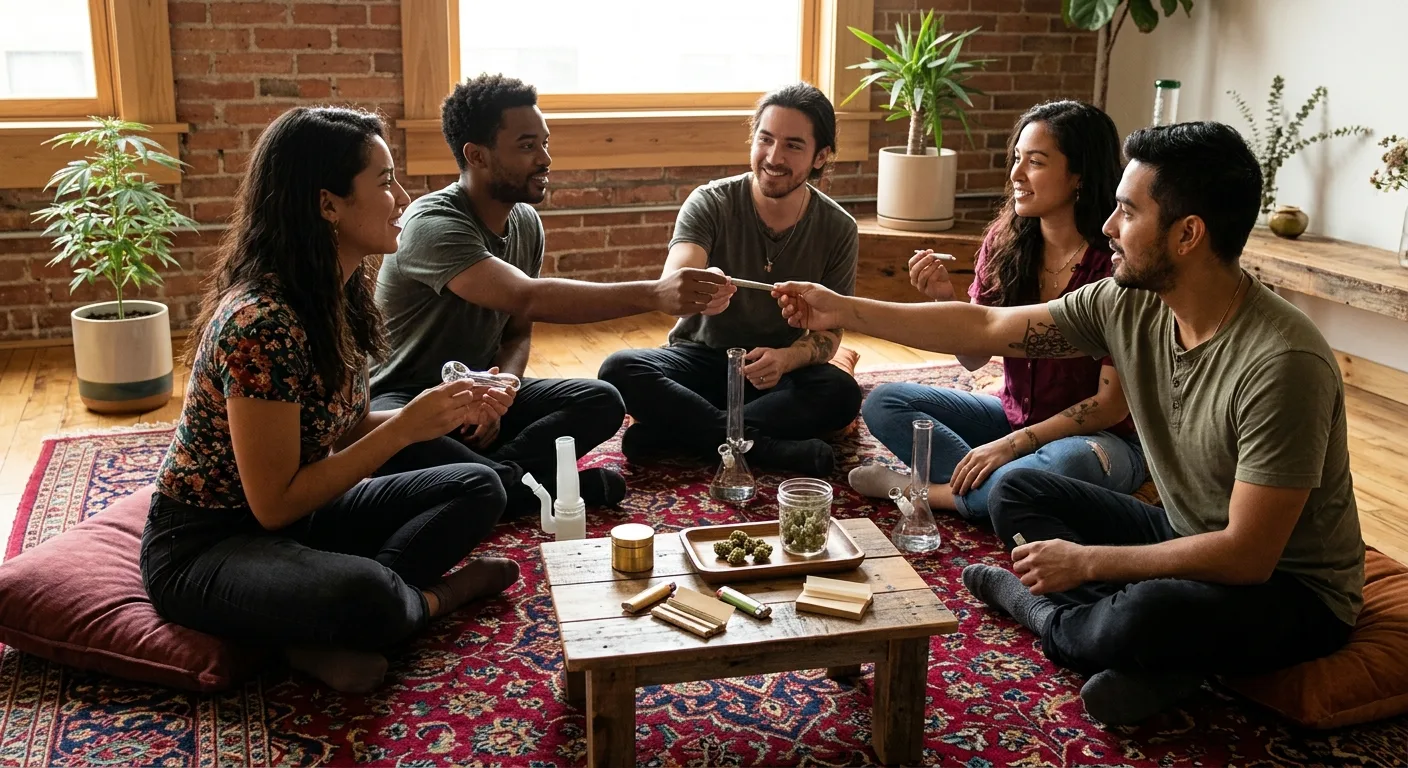
You've been invited to a smoke session. The anticipation builds as you head over with your favourite lighter and a good mood, ready to vibe. But the moment you sit down, you notice someone torching the entire top of the bowl instead of cornering it. Another person interrupts the rotation to tell a ten-minute story while holding the joint. Someone else brought absolutely nothing but still reaches for seconds. Suddenly, what should be a chill hang feels a bit... off.
Welcome to the world of weed session etiquette, the invisible rulebook that separates smooth, enjoyable smoke circles from awkward, tension-filled disasters. Whether you're passing around a bong in a Toronto apartment or sharing pre-rolls at a cottage weekend, these unwritten social codes keep everything flowing. This guide breaks down the essential rotation rules, cornering techniques, contribution expectations, and hosting basics that make cannabis consumption a genuinely social art form in Canada's legal landscape.
Understanding the Sacred Circle: How Rotation Actually Works
At the heart of every group smoke session lives one fundamental principle: the rotation. This isn't just about fairness, though that matters. The rotation creates rhythm, establishes turn-taking, and prevents the chaos of everyone reaching for the piece simultaneously. In most Canadian cannabis circles, the standard rotation follows a simple left-to-right or right-to-left pattern, determined by whoever sparked up first.
The person who provides the cannabis or rolls the joint typically gets "roller's rights," meaning they light up first and set the direction. From there, the piece moves consistently in one direction around the circle. This seems obvious until you're in a group of eight people sprawled across a living room, someone new walks in mid-session, or the host needs to step away to answer the door. That's when the unspoken awareness kicks in.
The Two-Puff Rule and When to Break It
The classic standard remains "puff, puff, pass," meaning you take two reasonable hits before passing. This strikes a balance between giving everyone their turn and allowing each person enough intake to feel the effects. The keyword here is reasonable. Two quick puffs are not the same as two massive, lung-bursting rips that leave you coughing for thirty seconds while everyone waits.
However, context matters. In a smaller circle of close friends, the rotation might naturally relax. Someone might hold onto a joint while finishing a sentence or take an extra hit without anyone caring. In larger groups or sessions with people you don't know well, tighter adherence to the two-puff standard keeps things moving and prevents anyone from accidentally monopolizing.
Don't Break the Rotation
Breaking rotation ranks among the most common etiquette violations. This happens when someone passes the joint to the wrong person, skips someone accidentally, or worse, deliberately passes it to their buddy across the circle instead of following the established direction. Unless someone explicitly passes on their turn, the rotation should flow uninterrupted.
If you realize the rotation got disrupted, the smoothest fix is simply acknowledging it: "Oh wait, I think it was supposed to go to you first." Most people appreciate the awareness, and the circle self-corrects without drama. The goal isn't rigid enforcement but mutual respect for everyone's turn.
Cornering, Torching and Bowl Etiquette
If rotation represents the macro-level social contract, cornering represents the micro-level respect for shared resources. When you're smoking from a bowl, bong, or pipe that's being passed around, how you apply flame determines how many people get fresh green hits versus charred ash.
Cornering means lighting only a small section or corner of the bowl's surface rather than torching the entire top. This technique ensures that multiple people get to taste the fresh flower instead of just the first person. The difference in flavour and smoothness is significant. Fresh green hits deliver full terpene profiles and smoother inhales, while torched bowls taste harsh and burnt.
The Cornering Technique
To corner properly, angle your lighter flame to touch only the edge of the packed bowl while you inhale. The flame should kiss just enough flower to create a small cherry that burns down gradually. After your hit, that cherried section stays lit briefly, and the next person can either hit the existing cherry or corner a different section of the bowl.
This approach extends the bowl life across more people and demonstrates thoughtfulness. In practice, good cornering becomes automatic after a few sessions. If you're new to group smoking or have only used joints and vapes before, watching how experienced smokers handle the bowl offers the quickest education. Learning proper accessories and techniques makes these shared experiences smoother for everyone involved.
When Someone Torches the Bowl
We've all watched someone hold the lighter directly over the bowl centre and absolutely obliterate the fresh green. Sometimes it's genuine inexperience. Other times, it's just not thinking. Either way, the social response usually involves gentle ribbing: "Whoa, trying to burn down the whole forest there?" Said with humour, this feedback helps the person adjust without creating tension.
For hosts, keeping a well-stocked grinder and packing fresh bowls more frequently solves this issue better than policing everyone's lighter technique. If you notice someone consistently struggles with cornering, a quick private tip between rotations works better than calling them out in front of the group.
Contribution Culture: What to Bring and When
One of the most awkward elements of session etiquette revolves around contribution. Cannabis costs money, and nobody wants to feel taken advantage of, but explicitly discussing who's bringing what can feel transactional. Different friend groups develop different norms, and reading the room becomes essential.
The fundamental principle: if you're attending a session regularly or joining a new group, contribute something. This doesn't always mean cannabis itself. Depending on the dynamic and your budget, contribution might look like bringing snacks, offering to host next time, providing rolling papers or hemp wraps, or simply matching the host flower-for-flower.
The BYO Approach
Bring Your Own cannabis removes most ambiguity. Everyone shows up with their personal stash, and you either smoke your own or share communally, depending on the vibe. This works particularly well in groups where people have different preferences. Maybe you prefer classic Pink Kush strains while your friend loves energizing sativas.
In BYO sessions, people often still share, but there's no expectation or pressure. If someone's running low or forgot to re-up, others might offer to share without creating an unspoken debt. The key difference is that everyone arrives prepared to sustain themselves, which eliminates the awkward dynamic of one person always providing while others always consume.
Matching and Throwing Down
In many Canadian cannabis circles, matching or "throwing down" represents the standard. This means if the host rolls a joint of their flower, you roll one of yours, or you contribute an equivalent amount to the communal pile. The math doesn't need to be exact, and nobody's pulling out scales mid-session, but general equivalency matters.
If you genuinely can't match for budget reasons, being upfront usually works: "Hey, I'm a bit low this week but wanted to hang. Mind if I throw in on snacks instead?" Most hosts would rather you be honest than silently resentful or feel pressured to give more than you can afford. Cannabis culture, at its best, emphasizes sharing and community over strict accounting.
The Chronic Guest Problem
Every group eventually encounters the person who never brings anything but always smokes. They're fun to hang with, they show up consistently, but they never contribute flower, papers, or even munchies. This tests group dynamics because nobody wants to be the person who explicitly calls it out, yet the pattern creates quiet frustration.
Addressing this works best through indirect adjustments rather than confrontation. The host might shift to more BYO sessions. Someone might casually mention dispensary runs: "I'm heading to grab more later if anyone wants to join." Sometimes the person genuinely doesn't realize the imbalance, and a friendly nudge helps them self-correct. If the behaviour continues despite subtle hints, the group might naturally drift toward sessions when that person isn't around.
Hosting Basics: Setting Up the Perfect Session
Hosting a smoke session carries specific responsibilities beyond just providing the space. Great hosts anticipate needs, create comfortable environments, and handle logistics so everyone else can relax. If you're opening your home for cannabis consumption, several elements separate mediocre sessions from memorable ones.
The Pre-Roll Stash Move
One of the smoothest host moves involves having pre-rolled joints or blunts ready before people arrive. Nothing kills momentum like everyone sitting around waiting while someone struggles to roll, especially if they're already a few hits in and their coordination is declining. Having three or four joints prepared means the session can start immediately and maintain flow.
This doesn't require expensive pre-rolls from dispensaries. Rolling your own beforehand works perfectly and actually demonstrates more thoughtfulness since you're investing your time. Rolling your own versus buying pre-rolls each has advantages, but for hosting purposes, having them ready in advance is what matters. Store them in a small container or dedicated case, and you look prepared without seeming overly formal.
Comfort and Ventilation
Where people sit, how the air flows, and what's available nearby all impact the session quality. Circular seating arrangements work best for maintaining rotation and conversation. Everyone should be able to see each other and pass pieces without awkward reaching or standing up.
Ventilation matters more than many hosts realize. Even cannabis enthusiasts don't necessarily enjoy sitting in a thick cloud of smoke for hours. Cracking a window, running a fan, or using an air purifier keeps the air breathable without being disrespectful to your neighbours. In apartment buildings especially, being conscious of smoke drift demonstrates good citizenship.
Have water readily available. Cotton mouth is real, and nobody wants to interrupt the session every ten minutes asking for drinks. Setting out a pitcher of water and cups, or making sure everyone knows where glasses are located, prevents these disruptions.
The Essentials Checklist
Beyond cannabis itself, certain items should always be accessible during a session. A grinder prevents people from having to break up flower with their fingers. Multiple lighters mean nobody's constantly asking "where's the lighter?" as it disappears into someone's pocket. An ashtray or designated spot for ash and roaches keeps things tidy.
Rolling papers, tips, and potentially hemp wraps or Backwoods give people options if they want to roll their own. A clean bong or pipe ready to go provides variety. Snacks should be abundant. Doesn't matter if it's just chips and cookies or an elaborate spread; having munchies available prevents that moment when everyone realizes they're hungry but nobody wants to pause the vibe to cook or order food.
Advanced Etiquette: The Unspoken Rules
Once you've mastered rotation, cornering, and contribution, more subtle etiquette elements separate casual smokers from genuinely considerate session participants. These rules rarely get stated explicitly but become obvious through repeated social smoking.
Don't Babysit the Joint
Babysitting means holding onto the joint, blunt, or pipe while talking, getting distracted, or simply forgetting you have it. The piece sits idle in your hand while you tell a story or scroll your phone, and meanwhile, it's either burning away unused or everyone's waiting for you to finish.
The solution is simple awareness. If you need to make a point mid-smoke, take your hits first, then pass before launching into the story. If you're mid-story when the piece comes to you, either pause your narrative for fifteen seconds or wave it along to the next person and pick up when it returns. The goal isn't to eliminate conversation; cannabis sessions should be social and fun. Just don't let the piece become a forgotten prop in your hand.
Respect People's Preferences and Limits
Not everyone wants to get absolutely obliterated. Some people have work tomorrow. Others have lower tolerances or prefer maintaining a mild buzz rather than reaching couch-lock territory. Pressuring someone to take another hit, mocking them for passing, or acting like they're not properly participating because they're pacing themselves ranks as genuinely poor etiquette.
Similarly, respect consumption preferences. If someone prefers vaping to smoking, don't give them grief. If they want to stick to lower-THC options while you're dabbing concentrates, that's their choice. The session works best when everyone feels comfortable consuming at their own level. This principle extends to recognizing when someone might be too high and offering support rather than amusement if they're greening out or uncomfortable.
Phone and Music Politics
Few things derail a session's vibe faster than someone constantly on their phone or arguing about the music. If you're present, be present. Checking messages occasionally is fine, but treating the session as background noise while you scroll Instagram sends a clear message that you'd rather be elsewhere.
Music control requires diplomatic sensitivity. The host typically gets default DJ privileges unless they delegate. If you really hate what's playing, suggesting alternatives works better than just grabbing the speaker and changing it. Better yet, ask between songs or albums rather than interrupting mid-track. Creating collaborative playlists before sessions solves this entirely, giving everyone input while avoiding mid-session music debates.
The Damp Mouthpiece Problem
Nobody wants to put their lips on a soggy, saliva-soaked joint or pipe mouthpiece. If you tend to over-salivate when smoking, wiping the mouthpiece with your shirt before passing is a small gesture that makes a huge difference. Some people even carry a small cloth or keep napkins nearby specifically for this purpose.
This becomes especially important when sharing blunts or joints wrapped in tobacco leaves, which tend to get wetter faster than pure hemp papers. Being conscious of not "fishing" the piece (getting it excessively wet) demonstrates basic consideration for the people smoking after you.
Navigating Different Session Types
Not all smoke sessions follow the same format, and reading which type you're entering helps you adjust your behaviour and expectations accordingly. The etiquette for a chill evening with two close friends differs significantly from a larger party session or a more formal cannabis tasting gathering.
Intimate Friend Sessions
Small groups of two to four close friends typically have the most relaxed etiquette. These sessions might not follow strict rotation, people might take extra hits without anyone caring, and contribution expectations usually balance out over time rather than session-by-session. The trust and familiarity allow for more flexibility.
That said, even in close friend groups, basic respect still applies. Don't finish someone's personal stash without asking. Don't show up empty-handed every single time. And if someone's hosting at their place repeatedly, offer to host at yours or at minimum help clean up afterwards.
Party Sessions
Larger gatherings with ten or more people require different approaches. Rotation often breaks down into smaller sub-circles. Multiple pieces might be circulating simultaneously. Contribution becomes less about exact matching and more about general participation in the collective supply.
In these settings, being aware of consumption pace matters more. With limited cannabis spread across many people, taking modest hits ensures everyone gets something rather than a few people dominating the supply. If you brought your own and want to smoke more heavily, pulling out your personal stash makes sense rather than depleting the communal pool.
Cannabis Tasting Sessions
Some groups organize more structured sessions specifically to sample different strains, compare products, or explore various consumption methods. These require more formal etiquette similar to wine tastings. People might take smaller hits to preserve palate awareness. Discussion focuses on flavour profiles, effects, and quality assessment. Notes might be taken.
In these contexts, avoid dominating the conversation or dismissing others' observations. What tastes like citrus to you might register as pine to someone else, and both perceptions are valid. The goal is exploration and shared learning rather than proving who's the biggest connoisseur. Understanding different flavour profiles and terpene signatures enhances these structured sessions significantly.
Common Session Violations and How to Handle Them
Even with the best intentions, etiquette violations happen. How you address them determines whether the issue gets resolved smoothly or creates lasting tension. The key lies in addressing behaviour without attacking character, using humour when appropriate, and recognizing when something matters versus when to let it slide.
The Lighter Thief
Lighters disappear into pockets with remarkable consistency. Someone unconsciously pockets the lighter after using it, and suddenly everyone's searching for it five minutes later. While rarely malicious, chronic lighter thieves can frustrate groups, especially if they're walking away with nice lighters that cost actual money.
The solution combines prevention and gentle callouts. Many smokers use distinctively coloured or decorated lighters that are harder to pocket accidentally. When someone does pocket the lighter, a simple "Hey, check your pocket" usually suffices. Most people are embarrassed when they realize and become more conscious going forward.
The Mic Hog
This person turns every session into their personal stage, dominating conversation and not letting anyone else get a word in. While cannabis often enhances sociability and some chattiness is expected, completely monopolizing the discussion excludes others and kills the collaborative vibe.
Addressing this requires tact. Sometimes other group members can gently redirect: "That's interesting, but I want to hear what Alex thinks about this." Other times, the host might need a private word if the behaviour becomes a consistent pattern. In the moment, ensuring quieter participants get asked direct questions helps balance the conversation.
The Cougher Who Won't Cover
Coughing happens. Cannabis smoke irritates lungs, and not everyone can take monster hits smoothly. But coughing directly into the circle or over the pieces spreads germs and makes people uncomfortable, especially in a post-pandemic world where respiratory awareness is heightened.
The expectation is simple: if you need to cough, turn your head away and cover your mouth. If you're coughing heavily, step away briefly rather than hacking directly into the rotation. Most people manage this naturally, but if someone doesn't, a quick "Hey, maybe turn away when you cough?" addresses it without being harsh.
Frequently Asked Questions
Absolutely participate! Many people enjoy the social atmosphere of smoke sessions without consuming themselves. Just let people know you're not smoking so they don't keep passing pieces to you. Bringing snacks or drinks to contribute shows you're invested in the gathering even if you're not partaking. Good friends will appreciate your company regardless of whether you're consuming.
Not at all, especially if you have hygiene concerns or prefer a specific consumption method. Just don't be disruptive about it or act superior because you brought your own expensive bong. Many experienced cannabis consumers maintain their personal pieces while still participating in shared rotation. The key is doing it without making others feel judged for sharing communally.
Simple honesty works best. A casual 'I'm good for now' or 'I'm gonna sit this round out' is perfectly acceptable. You don't owe anyone a detailed explanation about your tolerance, schedule, or preferences. Most groups will simply pass you by in rotation without making it awkward. If someone pressures you after you've declined, that's their etiquette failure, not yours.
Always ask the host first before bringing guests to someone else's space. Even in casual groups, people deserve to know who's coming into their home. When introducing someone new, give them a quick rundown of the group's dynamics and any house rules. Vouch for their character and contribution habits. If they violate etiquette, you're somewhat responsible for addressing it since you brought them.
Yes, especially if it's becoming a consistent pattern. Some friends genuinely don't mind sharing and have abundant supply, but assuming this without confirmation can damage relationships. Offering to reimburse, bringing cannabis next time, or finding other ways to contribute (food, hosting, supplies) shows respect for their generosity. Have an honest conversation about expectations rather than letting quiet resentment build.
Check in with them privately if possible. Ask if they need water, fresh air, or a quieter space. Don't make a big public announcement that might embarrass them. Having CBD on hand can help counteract THC's effects for some people. Most importantly, don't dismiss their discomfort or make jokes at their expense. Taking care of someone who's greening out is part of responsible cannabis culture and reflects well on the entire group.
Conclusion: Etiquette as Community Care
Weed session etiquette ultimately isn't about rigid rules or cannabis snobbery. These unwritten guidelines exist because they make shared consumption more enjoyable, respectful, and sustainable for everyone involved. When you corner the bowl, maintain rotation, contribute fairly, and stay aware of how your behaviour affects others, you're not just being polite, you're actively building the kind of cannabis culture that people want to be part of.
Canada's legal cannabis landscape has matured significantly since legalization, and with that maturity comes the opportunity to establish positive social norms around group consumption. Whether you're hosting your first session or you've been part of smoke circles for years, staying conscious of these etiquette principles ensures that cannabis remains a connector rather than a source of tension among friends.
The beautiful thing about these social codes is that they're ultimately about generosity and awareness. Pass the piece, share your stash when you can, be present with your people, and treat shared spaces with respect. Everything else flows naturally from those fundamental principles of community care.
Ready to Stock Up for Your Next Session?
Browse our selection of premium flower, convenient pre-rolls, and all the accessories you need to host the perfect smoke circle. Same-day delivery across Toronto and Canada-wide shipping available.
Shop Cannabis Now