Your first dab doesn't need to be intimidating or complicated. Despite what you might see in online videos of experienced users taking massive hits, starting with concentrates is actually straightforward when you understand the basics. The key lies in proper preparation, modest portions, and knowing that you have options beyond diving straight into a full dab rig setup.
This guide walks you through everything you need for your first dabbing experience, from the minimum gear required to the realistic effects you should expect. Whether you're ready to invest in equipment or prefer to ease into concentrates by topping flower, you'll find a path that matches your comfort level and budget.
Understanding What Dabbing Actually Is
Dabbing means vapourizing cannabis concentrates using high heat rather than combusting flower. The concentrate, which can be shatter, budder, live resin, or several other forms, is applied to a heated surface where it instantly vapourizes. You inhale the vapour through a water-filtered piece similar to a bong.
The appeal comes down to potency and flavour. Concentrates typically contain 60-90% THC compared to flower's 15-30% range. This means you need significantly less material for equivalent effects. The vapourization process also preserves terpenes better than combustion, delivering cleaner flavour profiles that highlight the plant's natural aromatics.
For someone accustomed to flower, the efficiency shift takes adjustment. A dab the size of a grain of rice can deliver effects comparable to smoking an entire joint. This concentration factor is precisely why portion control matters so much for beginners.
Why People Switch to Concentrates
Beyond potency, concentrates offer practical advantages. There's no smoke, just vapour, which means less lung irritation for many users. The process is faster: one proper dab versus rolling and smoking a full joint. Storage is simpler too, as a single gram of concentrate occupies minimal space and lasts considerably longer than the equivalent in flower.
Medical users appreciate the dosing precision. Once you establish your ideal portion size, concentrates deliver consistent results. The reduced plant material also appeals to those with respiratory sensitivities who find smoking flower too harsh.
The flavour experience converts many users. High-quality concentrates showcase strain-specific terpenes without the char taste of combustion. You taste the actual strain profile: the citrus notes, the pine undertones, the fruity esters, all delivered cleanly through vapour.
The Minimum Gear You Actually Need
Let's address the equipment question directly because this stops many beginners before they start. Yes, a full dab rig setup with a torch and titanium nail looks impressive. No, you don't need all that for your first experience.
The Basic Rig Setup
If you're going the traditional route, here's what matters. A dab rig is essentially a smaller bong designed for concentrates. The key component is the nail or banger, a piece that gets heated to vapourize your concentrate. Quartz bangers have become the standard because they heat evenly, cool predictably, and preserve flavour better than titanium or ceramic alternatives.
You'll need a heat source. Most people use a butane torch, the same type used in kitchen applications. These cost $15-30 and work reliably. Electronic nails (e-nails) eliminate the torch but start around $100-150, making them a later upgrade rather than a beginner necessity.
A dab tool, basically a small metal or glass pick, lets you handle sticky concentrates without waste or mess. These run $5-15. A carb cap covers the banger after you apply your dab, controlling airflow and ensuring complete vapourization at lower temperatures.
Total investment for a basic functional setup: $80-150 depending on the rig quality you choose. That's genuinely all you need to start dabbing properly.
The Flower-Topping Alternative
Not ready for rig investment? You can ease into concentrates by adding small amounts to flower. This method works with any smoking device you already own: pipes, bongs, or joints. The concentrate amplifies the flower's effects while you become familiar with concentrate potency and flavour.
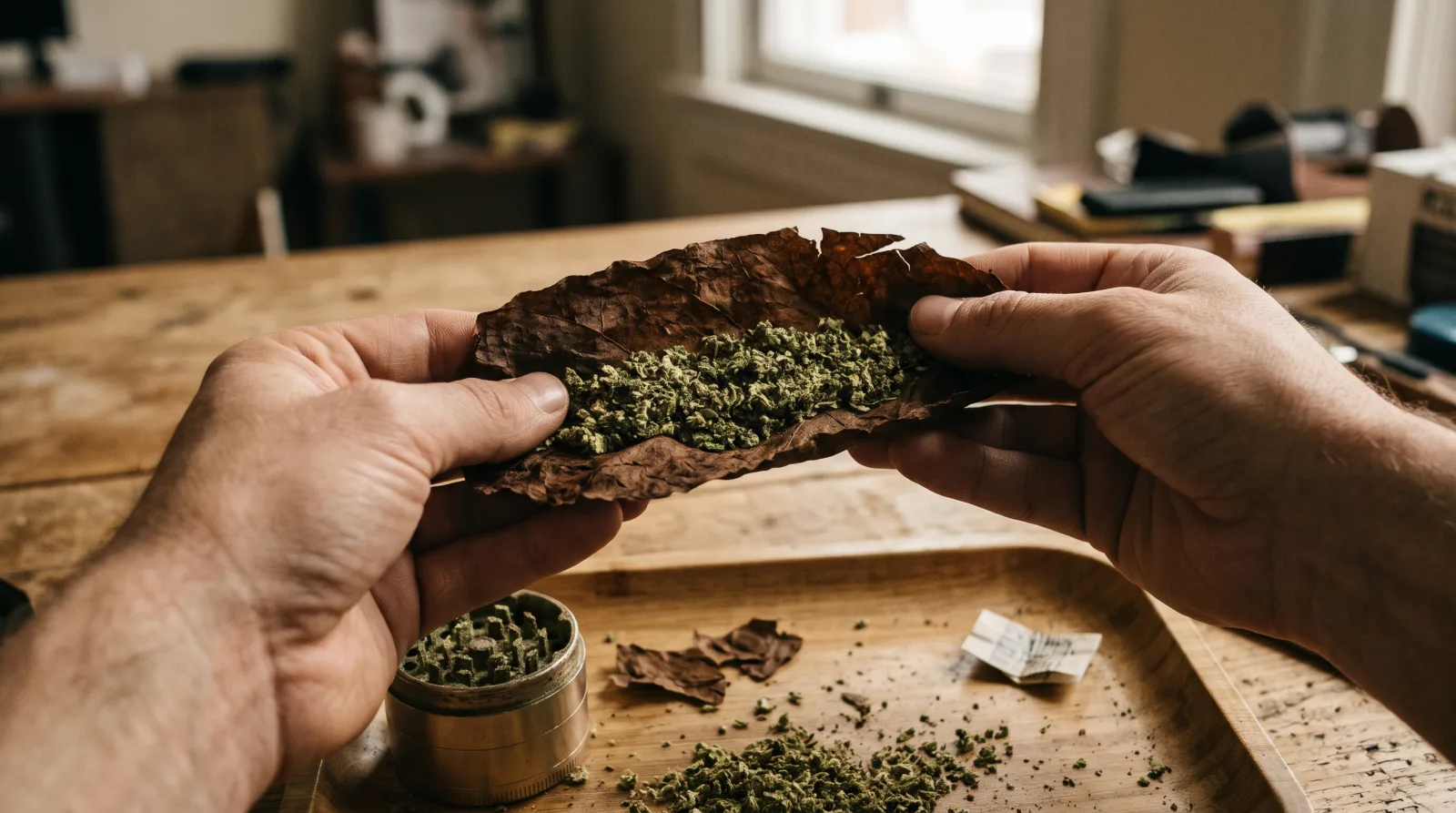
For pipes or bongs, break up your flower as normal, then add a rice-grain portion of concentrate on top. The flower combusts at a lower temperature and liquefies the concentrate, creating enhanced smoke. In joints, spread a thin line of concentrate along the inside of your paper before adding flower, or roll small pieces into the mix.
This approach has limits. You're still combusting rather than vapourizing, so you lose some of the flavour benefits and efficiency that proper dabbing provides. But as a zero-investment introduction to concentrate effects, it works perfectly well.
Portion Control: The Rice Grain Rule
This might be the single most important tip for first-time dabbers: start absurdly small. When experienced users say "rice grain sized," they mean an actual grain of rice, not a pea or a kernel of corn. New users consistently overestimate their first portion, leading to uncomfortable experiences that could have been easily avoided.
A proper beginner dab measures about 25-50mg. For context, that's roughly the amount that would fit on the tip of a toothpick. With concentrates testing at 70-80% THC, this tiny portion delivers 17-40mg of active THC, comparable to a moderate edible dose but with faster onset.
Why Size Matters More Than With Flower
The concentration factor amplifies mistakes. With flower, smoking slightly too much means you're a bit higher than planned. With concentrates, the same miscalculation can trigger greening out, complete with anxiety, dizziness, and the overwhelming urge to lie down.
Your tolerance to flower doesn't directly translate to concentrate tolerance. Someone comfortable smoking multiple joints daily might still find a normal-sized dab overwhelming if they haven't built specific concentrate tolerance. The delivery method, the purity, and the speed of onset all differ enough that you're essentially starting fresh.
You can always take another dab in 10-15 minutes if your first one feels too mild. You cannot un-dab once you've inhaled too much. This basic truth makes conservative dosing the only rational approach for beginners.
How to Measure Without a Scale
Most concentrates have some texture that allows portion control without precise measurement. Shatter can be broken into tiny shards. Budder can be scooped with your dab tool. Crumble can be pinched into small pieces.
Use your dab tool to collect a small amount, then assess it visually. If you're thinking "that looks too small," you've probably portioned correctly. First dabs should look comically tiny. After you understand how that amount affects you, you can adjust upward gradually.
Temperature Basics: Low and Slow Wins
Temperature separates good dabs from harsh ones. Too hot and you're combusting your concentrate, wasting cannabinoids, destroying terpenes, and creating throat-scorching vapour. Too cool and the concentrate won't fully vapourize, leaving puddles in your banger and delivering weak effects.
The ideal temperature range sits between 315-400°F (157-204°C). Within this window, concentrates vapourize efficiently while preserving flavour. Lower temperatures (315-350°F) maximize terpene preservation and deliver smoother hits with more pronounced flavour. Higher temperatures (370-400°F) create denser vapour with faster effects but slightly harsher feel.
The Heating and Cooling Process
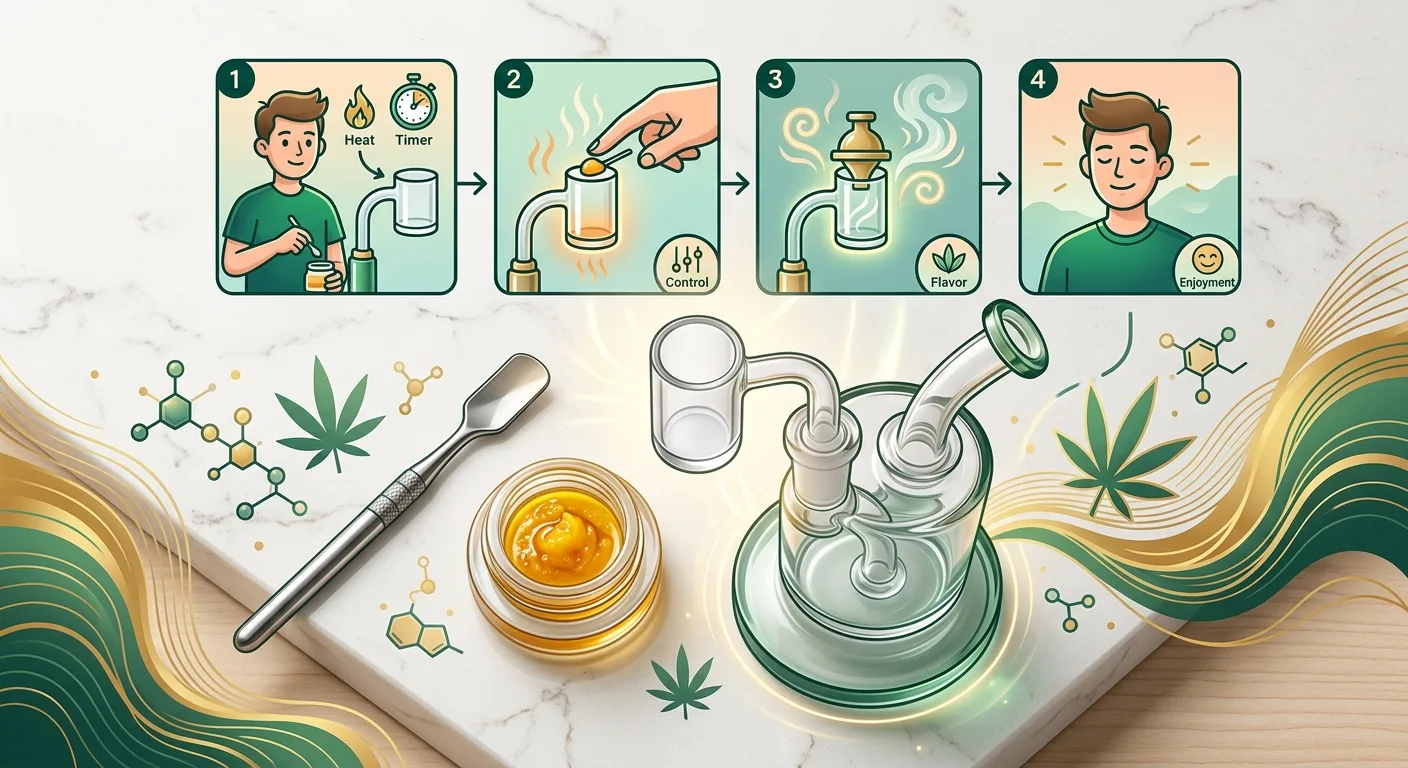
Here's the standard timing sequence for quartz bangers. Heat your banger with the torch for 30-45 seconds until it glows faintly red. Turn off the torch and wait. This cooldown period is crucial. For a low-temperature dab, wait 45-60 seconds. For medium temperature, wait 30-45 seconds.
These timings vary based on banger thickness, ambient temperature, and torch strength, so treat them as starting points. You'll dial in your specific setup through trial and error. Many dabbers use infrared thermometers ($20-40) to eliminate guesswork, aiming for their preferred temperature precisely.
Apply your dab to the inside of the banger, immediately place your carb cap on top, and inhale slowly. The carb cap traps heat and creates convection, ensuring complete vapourization even at lower temperatures. You should see the concentrate bubble and vapourize, not char or smoke.
Cold Start Dabbing for Beginners
The cold start method reverses the traditional sequence and works beautifully for beginners. Place your dab in a room-temperature banger first, then cap it and apply heat gradually while inhaling. This approach eliminates timing guesswork and makes it nearly impossible to overheat.
Start inhaling slowly as you heat the bottom of the banger. You'll see the concentrate begin to melt, then bubble, then vapourize. Once vapour production peaks, remove the heat and continue inhaling. The whole process takes 15-30 seconds from cold to complete vapourization.
Cold starts naturally favour lower temperatures, making them ideal for flavour-focused sessions and gentler on the throat. The method also reduces the learning curve significantly since you're watching the concentrate react in real-time rather than trying to nail specific cooldown timings.
What Your First Dab Will Actually Feel Like
Let's set realistic expectations. Your first properly-sized dab will likely feel smooth going in, assuming you've nailed the temperature. The vapour should taste clean and strain-specific, not harsh or burnt. You'll hold it briefly, exhale, and wait.
Effects begin within 1-3 minutes, much faster than flower. You'll notice the familiar cannabis warmth, but it arrives more directly and builds more rapidly. Peak effects hit around 10-15 minutes and plateau there for 1-2 hours. The comedown is typically gentler than with flower, without the heavy sedation that often accompanies combustion.
Comparing the Experience to Flower
The high from concentrates feels "cleaner" to most users. There's less body heaviness, less coughing, less of the fuzzy-headed confusion that can come from smoking large amounts of flower. The effects feel more focused and cerebral, though this varies by concentrate type and strain origin.
Indica-derived concentrates still lean sedating. Sativa-derived concentrates still lean energizing. But the concentrate format seems to emphasize the mental aspects of the high while reducing some of the physical sluggishness. Many users describe concentrate highs as more "functional" despite being objectively stronger.
Duration is shorter than flower by 30-60 minutes on average. Where a joint might keep you elevated for 2-3 hours, a comparable dab might run 1.5-2.5 hours. This makes concentrates useful for situations where you want effects without extended commitment.
Possible Challenges and How to Handle Them
Coughing is common even with perfect technique. Concentrate vapour is denser than smoke, and your lungs need adjustment time. Take smaller inhales than you would with flower. Sip the vapour rather than pulling hard. Keep water nearby.
If you feel too high, remember the standard green-out protocol applies. Sit or lie down, drink water, eat something if you can, and wait it out. The feeling will pass, typically within 30-60 minutes. CBD can help moderate THC's effects if you have access to a CBD product.
Some people experience a brief dizzy spell immediately after a dab. This usually relates to the deep inhalation pattern rather than the concentrate itself. Sitting down before you dab prevents any balance issues.
Choosing Your First Concentrate
Not all concentrates are created equal, and your choice matters for the first experience. Stability, ease of handling, and quality all factor into beginner-friendly options.
Best Concentrate Types for Beginners
Shatter wins for handling simplicity. It's stable at room temperature, breaks into precise portions easily, and doesn't stick to everything it touches. The glassy texture makes it obvious when you've collected too much on your dab tool. Quality shatter delivers clean flavour and predictable effects.
Budder and badder (whipped, creamy textures) also work well. They're easy to scoop in controlled amounts and typically preserve terpenes effectively, meaning good flavour. The consistency prevents waste since it doesn't shatter into flying fragments like glass-like concentrates sometimes do.
Sugar wax offers a middle ground: manageable texture with excellent terpene preservation. The crystalline structure makes it easy to portion while delivering robust flavour profiles.
What to Avoid Initially
Save THC diamonds for later. These ultra-high-potency crystals (often 95%+ THC) exceed beginner needs and require more precise portioning. Live resin, while delicious, tends to be saucy and harder to handle cleanly until you've developed dab tool skills.
Distillate, despite being common in vape pens, isn't ideal for dab rigs. It lacks the terpene content that makes dabbing flavourful and can be extremely viscous, making temperature control trickier.
Stick with mid-shelf concentrates for learning. Top-shelf products are wasted on beginners still developing their palate and technique. Budget options sometimes cut corners on purging solvents. The middle tier offers clean products at reasonable prices while you build experience.
Ready to Explore Concentrates?
Browse our selection of beginner-friendly shatter, budder, and quality concentrates with same-day delivery in Ottawa and nationwide shipping across Canada.
Shop ConcentratesCommon First-Timer Mistakes and How to Avoid Them
Learning from others' errors saves you from repeating them. These mistakes appear consistently among new dabbers, but all are easily prevented with awareness.
Taking Too Big a First Dab
We've emphasized this throughout, but it bears repeating because it's the most common mistake. The "more is better" mentality that might work with flower backfires dramatically with concentrates. Start small, wait 15 minutes, assess your state, then decide if you want more.
Your experienced friend's normal dab size is not your normal dab size. Their tolerance built over months or years of regular concentrate use. Trying to match their portions on your first attempt is like someone who's never lifted weights trying to match an athlete's workout.
Overheating the Banger
Hotter doesn't mean better. Overheated dabs taste awful, waste material, and create harsh vapour that triggers coughing fits. They also build up char in your banger that becomes increasingly difficult to clean.
If you see smoke instead of vapour, you've gone too hot. If your concentrate turns black or leaves dark residue, you've gone too hot. Proper dabs leave minimal residue, usually just a light golden puddle that can be wiped clean easily.
Neglecting to Clean Your Banger
After each dab, while the banger is still warm (not hot), wipe it out with a cotton swab. This takes five seconds and prevents buildup that degrades flavour and damages your banger. Once residue cakes on, it affects every subsequent dab's taste and eventually makes the banger unusable.
Isopropyl alcohol (90%+ concentration) helps dissolve stubborn residue for periodic deep cleaning. Avoid using your banger if it has visible black char - that's burnt material that will contaminate your next dab's flavour.
Holding Vapour Too Long
Unlike the old myths about flower, holding concentrate vapour longer doesn't increase absorption. THC absorbs within 3-5 seconds. Holding beyond that just increases throat irritation without additional effect. Inhale, hold briefly, exhale smoothly.
Building Your Technique Over Time
Your first dab is just the beginning. As you gain experience, you'll naturally refine your approach based on personal preferences.
Temperature preferences become more defined. Some people discover they love the intense flavour of low-temp dabs and never go higher than 350°F. Others prefer the punch of 400°F dabs and accept the slight harshness trade-off. There's no wrong answer, only personal preference.
Portion sizes adjust to your developing tolerance and desired effects. What started as a rice grain might eventually become two grains, then half a BB, gradually scaling to match your needs. The key is making these adjustments consciously rather than accidentally taking larger dabs without realizing it.
Equipment upgrades happen naturally. You might start with a basic rig and torch, then add a thermometer for precision, then try an e-nail for convenience, then experiment with different banger styles for performance differences. Each upgrade teaches you something about the process.
Concentrate preferences evolve with your palate. Early on, everything might taste vaguely similar. Over time, you'll distinguish between strain profiles, notice quality differences, and develop favourites based on specific terpene combinations. This journey parallels wine or coffee appreciation - the more you try, the more nuanced your perception becomes.
Budget $30-50 for a gram of quality mid-shelf concentrate. This amount provides 15-30 beginner-sized dabs, giving you plenty of material to practice with while learning technique and determining preferences. Avoid the cheapest options (potential quality issues) and don't splurge on premium products until you can appreciate the differences.
Yes, but be especially conservative with portions. Infrequent cannabis users should start with portions half the size of what regular users take - litreally half a grain of rice. Consider the flower-topping method first to gauge concentrate potency before committing to dabbing equipment. Your low tolerance means concentrates will affect you more dramatically than regular users.
Both work well, but shatter edges ahead for beginners because it's easier to portion precisely. You can see exactly how much you're breaking off, and it doesn't stick to your dab tool as readily. Budder delivers slightly better flavour typically, but the handling simplicity makes shatter the more forgiving learning material.
Wait at least 15-20 minutes. Concentrate effects build more gradually than you might expect, and peak effects don't arrive until 10-15 minutes after inhalation. Taking a second dab too quickly leads to unexpectedly intense combined effects. Once you understand your response to a single dab, you can adjust timing in future sessions.
Generally no, despite concentrates being more potent. Vapourization produces fewer irritants than combustion, so most people find properly-done dabs smoother than smoking. However, the vapour density can trigger coughing initially. Over time, as technique improves and lungs adjust, most users find dabbing gentler than smoking equivalent amounts of flower.
Actual fainting is rare with appropriate portions. The dizzy feeling some people experience comes from deep inhalation patterns rather than the concentrate itself. Sit down before dabbing, especially your first few times. Stay hydrated and don't dab on an empty stomach. If you portion conservatively (rice grain size), you're extremely unlikely to have any alarming physical reactions.
Your First Dab Should Be Unremarkable
If you've followed the guidance in this article, your first dabbing experience should be pleasantly uneventful. You'll take a small, properly-temperatured dab, experience smooth vapour, enjoy clean flavour, and settle into a comfortable high that feels stronger but cleaner than smoking flower. No drama, no panic, no regrets.
That's exactly how it should be. The horror stories about dabbing typically involve people who skipped the learning process, ignored portion control, or tried to match experienced users from day one. When approached methodically, with conservative portions and proper technique, dabbing is simply another consumption method - one that many users find they prefer once they understand it.
Start with minimal equipment or the flower-topping alternative. Use rice-grain portions religiously for at least your first 5-10 dabs. Master temperature control through whichever method makes sense for your setup. Clean your gear after each use. And remember that you're learning a skill, not proving anything. There's zero glory in taking massive dabs before you're ready.
As you gain experience, you'll naturally find your preferences: your ideal concentrate type, your perfect temperature range, your preferred portion size for different situations. That knowledge builds through experimentation and patience, not through jumping in with both feet on day one.