Walk into any cannabis store in Toronto or browse an online menu, and the first number you'll see beside each product is its THC percentage. It's printed bold, often highlighted, and treated like the single most important factor in choosing your weed. But here's what most budtenders won't tell you upfront: THC percentage is just one piece of a much larger puzzle, and chasing the highest number on the shelf doesn't guarantee the experience you're actually looking for.
THC percentage measures the concentration of tetrahydrocannabinol,the primary psychoactive compound in cannabis,as a percentage of the flower's total dry weight. A strain labelled 20% THC contains roughly 200 milligrams of THC per gram. Simple enough, right? The problem is that this single metric has become shorthand for "quality" and "strength" in ways that oversimplify how cannabis actually works in your body. Understanding what THC percentage really means, and what it doesn't tell you, is essential for making informed choices that match your tolerance, experience level, and desired effects.
How THC Percentage Is Measured and Calculated
Before you can interpret THC percentages, it helps to understand where these numbers come from. Licenced producers in Canada are required to test their products through accredited labouratories that use standardized methods to measure cannabinoid content. The most common technique is high-performance liquid chromatography (HPLC), which separates and quantifies individual compounds in a cannabis sample.
When a lab receives a sample, they test for multiple cannabinoids, including THC, THCA (the non-psychoactive precursor to THC), CBD, CBG, and others. The percentage you see on a label typically represents total potential THC, which includes both activated THC and THCA that would convert to THC when heated. This is why the same strain can show slightly different numbers between batches,cannabis is an agricultural product with natural variation, and factors like growing conditions, harvest timing, and curing methods all influence final cannabinoid levels.
The calculation itself is straightforward: if one gram of dried flower contains 200 milligrams of total THC, that's 20% THC. But here's the first important caveat,this measurement is taken from a small sample, not the entire batch. A single bud from the top of the plant might test higher than one from the bottom. Reputable producers test multiple samples and average the results, but some variation is inevitable.
The Difference Between THC and THCA
Raw cannabis doesn't actually contain much activated THC,it's mostly THCA, which isn't psychoactive in its natural state. When you apply heat through smoking, vaping, or cooking, THCA undergoes decarboxylation and converts to THC. This is why eating raw cannabis won't get you high, but smoking it will. Labels account for this by showing "total THC," which assumes full conversion, though real-world conversion rates can vary depending on your consumption method and temperature.
What THC Percentage Actually Tells You
Now that we understand how the number is derived, let's talk about what it genuinely indicates. THC percentage is a reliable measure of maximum psychoactive potential,it tells you the upper limit of how much THC you could theoretically consume from a given amount of flower. This information is useful for calculating approximate dosage, especially when you're trying to be precise about intake.
For example, if you know a joint typically contains 0.5 grams of flower, and your strain is 20% THC, you're working with roughly 100mg of THC in that joint. Since you won't absorb 100% of what you smoke, actual intake will be lower, but the math gives you a baseline. This becomes particularly important for people managing medical conditions who need consistent, predictable dosing.
THC percentage also provides a rough comparison tool when you're looking at products within the same category. A 25% THC indica will generally feel stronger than a 15% THC indica of the same strain, all other factors being equal. The keyword here is "generally",because other factors are rarely equal, and that's where things get more complicated.
The Tolerance Factor
Your personal tolerance plays a massive role in how THC percentage translates to actual experience. Someone who consumes cannabis daily might barely feel effects from a 15% strain that would overwhelm a first-time user. Tolerance isn't just about needing "more" THC,your endocannabinoid system adapts over time, changing how efficiently your CB1 receptors respond to cannabinoids. This means two people can consume the same 20% THC strain and have completely different experiences based on their usage history.
Regular consumers often find they need periodic tolerance breaks to reset their systems, regardless of whether they switch to higher-percentage products. Chasing ever-higher THC numbers can lead to diminishing returns if your body has already adjusted to elevated cannabinoid levels.
What THC Percentage Doesn't Tell You
Here's where the industry's obsession with THC percentages falls apart: that single number reveals almost nothing about how the cannabis will actually make you feel. The subjective experience of using cannabis,what researchers call the "entourage effect",depends on dozens of compounds working together, not just THC in isolation.
A 17% THC strain rich in the terpene myrcene might produce heavier sedation than a 25% THC strain with a limonene-dominant profile that feels more uplifting. THC percentage doesn't account for the presence of other cannabinoids like CBD (which can modulate THC's psychoactive effects), CBG (associated with focus and clarity), or CBN (linked to sedation). It completely ignores terpenes,the aromatic compounds that contribute significantly to both flavour and effects.
Think about alcohol for a moment: vodka and wine can have the same alcohol percentage, but they produce distinctly different experiences because of their other ingredients. Cannabis works the same way, except with far more variables at play. The ratio of different compounds, not just the concentration of one, determines what you'll actually feel.
The Myth of "Stronger = Better"
The cannabis industry has inadvertently created a problematic hierarchy where higher THC percentages command premium pricing and are marketed as superior products. This is particularly evident in how weed grades and pricing structures have evolved, with THC content often weighted heavily in quality assessments alongside factors like appearance and cure.
But strength isn't the same as quality, and more isn't always better. Some of the most sought-after legacy strains in cannabis culture,think original Sour Diesel or classic OG Kush,typically test between 18-22% THC, well below many modern hybrids that push 30% or higher. What made these strains legendary wasn't THC content alone; it was their unique terpene profiles, balanced cannabinoid ratios, and the specific experiences they consistently delivered.
For many consumers, especially those seeking specific therapeutic benefits or particular experiential qualities, a moderate-THC strain with the right supporting compounds will outperform a high-THC strain every time. This is why experienced users often talk about "finding their sweet spot",a balance that works for their individual chemistry and goals, which may have little to do with maximum potency.
Other Factors That Matter More Than THC Alone
If THC percentage is just one variable among many, what else should you consider when choosing cannabis? Let's break down the components that work together to create your actual experience.
Terpene Profiles
Terpenes are aromatic compounds found in cannabis and countless other plants, responsible for distinctive scents and flavours. But they do far more than make your weed smell like pine or citrus,research increasingly shows that terpenes directly influence effects through their own therapeutic properties and by modulating how your body processes cannabinoids.
Common cannabis terpenes include myrcene (earthy, sedating), limonene (citrus, uplifting), pinene (pine, alertness), linalool (floral, calming), and caryophyllene (peppery, anti-inflammatory). A strain with 18% THC and 3% total terpenes might deliver a more pronounced, pleasant experience than a 25% THC strain with only 1% terpenes. Unfortunately, most product labels don't include terpene data, though this is slowly changing as consumer education improves.
CBD and Minor Cannabinoids
CBD (cannabidiol) doesn't just provide its own therapeutic benefits,it actively moderates THC's psychoactive effects. Strains with balanced THC:CBD ratios (like 1:1 or 2:1) tend to produce clearer, less anxious highs than THC-dominant strains, even when total cannabinoid percentage is lower. This is particularly valuable for newer users or anyone prone to cannabis-induced anxiety.
Beyond CBD, researchers have identified over 100 minor cannabinoids, each contributing to the overall experience. CBG shows promise for focus and inflammation. CBN is associated with sedation and appears in aged cannabis. THCV may suppress appetite (unlike THC, which stimulates it). As testing becomes more sophisticated, we're learning that these compounds work synergistically in ways that a simple THC percentage could never capture.
Consumption Method
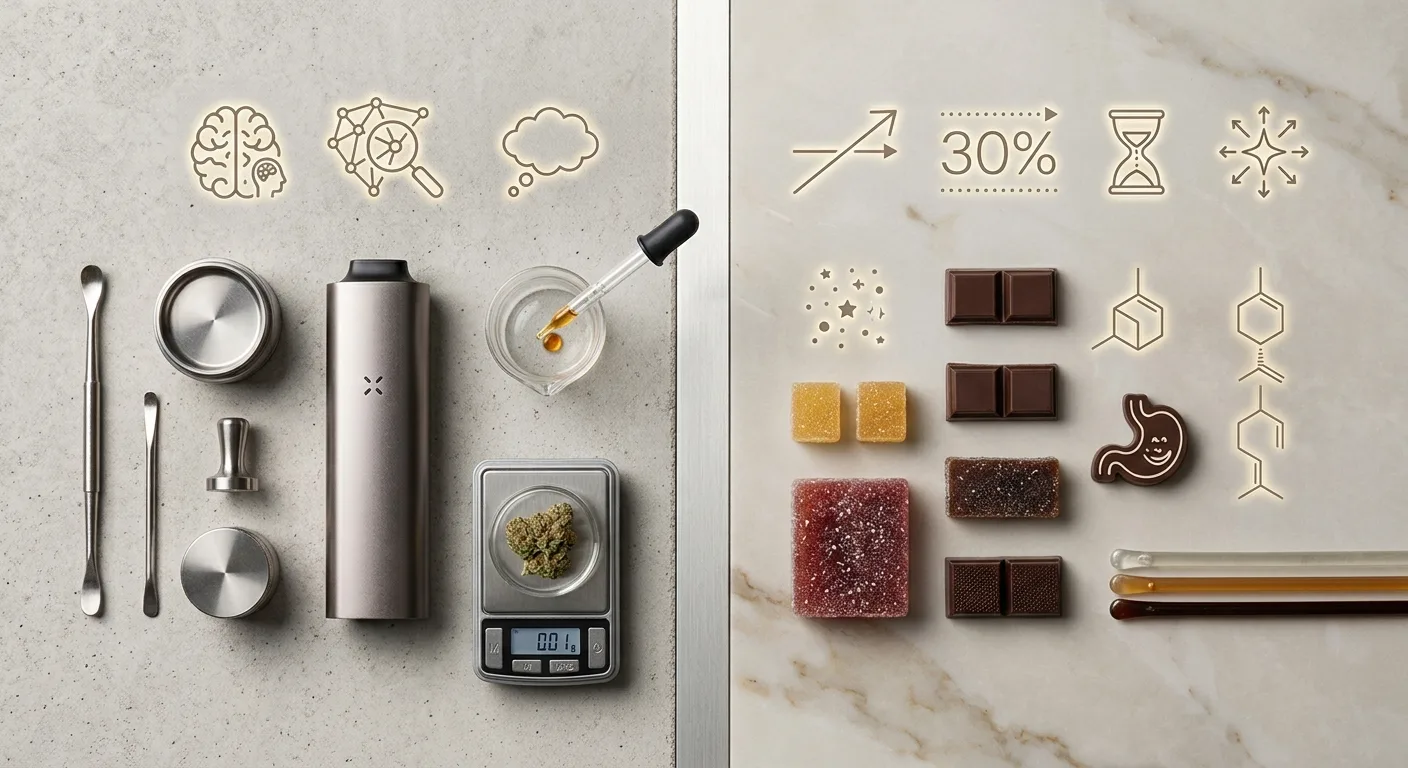
How you consume cannabis dramatically affects what percentage of THC actually reaches your bloodstream,a concept called bioavailability. Smoking or vaping delivers THC quickly with roughly 10-30% bioavailability, depending on technique. When comparing edibles versus smoking, edibles have lower bioavailability (roughly 4-20%) but metabolize THC into 11-hydroxy-THC, a more potent compound that produces longer-lasting, often more intense effects.
This means a 100mg THC edible won't feel equivalent to smoking flower containing 100mg THC, even though the THC content is identical. Understanding these differences helps you calibrate expectations and avoid overconsumption, especially when switching between methods.
How to Use THC Percentage as One Decision Factor
THC percentage isn't useless,it's just incomplete. Think of it as one data point in your decision-making process, not the deciding factor. Here's how to incorporate it intelligently into your cannabis choices.
Matching Percentage to Experience Level
For first-time cannabis users, starting with lower THC percentages (10-15%) provides a gentler introduction with more manageable effects. This range allows you to gauge your individual response without overwhelming your system. Mid-range products (15-20% THC) suit regular consumers who've established baseline tolerance and understand their preferences.
High-THC products (20-30%+) make sense for experienced users with established tolerance or medical patients who've worked with healthcare providers to determine appropriate dosing. But even within these categories, remember that percentage interacts with everything else,a 15% strain rich in sedating terpenes might hit harder than a 20% strain with an energizing profile, depending on what you're sensitive to.
Balancing Potency with Budget
THC percentage directly impacts pricing in most markets. Understanding realistic ounce pricing in Toronto helps you evaluate whether you're paying for actual quality or just high numbers. Premium pricing should reflect multiple quality factors,grow quality, cure, terpene preservation, balanced cannabinoid profiles,not THC content alone.
Sometimes the best value lies in mid-range THC products with superior terpene profiles and better overall quality. A well-grown 18% strain often delivers a more satisfying experience than a poorly cured 28% strain that's harsh, lacks flavour, and produces one-dimensional effects. Your money should buy complete quality, not just one metric.
Experimenting Within Ranges
Rather than fixating on exact percentages, try working within ranges to find what suits you. If you discover that strains in the 16-20% THC range consistently work well for your needs, explore different options within that band with varying terpene profiles and cannabinoid ratios. This approach lets you fine-tune your experience based on actual effects rather than chasing arbitrary numbers.
Keep informal notes about what works,not just THC percentage, but strain names, how they made you feel, and what you were trying to achieve. Over time, you'll notice patterns that have more to do with complete profiles than single metrics. This personalized knowledge becomes far more valuable than any number on a label.
The Future of Cannabis Testing and Labelling
The good news is that the cannabis industry is slowly evolving beyond THC-centric marketing. More producers now include full cannabinoid panels and terpene profiles on their labels, giving consumers a more complete picture. Some forward-thinking brands have started emphasizing terpene percentages, strain lineage, and expected effects alongside or even above THC content.
Advanced testing methods continue to improve, with some labs now measuring individual terpenes, minor cannabinoids, and even compound ratios thought to influence specific effects. As research catches up with consumer experience, we're likely to see labelling that reflects the complexity of how cannabis actually works rather than reducing everything to a single potency number.
Consumer education is also improving. More people understand that the "strongest" product isn't necessarily the "best" product for their needs. This shift in perspective encourages producers to focus on well-rounded quality,proper growing conditions, careful curing, terpene preservation, and consistency,rather than simply maximizing THC at the expense of everything else.
What to Look for Beyond the Numbers
When evaluating cannabis products, ask for or look up complete test results if available. Beyond THC percentage, valuable information includes total terpene percentage (above 2% is generally considered terpene-rich), specific terpene breakdowns, CBD content, and the presence of minor cannabinoids. Appearance matters too,properly cured flower should be aromatic, appropriately sticky without being wet, and show visible trichome coverage.
Don't hesitate to ask questions about growing methods, curing time, and harvest dates when evaluating online dispensaries. Reputable suppliers can provide this information and understand that educated consumers make better repeat customers. If a retailer can only talk about THC percentages and can't discuss terpenes, effects, or growing practices, that's a red flag about their commitment to quality.
Find Cannabis That Matches Your Needs
Browse our full selection of carefully curated strains with complete lab testing, terpene profiles, and detailed effect descriptions. Quality is about more than just numbers.
Explore Our MenuCommon Questions About THC Percentage
For most beginners, 25% THC is likely more potent than necessary and increases the risk of uncomfortable experiences like anxiety or paranoia. Start with strains in the 10-15% range to gauge your individual tolerance and response. You can always consume more or try stronger products later, but you can't undo overconsumption. Lower percentages give you more control while you're learning how cannabis affects you personally.
Absolutely. THC percentage is just one component of the overall chemical profile. Two 20% THC strains can produce vastly different effects depending on their terpene profiles, ratios of other cannabinoids like CBD or CBG, and how these compounds interact in your specific endocannabinoid system. This is why experienced users focus on complete profiles and personal experience rather than percentages alone.
Not necessarily. THC percentage measures potency, not quality. High-quality cannabis depends on multiple factors including proper growing conditions, careful harvesting at peak ripeness, appropriate curing time, terpene preservation, and absence of contaminants. A well-grown 18% strain with rich terpenes and balanced cannabinoids will often provide a superior experience to a poorly grown 30% strain that's harsh and one-dimensional.
Licenced producers in Canada must use accredited labs with standardized testing methods, making the numbers generally reliable within a margin of error (typically ±2-3%). However, natural variation exists between buds in the same batch, and testing represents a sample rather than every individual bud. The percentage gives you a solid baseline, but exact numbers may vary slightly. Reputable producers test multiple samples and provide ranges rather than single precise figures.
THC percentage matters differently for each format. With flower, the complete chemical profile (terpenes and cannabinoids working together) significantly impacts experience, so percentage is just one factor. For edibles, THC content is more straightforward since you're measuring total milligrams per serving, though individual metabolism still affects how those milligrams feel. When considering <a href=
This happens because of the entourage effect,the synergistic interaction between cannabinoids, terpenes, and other compounds. A strain with 17% THC but high concentrations of sedating terpenes like myrcene and linalool might feel more potent for relaxation than a 28% THC strain with stimulating terpenes. Your individual body chemistry, tolerance level, consumption method, and what you've eaten that day also influence how strong a strain feels regardless of lab-tested percentage.
Making Informed Choices Beyond the Numbers
Understanding what THC percentage really means,and what it doesn't,empowers you to make cannabis choices based on your actual needs rather than marketing hype or incomplete information. That number on the label tells you about potential maximum potency, which is useful for dosage estimation and general comparison. But it reveals nothing about how the cannabis will actually make you feel, what therapeutic benefits it might provide, or whether it's worth the price being charged.
The most satisfying cannabis experiences come from matching complete product profiles to your individual goals, tolerance, and preferences. Sometimes that means choosing a 16% strain with exceptional terpenes over a 30% strain that's one-dimensional. Sometimes it means paying attention to CBD ratios or looking for specific terpene combinations that deliver the effects you're seeking. And sometimes it simply means trying different options within a comfortable THC range and keeping track of what works for you personally.
As the industry matures and consumers become more educated, we're seeing a welcome shift away from THC-percentage obsession toward more nuanced appreciation of cannabis quality. Producers who focus on complete profiles, proper growing practices, and consistent experiences are building loyal customer bases that understand value extends far beyond a single lab number. By thinking critically about what information actually matters for your needs, you join this evolution toward smarter, more satisfying cannabis consumption.