If you've ever stood in front of a dispensary menu wondering whether 10mg will send you to the moon or barely tickle your system, you're asking the right question. The dosage sweet spot for cannabis edibles isn't some universal number,it's deeply personal, shaped by your tolerance, body chemistry, and experience level. While the internet loves to throw around "start with 5mg" as gospel, the reality is far more nuanced. Your friend who microdoses with 2.5mg gummies and your cousin who casually eats 100mg brownies aren't living in different realities,they're operating on completely different tolerance scales.
Understanding how many mg of edibles you should take begins with recognizing where you sit on the tolerance spectrum. This comprehensive guide breaks down dosing recommendations based on actual user profiles, explains why edibles hit harder than smoking, and gives you a framework for finding your personal optimal dose without the guesswork or uncomfortable experiences that come from going in blind.
Why Edible Dosing Is Different From Smoking Cannabis
When you smoke or vape cannabis, THC enters your bloodstream through your lungs almost immediately. You feel effects within minutes, and you can easily gauge whether you need another puff. Edibles operate on an entirely different metabolic pathway that fundamentally changes how THC affects your body.
After you consume an edible, the THC travels through your digestive system to your liver, where it's converted into 11-hydroxy-THC,a metabolite that's significantly more potent and longer-lasting than the delta-9-THC you inhale when smoking. This conversion process explains why edibles produce a more intense body high and why the effects can last anywhere from 4 to 12 hours instead of the 1 to 3 hours you'd experience from smoking.
The delayed onset time creates another critical difference. While smoking hits within minutes, edibles typically take 30 minutes to 2 hours to kick in, with peak effects arriving around the 2 to 3 hour mark. This delay is where most dosing mistakes happen,people feel nothing after 45 minutes, assume they need more, take another dose, and then both waves hit simultaneously a few hours later.
Your metabolism, body weight, what you've eaten that day, and even your genetics all influence how quickly and intensely edibles affect you. Someone with a fast metabolism might feel effects in 30 minutes, while another person with a slower digestive system might not feel anything for 90 minutes from the exact same product.
The First-Pass Effect and Why It Matters for Dosing
The liver's conversion of delta-9-THC to 11-hydroxy-THC doesn't just make edibles stronger,it makes them unpredictable for first-time users. Some people have liver enzymes that process THC very efficiently, leading to intense effects from even modest doses. Others have enzyme profiles that result in weaker conversion, requiring higher doses to achieve the same effects.
This genetic lottery means there's no truly universal starting dose. The commonly recommended 5mg works well for many people, but it's based on averages, not individuals. Understanding this helps explain why your dosing journey requires personal experimentation rather than simply following a one-size-fits-all chart.
Dosing Guidelines Based on Your Tolerance Level
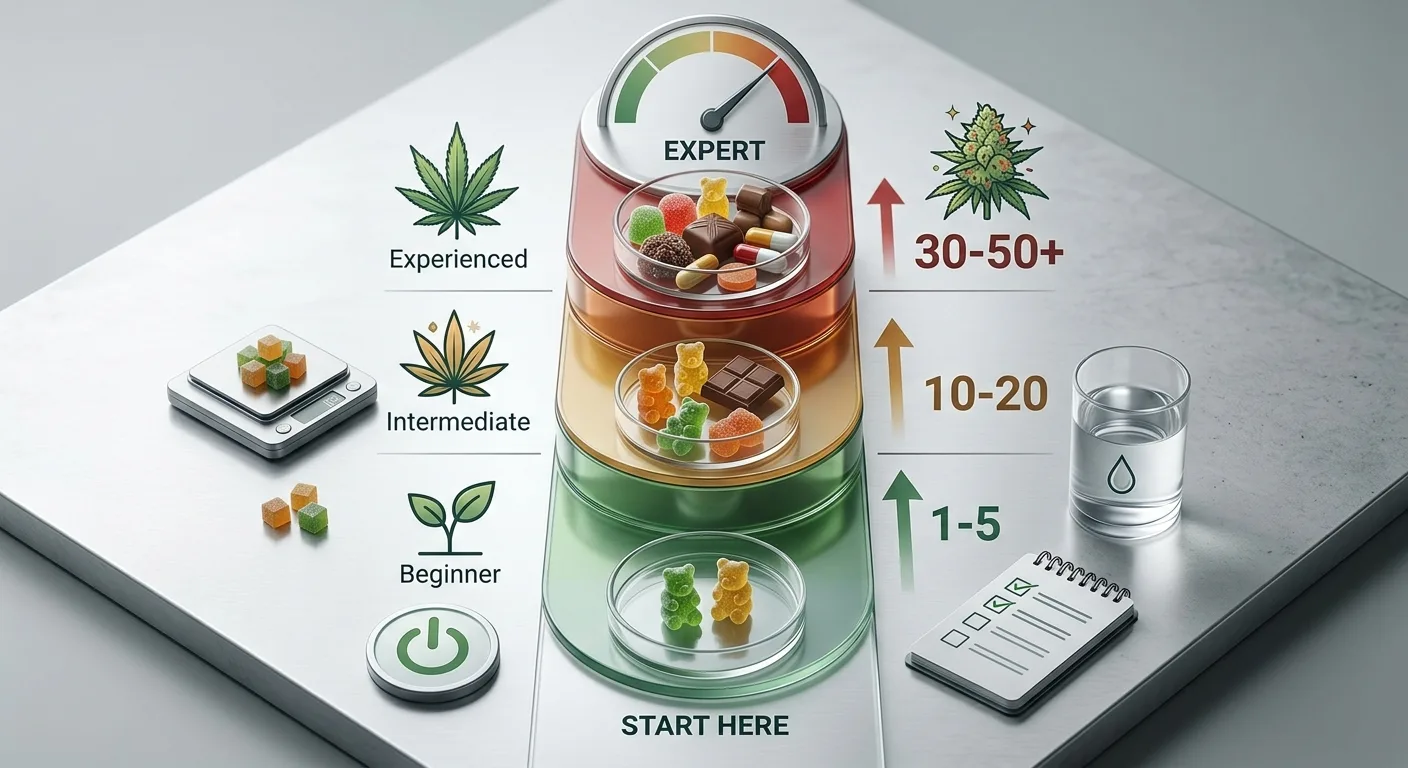
The most practical way to determine how many mg of edibles you should take is to honestly assess your current tolerance and experience level. These categories aren't arbitrary,they're based on how regular cannabis consumers actually respond to different dose ranges.
Zero Tolerance: New Users or Long Breaks (2.5mg - 5mg)
If you've never consumed cannabis or haven't used it in several months, your tolerance is essentially at zero. For this group, starting with 2.5mg to 5mg of THC is genuinely appropriate. At this range, expect mild relaxation, slight euphoria, and possibly enhanced sensory perception. You should remain functional and clear-headed, though your reaction times might be slightly slower.
Many first-time users report feeling "nothing" from 2.5mg, but this often means the experience is so subtle they're expecting something more dramatic. A gentle mood lift and slight body relaxation is exactly what a low dose should feel like,it's a feature, not a bug. This allows you to gauge your body's response without risking an overwhelming experience.
For complete beginners who want to explore cannabis responsibly, products like lower-dose edibles designed for controlled experiences offer the safety net of precise dosing. Starting low means you can always take more next time, but you can't un-take an excessive dose once it's in your system.
Low Tolerance: Occasional Users (5mg - 15mg)
If you consume cannabis once or twice a month, or if you've had positive experiences at the 5mg level and want slightly stronger effects, the 5mg to 15mg range is your zone. This is where most recreational users find their sweet spot for social situations, creative activities, or unwinding after work.
At 10mg, you'll experience more pronounced euphoria, enhanced music and food appreciation, and noticeable physical relaxation. You might feel giggly or contemplative, and complex tasks will likely require more effort than usual. At 15mg, expect these effects to intensify,this is approaching the upper limit for maintaining full functionality for most people with low tolerance.
The jump from 5mg to 10mg feels more significant than the numbers suggest because you're doubling your dose. If 5mg feels pleasant but underwhelming, try 7.5mg next time rather than immediately doubling up. Small incremental increases help you find your optimal dose without overshooting it.
Medium Tolerance: Regular Users (15mg - 30mg)
Regular cannabis consumers who use flower or vapes multiple times per week typically need 15mg to 30mg of edibles to achieve their desired effects. At this tolerance level, your endocannabinoid system has adapted to regular THC exposure, requiring higher doses to activate the same receptors.
Users in this category report that 20mg to 25mg provides strong relaxation, substantial euphoria, and noticeable psychoactive effects while still maintaining awareness and control. This range works well for experienced users seeking therapeutic benefits like pain relief, sleep assistance, or significant stress reduction. For those specifically looking for evening relief, exploring indica-based edibles at this dosage range can provide the sedating effects many seek.
However, even experienced smokers sometimes underestimate edibles at this level. Just because you can smoke a full joint without issue doesn't mean 30mg of edibles will feel equivalent. The 11-hydroxy-THC conversion makes edibles punch above their weight class compared to inhaled THC.
High Tolerance: Daily Consumers (30mg - 100mg+)
Daily cannabis users, medical patients managing chronic conditions, and those who've built substantial tolerance over years of use often require 30mg or higher to feel significant effects. Some experienced users comfortably consume 50mg to 100mg for recreational purposes, while medical patients treating severe pain or illness might use even higher doses under guidance.
At 50mg, expect intense psychoactive effects, substantial body sedation, and significantly altered perception for several hours. This is not a dose for maintaining productivity,it's for dedicated relaxation, sleep, or symptom management. Users with high tolerance describe 50mg as "properly stoned" rather than just relaxed.
The 100mg+ range is strictly for those with established high tolerance. These doses can produce overwhelming effects in less experienced users, including anxiety, paranoia, and extended sedation. If you're considering doses this high, you should have extensive experience with edibles and understand exactly how your body responds to THC.
Finding Your Personal Optimal Dose: A Methodical Approach
Rather than guessing or relying on what works for others, finding your ideal edible dose requires a systematic approach. This method minimizes uncomfortable experiences while efficiently identifying your sweet spot.
The Step-Up Protocol
Start with a conservative dose based on your tolerance category,2.5mg for absolute beginners, 5mg for occasional users, or 10mg for regular consumers. Set aside an entire day or evening where you have no obligations. Take your starting dose and wait a full two hours before considering whether to take more.
Track your experience in a simple journal or phone note: record the dose, time consumed, when effects began, peak intensity, and how long effects lasted. Note whether the experience was too weak, too strong, or just right. This data becomes invaluable for future dosing decisions.
If your starting dose feels underwhelming, increase by just 2.5mg to 5mg for your next session (which should be at least 3 days later to avoid tolerance skew). Continue this incremental approach until you find the dose that produces your desired effects without tipping into discomfort. This patient method takes longer than jumping straight to higher doses, but it prevents the deeply unpleasant experience of being too high for 8+ hours.
Timing and Environment Considerations
Your optimal dose isn't just about mg,it's about context. Taking edibles on an empty stomach accelerates onset and intensifies effects compared to consuming them after a full meal. For consistent results, try to maintain similar eating patterns when using edibles.
Your environment and mindset also influence how you experience any given dose. The same 15mg that feels perfect while watching movies at home might feel overwhelming at a crowded social event. As you're finding your dose, use edibles in comfortable, controlled settings until you understand your response pattern.
Common Dosing Mistakes and How to Avoid Them
Even experienced cannabis users make predictable errors when dosing edibles. Understanding these common pitfalls helps you avoid them entirely.
The Impatience Trap: Taking More Too Soon
The single most common dosing mistake is taking a second dose before the first one fully kicks in. You consume 10mg, feel nothing after 45 minutes, take another 10mg, and then find yourself dealing with 20mg worth of effects two hours later. This scenario plays out thousands of times daily across Canada.
The solution is simple but requires discipline: commit to waiting a minimum of two hours after your first dose, preferably three hours, before even considering additional consumption. Set a timer if necessary. If you're still not feeling effects after three hours, you likely need a higher starting dose next time,but resist the urge to stack doses during a single session until you're very experienced.
Tolerance Mismatches: Applying Smoking Tolerance to Edibles
Smoking tolerance and edible tolerance are related but not identical. Someone who smokes daily and has high inhalation tolerance might still have moderate edible tolerance because the metabolic processes are different. The assumption that "I smoke a lot, so I need high-dose edibles" leads many people to overconsume.
When transitioning from smoking to edibles, start one tolerance category lower than you'd expect. If you're a daily smoker, begin in the 10mg to 15mg range rather than immediately jumping to 30mg. You can always increase, and this conservative approach prevents the distinctly unpleasant experience of edible overconsumption.
Inconsistent Products and Dosing Variability
Not all edible products are created equal in terms of consistency and accuracy. Homemade edibles, in particular, can have significant variation in THC distribution,one cookie might have 5mg while another from the same batch contains 25mg. This inconsistency makes finding your optimal dose nearly impossible.
For reliable dosing, stick with regulated, lab-tested products that clearly state their THC content per serving. Products from established sources provide the consistency needed for methodical dose finding. Understanding how professional cannabis delivery services ensure product quality helps you make informed purchasing decisions.
What to Do If You've Taken Too Much
Despite best efforts, most edible users eventually experience taking more than they bargained for. While uncomfortable, THC overconsumption from edibles is not medically dangerous for healthy adults. Knowing what to expect and how to manage the experience reduces anxiety and helps you ride it out.
Recognizing the Signs of Overconsumption
Taking too many mg of edibles typically manifests as extreme drowsiness, dizziness, anxiety or paranoia, rapid heartbeat, confusion, nausea, or an overwhelming desire to sleep. Your perception of time might become severely distorted, and you may feel temporarily convinced the effects will never end. These symptoms, while distressing, will pass as your body metabolizes the THC.
The effects of edible overconsumption typically peak around 3 to 4 hours after consumption and gradually diminish over the following 4 to 8 hours. In extreme cases with very high doses, residual effects might linger into the next day as a "weed hangover" characterized by grogginess and brain fog.
Practical Management Strategies
If you realize you've taken too much, first remind yourself that you're not in danger and the effects are temporary. Move to a comfortable, quiet space where you feel safe. Dim the lights, put on familiar calming music or a comfort TV show, and try to relax rather than fight the experience.
Stay hydrated with water and have light snacks available,crackers, fruit, or something simple that appeals to you. Some users find that CBD can help counteract excessive THC effects, though this is anecdotal rather than scientifically proven. Taking a shower or getting fresh air might help if you're not too dizzy.
Focus on your breathing with slow, deep breaths. Remember that you haven't done anything dangerous,you've simply taken more than your optimal dose, and the worst that will happen is you'll sleep it off. If you're with trusted friends, let them know you're uncomfortable so they can keep an eye on you, but reassure them (and yourself) that you just need time for your body to process the THC.
Special Considerations: Body Weight, Metabolism, and Individual Factors
While tolerance is the primary factor in determining your ideal edible dose, several other biological variables influence how THC affects you. Understanding these factors helps explain why dosing recommendations are guidelines rather than guarantees.
Does Body Weight Actually Matter?
The relationship between body weight and edible dosing is less straightforward than many assume. While larger individuals might require slightly higher doses due to greater blood volume and tissue distribution, the difference is nowhere near proportional to weight differences. A 200-pound person doesn't need twice the dose of a 100-pound person.
THC is fat-soluble and distributes throughout fatty tissue, which means body composition (muscle versus fat ratio) potentially plays a role. However, tolerance and liver enzyme activity remain far more influential than body weight in determining your optimal dose. A petite daily cannabis user will likely need much higher doses than a large-framed first-time user.
Metabolism and Enzyme Variations
Your liver's CYP450 enzyme system handles THC conversion, and genetic variations in these enzymes create dramatic differences in how people process edibles. Some people are "fast metabolizers" who process THC quickly, experiencing shorter but potentially more intense effects. Others are "slow metabolizers" who might need to wait longer for effects to begin but experience extended duration.
A small percentage of people have enzyme profiles that make them largely unresponsive to edibles altogether,they can consume 50mg or more and feel minimal effects because their bodies don't efficiently convert delta-9-THC to 11-hydroxy-THC. If you've tried multiple doses and consistently feel nothing, you might fall into this category, and other consumption methods might work better for you.
Food Interactions and Timing
Taking edibles with or without food significantly impacts their effects. Consuming edibles on an empty stomach typically accelerates onset time and can intensify effects, as the THC is absorbed more quickly without competing nutrients. Taking edibles after a meal, especially one high in fat, slows absorption but can actually increase bioavailability since THC binds to dietary fats.
For consistent results, try to maintain similar eating patterns when using edibles. If you always take them after dinner, that becomes your baseline. If you occasionally take them on an empty stomach, expect faster and potentially stronger effects than usual even from your standard dose.
Adjusting Your Dose Over Time: Understanding Tolerance Development
If you use edibles regularly, you'll inevitably develop tolerance, requiring higher doses to achieve the same effects. This is a natural physiological adaptation as your endocannabinoid system adjusts to regular THC exposure. Understanding how tolerance develops helps you manage it strategically.
The Tolerance Timeline
Casual users who consume edibles once or twice monthly typically don't develop significant tolerance. Weekly users might notice gradual tolerance building over months, requiring 20% to 30% higher doses to maintain their original experience. Daily users can develop substantial tolerance within weeks, sometimes requiring double their starting dose or more.
The good news is that cannabis tolerance reverses relatively quickly compared to many substances. A tolerance break of just 3 to 5 days can significantly reduce your required dose, while a full two-week break typically resets tolerance close to baseline levels. If you find yourself needing increasingly higher doses, a planned break is more effective than constantly escalating your consumption.
Strategic Tolerance Management
Rather than continuously increasing your dose as tolerance builds, consider implementing planned consumption patterns. Some experienced users follow a schedule where they use edibles for several weeks, then take a week off to let tolerance reset. Others vary their dosing amounts,using lower doses on weekdays and saving higher doses for weekends.
Mixing consumption methods can also help manage tolerance. Rotating between edibles, vaping, and other methods means you're not constantly hammering the same metabolic pathways, potentially slowing overall tolerance development. For those exploring different consumption methods, understanding the various cannabis product types and their effects provides valuable context for building a varied routine.
Medical Dosing vs. Recreational Dosing
Medical cannabis patients often use edibles at higher doses and more frequently than recreational users, but with different goals. Understanding this distinction is important whether you're using cannabis therapeutically or recreationally.
Therapeutic Dose Ranges for Common Conditions
Patients using cannabis for chronic pain management often find relief in the 10mg to 30mg range, taken multiple times daily. Those treating severe pain, cancer-related symptoms, or chemotherapy side effects might require 50mg to 100mg or higher doses under medical supervision. Sleep disorders often respond to 10mg to 25mg taken an hour before bedtime.
For anxiety and stress management, patients typically use lower doses in the 2.5mg to 10mg range, as higher doses can paradoxically increase anxiety in some individuals. The goal with medical dosing is finding the minimum effective dose that provides symptom relief without excessive psychoactive effects interfering with daily functioning.
Medical users should work with healthcare providers familiar with cannabis therapeutics to develop appropriate dosing schedules. Self-medicating with edibles can be effective, but professional guidance ensures you're using appropriate amounts for your specific condition and helps you avoid adverse interactions with other medications.
Microdosing for Productivity and Wellness
Microdosing involves taking sub-psychoactive doses of THC,typically 1mg to 3mg,to achieve subtle therapeutic benefits without impairment. This approach has gained popularity among professionals seeking mild anxiety relief, enhanced creativity, or improved focus without the high associated with standard recreational doses.
Microdosers report that these tiny amounts provide mood enhancement, reduced stress, and slight pain relief while maintaining complete functionality. The effects are often described as similar to how caffeine works,a gentle shift in baseline state rather than an obvious alteration. If you're curious about cannabis benefits but wary of intoxication, microdosing offers an entry point worth exploring.
Ready to Find Your Perfect Dose?
Explore our selection of precisely-dosed edibles with transparent lab testing and consistent quality. From beginner-friendly 5mg options to higher-potency products for experienced users, we help you find exactly what you need.
Browse EdiblesProduct Types and How They Affect Dosing
Not all edible products are consumed the same way, and the product format influences how you should approach dosing. Understanding these differences helps you choose products that match your experience level and desired effects.
Gummies and Candies: Easy Division and Consistent Dosing
Gummies are the most popular edible format because they're precisely dosed, easy to divide, and have predictable effects. A package might contain 10mg per gummy, allowing you to easily split one in half for a 5mg dose or take multiple pieces to reach higher doses. This flexibility makes them ideal for dose finding and maintaining consistent consumption.
Products like the Buddha Boys Gummies line offer various potency options, allowing users to select products matching their tolerance level rather than trying to calculate complex divisions of high-potency products. When starting out, choosing products with moderate per-piece dosing (5mg to 10mg per gummy) provides the easiest path to accurate dosing.
Chocolates and Baked Goods: Harder to Divide Accurately
While delicious, chocolate bars, brownies, and cookies present dosing challenges because THC distribution throughout the product might not be perfectly uniform. A chocolate bar labelled as 100mg total might not have exactly 10mg in each of its 10 pieces,some squares might have 8mg while others have 12mg due to manufacturing variability.
If you prefer these products, account for potential inconsistency by starting with slightly less than you'd normally take. Give the dose extra time to kick in before deciding if you need more, as these products can sometimes take longer to digest than gummies.
Beverages and Tinctures: Faster Onset, Easier Adjustment
Cannabis beverages and sublingual tinctures offer faster onset times,often 15 to 45 minutes rather than 1 to 2 hours,because some absorption occurs through mucous membranes in your mouth before the product reaches your digestive system. This quicker feedback allows for easier real-time dose adjustment compared to traditional edibles.
Tinctures in particular provide excellent dose control since you can add drops incrementally. Starting with a small amount under your tongue and waiting 30 minutes gives you reliable information about whether you need more, making tinctures ideal for methodical dose finding.
Wait a minimum of 2 hours, ideally 3 hours, before even considering taking more. Edibles can take anywhere from 30 minutes to 2 hours to kick in, with peak effects arriving around the 2-3 hour mark. Taking more too soon is the most common dosing mistake and often results in consuming more than intended when both doses hit simultaneously. If you consistently feel nothing after 3 hours across multiple sessions, you likely need a higher starting dose next time rather than stacking doses during a single session.