When you're staring at a menu that offers both dried flower and dark blocks of hashish, the choice can feel more confusing than it should. Hash and weed are both cannabis products , they come from the same plant , but they deliver distinctly different experiences in terms of potency, flavour, ritual, and cost. Understanding these differences helps you choose the format that matches your tolerance, budget, and preferred consumption method.
This guide breaks down hash vs weed across every dimension that matters: how they're made, how strong they are, what they cost per session, and which consumption methods work best. We'll start with a side-by-side comparison table, then dive into the nuances that determine which format fits your needs. By the end, you'll know exactly when to reach for flower and when to reach for hash.
Hash vs Weed: Side-by-Side Comparison
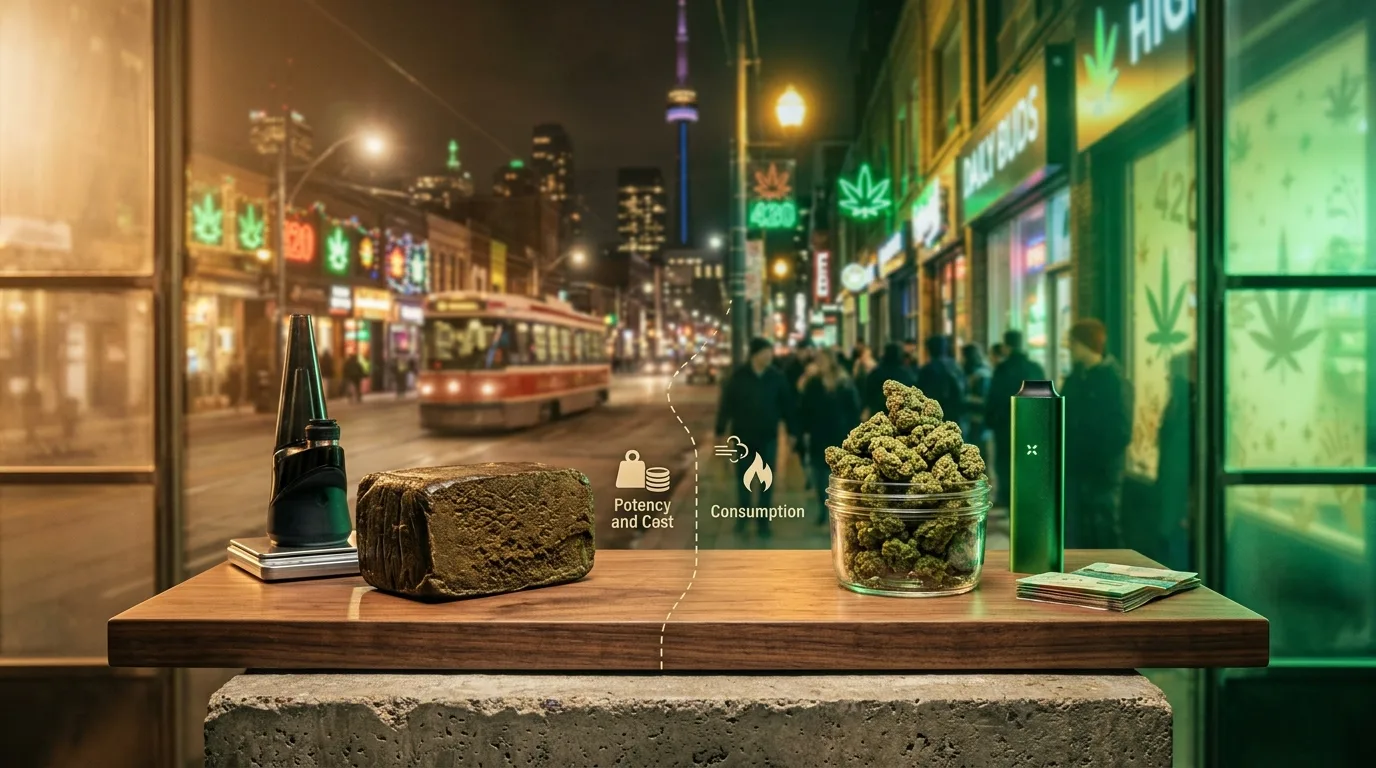
Before we dig into the details, here's a quick reference table comparing the two formats across the metrics most buyers care about:
| Factor | Weed (Dried Flower) | Hash (Concentrated Resin) |
|---|---|---|
| THC Range | 15-30% | 30-60%+ |
| Consumption Methods | Joints, bongs, pipes, vapourizers | Crumbled in joints, bowls, knives, vapourizers |
| Avg. Cost Per Session | $2-5 (0.5-1g flower) | $1.50-3 (0.1-0.3g hash) |
| Flavour Profile | Bright terpenes, strain-specific | Earthy, spicy, resinous |
| Shelf Life | 6-12 months (if stored properly) | 1-2+ years |
| Best For | Flavour chasers, session smokers | High-tolerance users, efficiency seekers |
This table gives you the headlines, but the real story lives in the details. Let's unpack each dimension to understand what these differences mean in practice.
What Hash Actually Is (and How It Differs From Flower)
Weed, or dried flower, is exactly what it sounds like: the harvested, dried, and cured buds of the cannabis plant. You're smoking the whole flower structure, including plant matter, trichomes, and everything in between. The THC and other cannabinoids are concentrated in the resin glands (trichomes) that coat the surface of the buds.
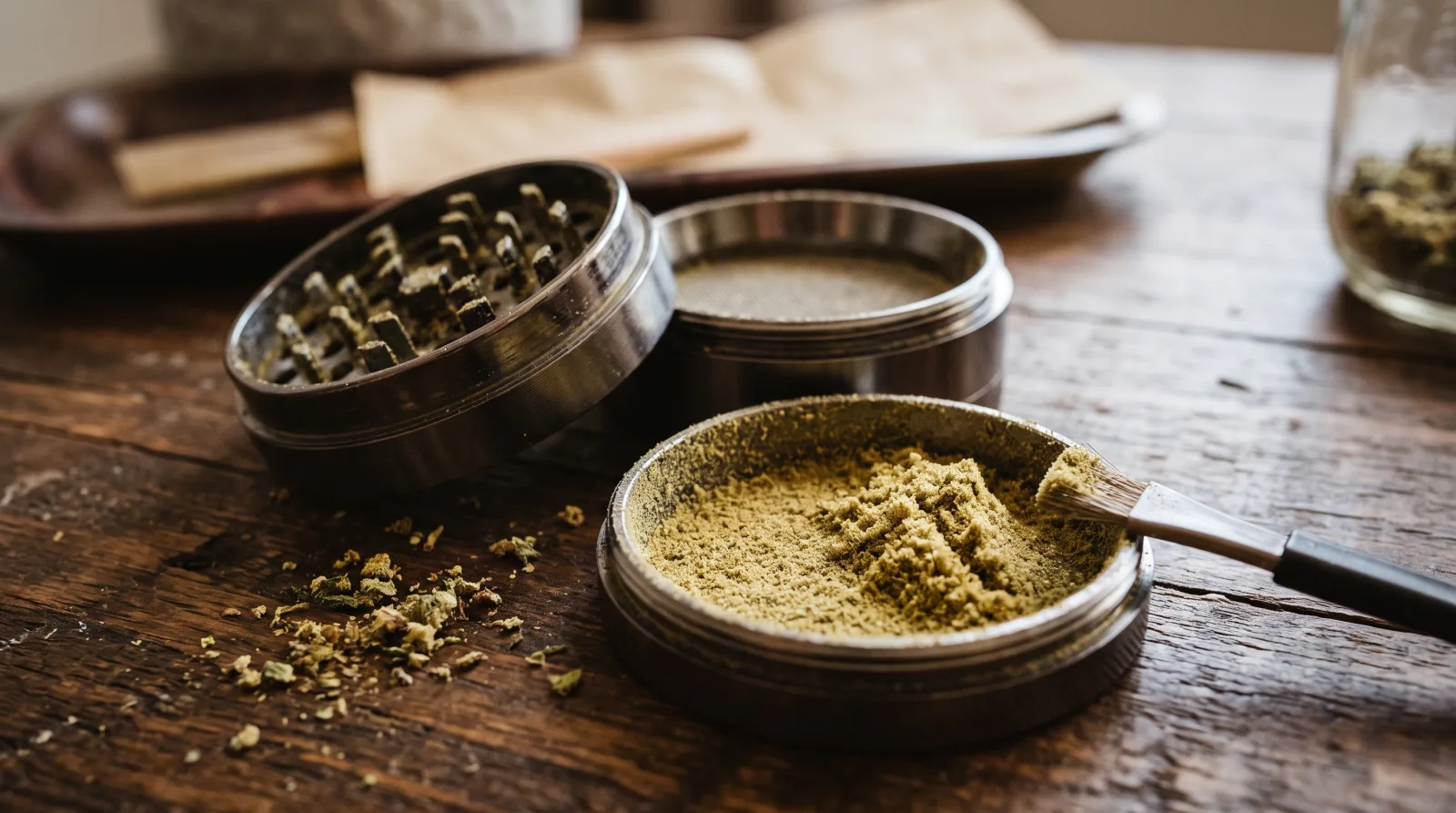
Hash, by contrast, is a concentration of those trichomes. Traditional hash production involves separating the resin glands from the plant material through mechanical methods like sieving, hand-rubbing, or ice-water extraction. What remains is a compressed mass of cannabinoid-rich resin with minimal plant matter. The result is a denser, more potent product that requires less material to achieve the same effect.
Production Methods: From Plant to Product
Understanding how each format is made helps explain their potency and flavour differences. Dried flower goes through a relatively straightforward process: harvest, trim, dry for 7-14 days, cure for 2-8 weeks. The goal is to preserve terpenes and cannabinoids while reducing moisture to prevent mold.
Hash production varies by type. Dry sift hash involves shaking dried flower over fine screens to separate trichomes. Hand-rubbed hash (like charas) is made by rolling live flowers between the palms until resin accumulates. Ice-water hash (bubble hash) uses cold water and agitation to freeze and separate trichomes, which are then collected and dried. Pressed hash like Moroccan or Afghan varieties compress sifted kief under heat and pressure into solid blocks.
Each method produces hash with different textures, colours, and potency levels. Traditional imported hash like Moroccan or Afghan tends to be hand-pressed and less refined than modern bubble hash, but still significantly more potent than flower.
Why Hash Is Stronger
The concentration process is key. When you smoke flower, you're combusting a mix of cannabinoids, terpenes, and inert plant material. Hash strips away most of that plant matter, leaving a product that's 30-60% THC by weight versus 15-30% for premium flower. You get more active compounds per gram, which means smaller doses produce comparable or stronger effects.
This potency difference isn't just about numbers on a lab report. It translates to noticeably heavier effects, faster onset, and longer duration compared to the same weight of dried flower. For users with high tolerance or those seeking efficiency, hash delivers more cannabinoids per dollar and per inhalation.
Consumption Methods: How You Actually Use Each Format
The way you consume hash versus weed shapes the entire experience. Flower is versatile and beginner-friendly; hash requires a bit more technique but offers unique rituals and efficiency.
Smoking Flower: Joints, Bongs, Pipes
Dried flower works in virtually every traditional smoking device. You can roll it into joints or blunts, pack it into bong bowls or pipes, or use a dry-herb vapourizer. The process is straightforward: grind, load, ignite. Most cannabis users start with flower because it requires no specialized knowledge, burns evenly on its own, and produces familiar smoke.
Joints are the most popular flower consumption method in Canada. They're portable, social, and don't require equipment beyond rolling papers. Bongs and pipes offer smoother, cooler smoke and better dose control. Dry-herb vapourizers heat flower below combustion temperature, preserving terpenes and reducing harshness, but they require an upfront investment in hardware.
Smoking Hash: Crumbled, Knifed, or Sandwiched
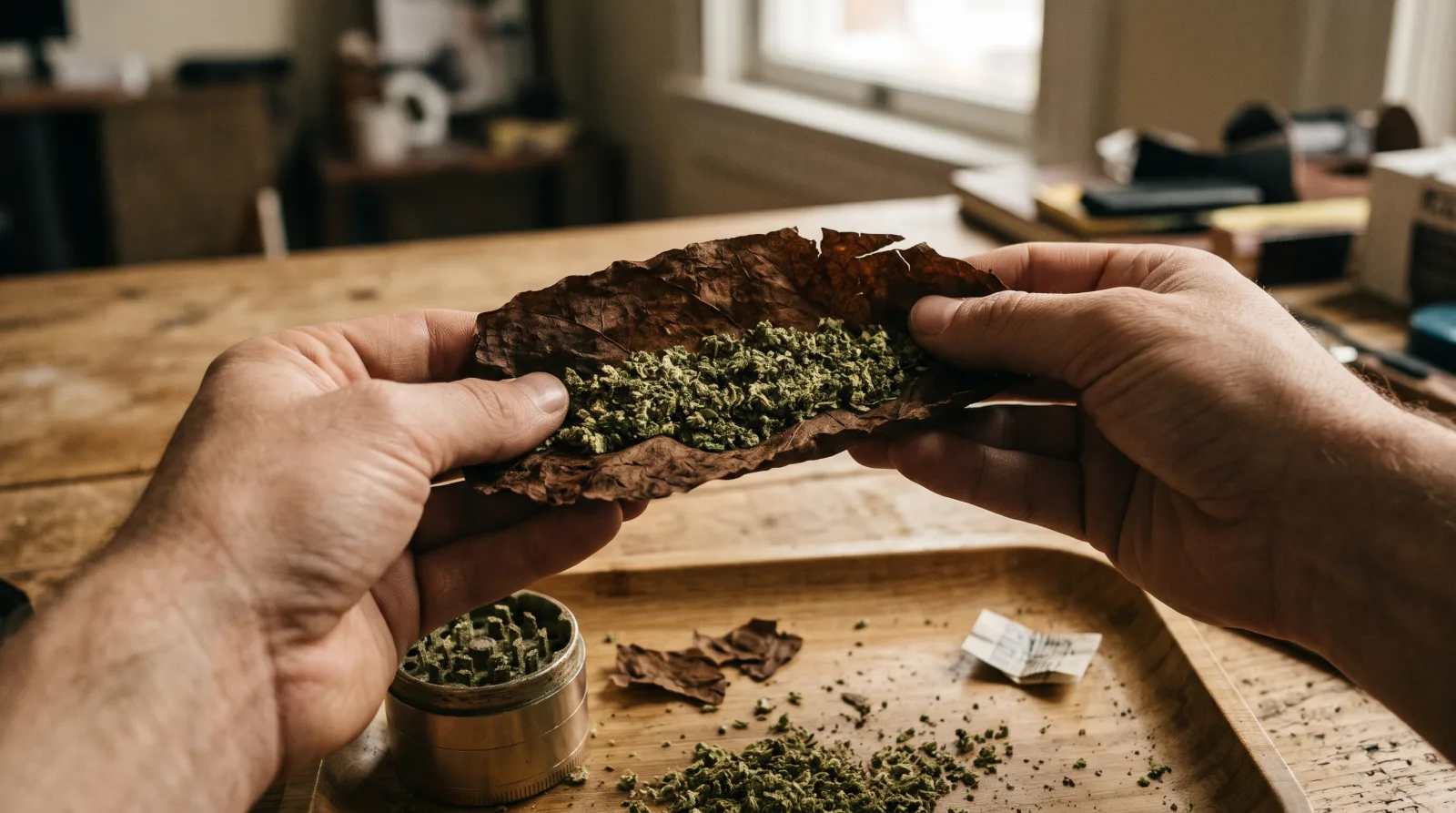
Hash doesn't burn cleanly on its own in most cases, especially softer varieties. The most common method is crumbling hash into a joint or bowl mixed with tobacco or flower. This provides the plant material needed for even burning while boosting the potency of your smoke. A typical hash joint might be 70% flower and 30% hash by weight, delivering a noticeably stronger effect than pure flower.
Another classic method is hot knives (also called blades or spots). You heat two butter knives on a stove element, press a small piece of hash between them, and inhale the vapour through a funnel or bottle. This method wastes almost nothing and hits hard, but it's not practical for on-the-go use.
Some users sandwich hash between layers of flower in a bowl or bong. The flower on bottom catches the flame and heats the hash above it, vapourizing cannabinoids without needing direct flame. This works well with sticky, pliable hash but can be messy with harder pressed varieties.
Modern vapourizers designed for concentrates can handle hash, though performance varies by texture. Softer, oilier hash works better than hard, dry pressed blocks. You may need to crumble it into small pieces or use a concentrate pad to prevent clogging.
Why Consumption Method Affects Cost Per Session
The amount you need per session varies dramatically between formats. A typical joint uses 0.5-1g of flower. If you're mixing hash into that joint at a 30% ratio, you're using 0.15-0.3g of hash plus 0.35-0.7g of flower. Because hash is roughly twice as potent, you could theoretically use half the hash by weight to match the cannabinoid content of pure flower.
In practice, many users find they need 0.1-0.2g of hash for a satisfying session when consumed efficiently through hot knives or a vapourizer. At $20-30 per gram for quality hash, that's $2-6 per session. Premium flower at $6-10 per gram used at 0.5-1g per session costs $3-10. The math favours hash for high-tolerance users who can dose precisely.
Potency, Effects and Who Should Choose Which
THC percentage tells part of the story, but the lived experience of hash versus flower involves more than just cannabinoid concentration. Terpene profiles, entourage effects, and consumption speed all influence what you feel.
The Flower Experience: Terpene-Forward, Strain-Specific
Dried flower tends to preserve more of the original terpene profile than hash, especially when properly cured and stored. Terpenes are the aromatic compounds that give each strain its distinctive smell and contribute to the overall effect. A sativa-leaning strain like energetic daytime varieties will deliver bright, uplifting effects with citrus or pine notes. An indica-dominant flower offers sedative, body-focused relaxation with earthy or sweet flavours.
Because flower is less concentrated, the onset is gradual and the peak is moderate. You can easily titrate your dose by smoking half a joint, waiting ten minutes, and deciding whether to continue. This makes flower ideal for recreational users, social settings, and anyone still learning their tolerance.
The Hash Experience: Heavy, Resinous, One-Dimensional
Hash hits harder and faster. The concentrated cannabinoids produce a more intense body high and mental fog, even when sourced from the same starting material as flower. Because many traditional hash production methods involve heat and oxidation, some delicate terpenes degrade, leaving a more uniform earthy, spicy, or incense-like flavour across different hash types.
That doesn't mean hash lacks nuance. High-grade bubble hash or fresh-pressed varieties can retain significant terpene content, but the experience is generally less about strain-specific character and more about raw potency and the unique ritual of hash consumption. Users describe the high as "heavier," "more narcotic," and "longer-lasting" compared to flower, even at equivalent THC doses.
Try Hash If You:
- Have high tolerance. If you're smoking multiple grams of flower daily, hash offers more bang for your buck and fewer inhalations to reach your desired effect.
- Value efficiency. Hash produces less smoke volume and requires smaller quantities, making it ideal for discreet or quick sessions.
- Want longer shelf life. Properly stored hash lasts years; flower starts degrading after 6-12 months even in ideal conditions.
- Enjoy the ritual. There's a certain old-school appeal to crumbling hash into a spliff or heating knives. If you appreciate the craft and history of cannabis, hash connects you to centuries of tradition.
- Prefer sedative effects. Hash's heavier body load makes it better suited for evening use, pain relief, or sleep support compared to bright, energetic flower.
Stick With Flower If You:
- Are new to cannabis. Flower's moderate potency and familiar consumption methods make it more forgiving for beginners.
- Chase flavour and terpenes. If you're a connoisseur who values the aromatic complexity of different strains, flower delivers a more nuanced sensory experience.
- Prefer precise dosing. It's easier to dial in your perfect dose when you're working with less concentrated material.
- Enjoy social smoking. Passing a joint of pure flower is simpler and more universally understood than explaining how to smoke hash to someone unfamiliar with it.
- Want daytime options. Flower offers more sativa and hybrid choices that won't anchor you to the couch.
Price Breakdown: What You Actually Pay Per High
Retail prices don't tell the full story. What matters is cost per session, which depends on potency, consumption method, and your individual tolerance.
Flower Pricing in the Canadian Market
Premium AAAA flower in Toronto typically runs $180-280 per ounce ($6-10/g) through reputable online dispensaries. Mid-tier AAA flower costs $100-180/oz ($3.50-6/g). Budget options start around $60-100/oz ($2-3.50/g).
If you smoke 0.5g per session and buy premium flower at $7/g, each session costs $3.50. At one session per day, that's $105/month or $1,260/year. Heavy users consuming 2-3g daily spend $420-630/month on premium flower, which quickly motivates the search for more cost-effective options.
Hash Pricing and Session Economics
Quality imported hash ranges from $15-35/g depending on grade and origin. Premium bubble hash or temple balls can reach $40-50/g. At the lower end, traditional pressed hash like Blonde Moroccan or Red Lebanese costs $20-25/g.
Because hash is roughly twice as potent as flower, you need less to achieve comparable effects. If 0.5g of flower delivers your desired high, 0.25g of hash should theoretically match it. In practice, experienced users often consume 0.1-0.2g of hash per session through efficient methods like hot knives or vapourizers.
At $25/g hash and 0.15g per session, you're paying $3.75 per high. That's comparable to premium flower on a per-session basis, but hash delivers a stronger effect. For high-tolerance users who would need 1-1.5g of flower to feel satisfied, hash at 0.2-0.3g per session ($5-7.50) becomes notably cheaper than the $7-15 they'd spend on equivalent flower.
The Hidden Cost: Mixing Ratios
Many users don't smoke pure hash; they mix it with tobacco or flower. If you're adding 0.2g hash to 0.5g flower for a joint, you're spending on both products. This hybrid approach offers a middle ground, potency boost, and improved burn quality, but it complicates the cost comparison. A hash-and-flower joint might cost $5-8 in materials versus $3-5 for a pure flower joint, but it delivers a significantly stronger effect that could replace two flower joints for a heavy user.
The true savings appear when you use hash in its most efficient forms like dabbing, vapourizing, or hot knives where you consume the concentrate alone and minimize waste. This requires commitment to the format but maximizes value for daily users.
Flavour, Aroma and the Sensory Experience
Cannabis appreciation isn't purely about effects. Flavour, aroma, and the ritual of consumption contribute to the overall experience in ways that influence user preference beyond pharmacology.
Why Flower Wins the Flavour Competition
Dried flower, especially premium craft grades, preserves the full spectrum of terpenes produced by the plant. When you crack open a jar of well-cured Pink Kush or Blue Dream, the aroma tells a story: sweet florals, sharp citrus, funky fuel, earthy spice. Those terpenes survive into the smoke or vapour, creating distinct flavour profiles that vary dramatically between strains.
Users who prioritize taste gravitate toward flower because it offers variety. You can smoke a lemony sativa in the morning, a gassy hybrid in the afternoon, and a sweet indica at night, experiencing three completely different flavour journeys. The ritual of grinding fresh buds and smelling the released terpenes adds a tactile, aromatic dimension that hash can't fully replicate.
Hash Flavour: Earthy, Spicy, Uniform
Hash tends toward a narrower flavour range. Traditional pressed varieties like Afghan, Moroccan, or Lebanese share a common profile: earthy, spicy, incense-like, with subtle variations based on source material and production method. The compression and ageing process mellows sharp terpenes, while heat during pressing can caramelize some compounds, adding sweet or roasted notes.
High-grade bubble hash or fresh-pressed live rosin retains more terpene complexity and can taste closer to the source flower, but these products are rarer and more expensive. For most hash consumers, flavour is secondary to potency and efficiency. The taste is pleasant in an old-school, nostalgic way, but it doesn't offer the strain-specific diversity that flower provides.
That said, hash has its own sensory appeal. The process of crumbling a sticky chunk of temple ball, smelling the concentrated resin, and watching it melt into a joint creates a ritual that flower smokers miss. The thick, resinous smoke and slow-burning coal of quality hash offer a luxurious heaviness that feels indulgent.
Storage, Shelf Life and Practical Considerations
How long your cannabis stays fresh affects both cost-effectiveness and experience quality. Hash and flower have dramatically different storage requirements and degradation timelines.
Flower Shelf Life: The Six-Month Window
Properly dried and cured flower stored in airtight containers away from light and heat will maintain peak quality for 6-12 months. After that, cannabinoids slowly degrade (THC converts to CBN, which is more sedative and less potent), terpenes evaporate, and the flower becomes harsh and less flavourful. You can still smoke year-old flower, but it won't deliver the experience it once did.
This matters if you buy in bulk to save money. An ounce that takes you three months to consume is fine; an ounce that sits for a year becomes disappointing by the end. For detailed guidance on preserving freshness, see our guide on how to store weed properly.
Hash Shelf Life: Years, Not Months
Hash is far more stable. The low moisture content and compressed structure slow oxidation and terpene loss. Properly stored hash (wrapped in parchment, sealed in glass or mylar, kept cool and dark) can remain potent and enjoyable for 1-2 years or longer. Some traditional varieties improve with age as cannabinoids and resins cure further.
This makes hash ideal for long-term storage or bulk purchasing. If you find a great deal on hash, you can stock up without worrying about it degrading before you finish it. The stability also means hash is better suited for emergency stashes or infrequent users who want a product that won't lose quality between sessions.
The Legal Landscape: Hash and Flower in Canada
Both hash and flower are fully legal for adults in Canada under the Cannabis Act. You can purchase up to 30g of dried flower equivalent per transaction from licenced retailers. Hash counts toward this limit based on equivalency: 1g of solid concentrate (including hash) equals 1g of dried flower for legal purchase limits.
Reputable online dispensaries ship both formats discreetly via Canada Post in tracked, sealed packaging. Understanding how weed delivery works in Toronto helps ensure smooth ordering. There are no legal distinctions between hash and flower beyond packaging requirements; both must be sold in child-resistant, opaque containers with standardized health warnings.
From a legal standpoint, choosing between hash and flower is purely a matter of preference and need. Both are equally accessible, equally safe when purchased from licenced sources, and equally protected under federal law.