You've noticed you need two bowls to feel what one used to deliver. Your evening gummy doesn't hit the way it did three months ago. The vape cart that used to last two weeks is empty in five days. If any of this sounds familiar, you're not broken and your cannabis isn't weak,you've built tolerance, and your endocannabinoid system is asking for a conversation.
A tolerance break isn't punishment or failure. It's a reset. The good news: your receptors bounce back faster than you think. The better news: you have options beyond the all-or-nothing approach most articles preach. This guide covers what actually happens during a break, realistic timelines based on your consumption pattern, the taper-versus-cold-turkey decision, and the middle-path strategies for people who won't (or can't) stop entirely. No judgment. No medical claims. Just honest information for adult consumers who want their cannabis to work again.
What Tolerance Actually Is (and Why It Happens to Everyone)
Cannabis tolerance develops when your CB1 receptors,the primary binding sites for THC in your brain and nervous system,downregulate in response to repeated exposure. Think of it as your body's thermostat: when the temperature stays high for weeks, the system adjusts to make that the new normal. You need more input to achieve the same output.
This happens to every regular consumer eventually. Daily users notice it within weeks. Weekend warriors might take months. But the mechanism is identical: frequent THC exposure causes your body to reduce the number and sensitivity of available receptors. You're not imagining it when the same strain stops delivering the way it used to.
The speed and severity depend on three factors: frequency (how often you consume), dose (how much THC per session), and duration (how many weeks or months you've maintained the pattern). Someone vaping 30% flower twice daily will build tolerance faster than someone eating a 5mg gummy three nights a week. The math is straightforward: more THC, more often, equals faster adaptation.
The Endocannabinoid System Isn't Static
Your body produces its own cannabinoids,anandamide and 2-AG,that regulate mood, appetite, pain perception, and sleep. When you flood the system with external THC, production of these internal molecules can decrease. Your baseline shifts. This is why heavy users sometimes report feeling "flat" or unmotivated during breaks: they're not just missing the high, they're experiencing a temporary dip in their natural cannabinoid activity while the system recalibrates.
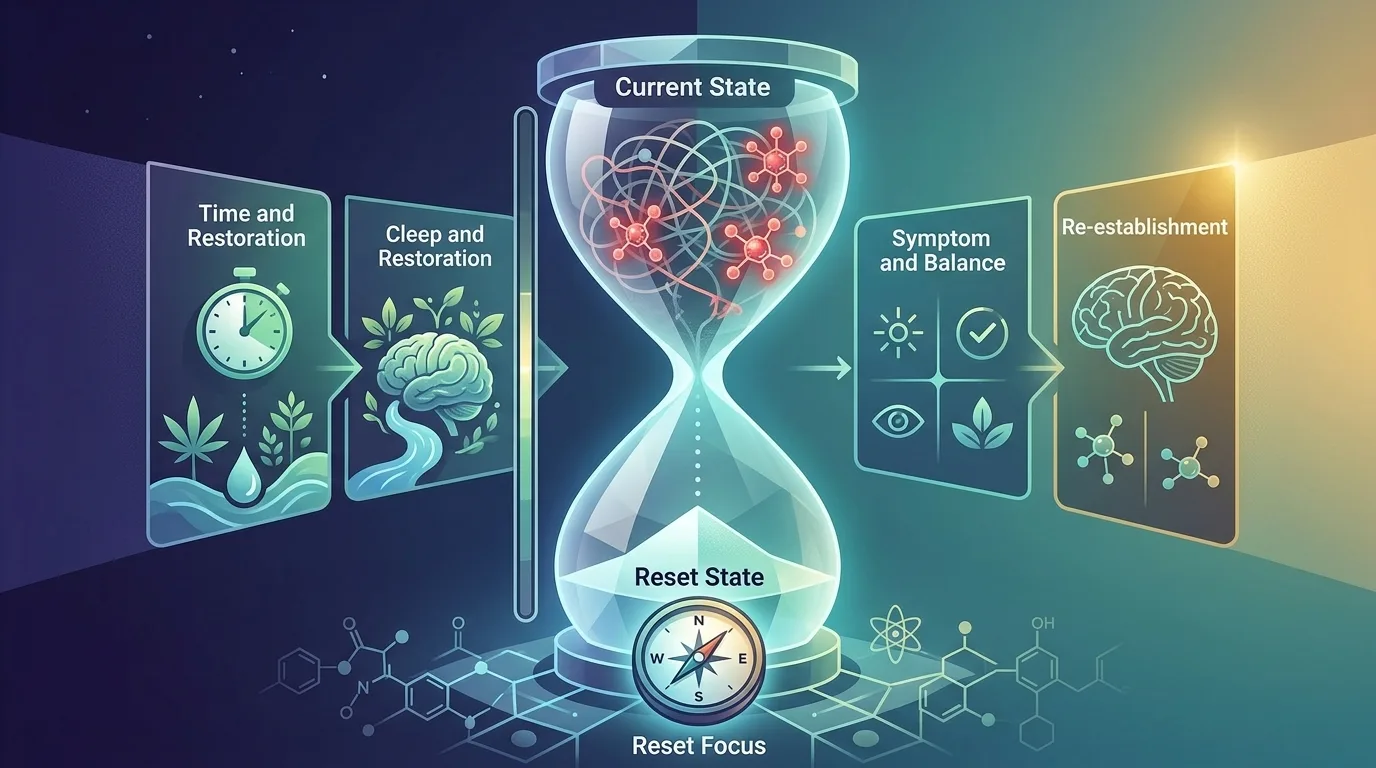
The upside? This process is reversible. Receptor density and sensitivity begin recovering within 48 hours of your last dose. Full restoration takes longer,we'll cover timelines in the next section,but meaningful improvement happens faster than most people expect. The system wants to return to baseline. You just have to give it time and space.
Realistic Timelines: What to Expect Week by Week
Tolerance breaks aren't one-size-fits-all. A weekend warrior needs less time than a decade-long daily consumer. But research and anecdotal reports give us useful benchmarks. Here's what happens during the most common break lengths, based on consumption patterns.
48-72 Hours: The Minimum Viable Reset
Two to three days off produces measurable receptor upregulation, especially for occasional users. If you consume 2-4 times per week and notice diminishing returns, a long weekend without cannabis can restore 30-40% of your baseline sensitivity. You won't return to "first time" levels, but your next session will feel noticeably stronger. This is the micro-break: short, manageable, and effective for light-to-moderate patterns.
One Week: Noticeable Improvement for Regular Users
Seven days produces significant recovery for most consumers. Daily users report that their first session after a week feels 60-70% as strong as it did months earlier. Sleep disturbances (common in the first 3-4 nights) typically resolve. Appetite normalizes. Mood stabilizes. One week isn't a full reset, but it's enough to make cannabis feel like cannabis again instead of a maintenance dose.
Two Weeks: The Standard Recommendation
Fourteen days is the most commonly cited tolerance break length because it balances efficacy with feasibility. By day 14, CB1 receptor density has largely returned to baseline for moderate users. Heavy daily consumers (gram-plus flower per day, high-dose edibles, multiple sessions) may need a few extra days, but two weeks delivers substantial restoration for most people. This is the sweet spot: long enough to work, short enough to stick with.
30 Days: Full System Reset
A month-long break allows complete receptor recovery and endocannabinoid system recalibration, even for decade-long daily users. By day 30, sensitivity is essentially restored to pre-tolerance levels. The first session after a full month can be disarmingly strong,approach it with caution and lower doses than you're used to. Many consumers who complete a 30-day break report that cannabis feels "new" again, with effects they hadn't experienced in years.
Most people don't need 30 days. But if you've been consuming heavily for years and genuinely can't remember what low-tolerance cannabis feels like, a full month is the gold standard. It's also an opportunity to reassess your relationship with cannabis and establish new consumption patterns that preserve sensitivity longer.
Cold Turkey vs Taper: Choosing Your Approach
You have two main paths into a tolerance break: abrupt cessation (cold turkey) or gradual reduction (tapering). Neither is "better",they serve different needs and personalities. Here's how to choose.
Cold Turkey: Fast, Clear, Uncomfortable
Stopping completely delivers the fastest receptor recovery. It also produces the most pronounced withdrawal symptoms in heavy users: insomnia, irritability, reduced appetite, vivid dreams, and night sweats. These symptoms peak around days 2-4 and typically resolve by day 7. For most people, they're uncomfortable but manageable,think of a bad week, not a medical crisis.
Cold turkey works best for: People with clear boundaries and high motivation. Consumers who want a clean break and defined timeline. Those with light-to-moderate use patterns (withdrawal symptoms are milder). Anyone who knows that "just one" will reset the clock.
The strategy is simple: pick a start date, remove all cannabis from your immediate environment, and commit to the timeline. Stock your space with alternative relaxation tools,herbal tea, CBD if it helps, exercise equipment, engaging books or games. The first three nights are the hardest. Plan for them.
Tapering: Gradual, Gentler, Requires Discipline
Reducing consumption over 7-14 days before stopping entirely minimizes withdrawal symptoms while still allowing receptor recovery. The downside: it requires more self-control and extends the timeline. If you struggle with moderation, tapering can become indefinite delay.
Tapering works best for: Heavy daily users who want to minimize disruption. People with demanding jobs or responsibilities who can't afford a rough week. Consumers who've tried cold turkey and found withdrawal symptoms genuinely interfering with function.
A basic taper protocol: reduce your daily intake by 25% every 2-3 days. If you normally consume four sessions, drop to three. Two days later, drop to two. Then one. Then stop. Switch to lower-THC products as you taper,this is where balanced-ratio cannabis shines. A 1:1 CBD:THC product at 50% of your normal dose delivers some effect while accelerating downregulation. For edible users considering a structured approach, learning how different milligram ranges affect various tolerance levels helps you plan an effective taper schedule.
The Middle Path: Lower-THC Products for Partial Breaks
Here's the option most guides ignore: you don't have to stop entirely to reset tolerance. Switching to significantly lower-THC products for 2-4 weeks produces meaningful receptor recovery while maintaining some cannabis in your routine. This isn't a full reset, but it's 60-70% as effective and infinitely more sustainable for people who use cannabis for symptom management or simply don't want to quit.
The Mechanics of a Partial Break
If your tolerance built on 25-30% THC flower or 50mg edibles, your receptors are adapted to high-dose exposure. Dropping to 10-15% flower or 5-10mg edibles for two weeks forces your system to re-sensitize because you're no longer providing the THC flood it expects. It's not as fast as abstinence, but it works,and it's dramatically easier to maintain.
The key is significant reduction, not marginal adjustment. Going from 30% to 25% flower won't do much. Going from 30% to 12% will. The bigger the drop, the faster the recovery. Aim to cut your THC exposure by at least 60-75% from your normal pattern. Understanding what THC percentages actually mean in practice helps you make informed switches that truly reduce your cannabinoid load without eliminating cannabis entirely.
Balanced-Ratio Cannabis: The Reset Tool Nobody Mentions
CBD:THC products in 1:1, 2:1, or even 5:1 ratios are uniquely useful during partial breaks. CBD doesn't produce tolerance the way THC does, and it may actually support faster CB1 receptor recovery. A 1:1 product with 10mg THC and 10mg CBD delivers mild effects while giving your system breathing room.
Use them as transition products: replace your evening high-THC session with a balanced option. You'll feel something,enough to satisfy the ritual,without reinforcing high-level tolerance. After two weeks on balanced products, your next high-THC session will hit considerably harder. For consumers curious about how these ratios affect experience, our guide on moving along the CBD to THC spectrum explains what to expect as you shift between different cannabinoid profiles.
Making It Stick: Practical Strategies for the Hard Days
Knowledge is easy. Execution is where tolerance breaks succeed or fail. Here are the strategies that actually help during the first difficult week.
Replace the Ritual, Not Just the Substance
If you vape every evening at 8pm, the absence creates a void. Don't try to white-knuckle through it,fill that time slot with something engaging. Brew elaborate tea. Take a walk with a podcast. Call a friend. Do pushups until you're too tired to think about cannabis. The ritual matters as much as the substance. Give yourself something to do instead of something to resist.
Front-Load Your Day
Tolerance break discomfort peaks in the evening when you'd normally consume. Schedule demanding activities during those hours: gym sessions, social plans, projects that require focus. Exhaust yourself before the cravings hit. Boredom is your enemy. Engaged exhaustion is your friend.
Track Your Progress Visibly
Mark each completed day on a calendar. Watch the number grow. This sounds trivial, but visible progress creates momentum. The further you get, the less willing you are to reset to zero. By day 5, you've invested too much to quit quitting. By day 10, you're proud of the streak. Small psychological tricks work.
Expect Vivid Dreams (and Embrace Them)
THC suppresses REM sleep. When you stop, REM rebounds,hard. You'll experience intensely vivid, sometimes bizarre dreams in nights 3-7. This is normal, temporary, and actually a sign that your brain chemistry is resetting. Some people find it unsettling. Others find it fascinating. Either way, it passes. Keep a dream journal if you're curious what your unconscious has been up to.
After the Break: Preserving Your Restored Sensitivity
You've completed your break. Your tolerance is reset. Congratulations,you now face the real challenge: not immediately rebuilding tolerance by returning to old patterns. Here's how to make the reset last.
Start Lower Than You Think
Your first session post-break will be strong. If you used to smoke 0.5g bowls, start with 0.2g. If your standard edible dose was 25mg, try 10mg. Seriously. Overestimating your restored tolerance leads to uncomfortable highs and wastes the reset you worked for. You can always consume more. You can't un-consume.
Space Out Your Sessions
Tolerance builds fastest with daily use. If you want to preserve sensitivity, aim for 4-5 sessions per week instead of 7. Take weekdays off, or take weekends off,whichever fits your lifestyle. The 48-hour gaps between sessions slow receptor downregulation significantly. You'll stay in the "sweet spot" longer.
Rotate Product Types and Potencies
Using the same 28% flower every day fast-tracks tolerance. Rotating between flower, edibles, lower-THC options, and balanced-ratio products keeps your system guessing and slows adaptation. Think of it as cross-training for your endocannabinoid system. Variety preserves sensitivity. For consumers who rely on convenience formats, understanding the onset and duration differences between smoking and edibles helps you vary your consumption method strategically throughout the week.
Schedule Regular Mini-Breaks
Instead of waiting until tolerance becomes unbearable, build periodic resets into your routine. A 3-day break every month, or a full week every quarter, prevents deep tolerance from developing in the first place. Maintenance is easier than major overhauls. Treat breaks as standard practice, not emergency measures.
What About CBD During a Tolerance Break?
CBD doesn't bind strongly to CB1 receptors and doesn't produce THC-style tolerance. Using CBD products during a THC break won't interfere with receptor recovery,in fact, some research suggests CBD may support endocannabinoid system homeostasis. If CBD helps you manage the discomfort of a break (anxiety, sleep disruption, etc.), use it freely. Just keep it THC-free or under 2-3mg THC per dose.
That said, CBD isn't a magic bullet. Some people find it helpful during breaks. Others notice no effect. If you've never used CBD before, a tolerance break probably isn't the time to experiment,you won't know if subtle effects are from the CBD or from your system resetting. Stick with what you know works or try CBD separately first.
Ready to Reset?
Browse our selection of lower-THC flower, balanced-ratio products, and CBD options designed to support your tolerance break strategy.
Shop Smart OptionsThe Substances That Make Breaks Harder (and What to Watch)
Tolerance breaks succeed or fail based on what else you're putting in your system. Three substances deserve specific mention because they commonly interfere with breaks or worsen withdrawal symptoms.
Alcohol: The Break-Killer
Alcohol and cannabis interact at the neurological level. Heavy drinking during a tolerance break often intensifies withdrawal symptoms (especially sleep disruption and irritability) and makes cravings worse. If you're serious about resetting tolerance, minimize alcohol during the break period. Switching one substance for another doesn't give your system the rest it needs.
Caffeine: The Sleep Thief
Many cannabis consumers don't realize they use THC to counteract caffeine-induced anxiety and insomnia. When you remove cannabis but maintain high caffeine intake, you unmask the underlying stimulation. If you're struggling with sleep during your break and you drink 3+ cups of coffee daily, that's likely the culprit. Reduce caffeine temporarily or cut your last dose to early afternoon.
Nicotine: The Pattern Reinforcer
If you've been mixing tobacco and cannabis (blunts, spliffs, etc.), the nicotine dependence and cannabis tolerance are tangled together. Taking a cannabis break while maintaining nicotine use is harder because the ritual is partially preserved. Consider whether this is a cannabis break or a combined reset. The latter is more challenging but potentially more valuable.
Tolerance begins rebuilding immediately when you resume regular use, but the speed depends on your consumption pattern. Daily high-dose use can restore significant tolerance within 2-3 weeks. Moderate use (3-4 times per week at lower doses) might take 6-8 weeks to approach your pre-break levels. The key to preserving your reset is spacing out sessions and avoiding the daily pattern that built tolerance initially.
Light and moderate users typically experience minimal withdrawal,maybe mild irritability or slight sleep disruption for 2-3 nights. Heavy daily users often experience more pronounced symptoms: insomnia, vivid dreams, reduced appetite, night sweats, and irritability, usually peaking around days 2-4 and resolving by day 7. These symptoms are uncomfortable but not dangerous and indicate your system is actively resetting. Tapering before stopping completely can minimize symptom severity.
Yes. CBD doesn't produce THC-style tolerance and won't interfere with CB1 receptor recovery. Many people use CBD during breaks to help manage sleep disruption or anxiety. Just ensure your CBD products are truly THC-free or contain only trace amounts (under 2-3mg per dose). High-THC 'CBD products' will slow your tolerance reset if you're consuming meaningful THC doses.
A 3-day break produces measurable receptor upregulation, especially for occasional users. Light-to-moderate consumers typically experience 30-40% improvement in sensitivity,not a full reset, but enough to notice that your next session hits harder. Daily heavy users will see less dramatic improvement in 72 hours but still benefit from the receptor recovery that begins within 48 hours. Think of it as a quick tune-up rather than a full overhaul.
It depends on your consumption pattern and lifestyle. Cold turkey delivers faster results and works well for light-to-moderate users or people with strong commitment. Tapering minimizes withdrawal symptoms and suits heavy daily users or those who can't afford disruption to work or responsibilities. The 'better' method is whichever one you'll actually complete. A gradual taper you finish beats a cold-turkey attempt you abandon on day 3.
Yes. High-dose edibles and concentrates build tolerance faster than moderate flower consumption because they deliver larger THC doses per session. Vaping and smoking produce quicker onset but shorter duration, potentially leading to more frequent dosing throughout the day. The total THC exposure matters most,someone taking 50mg edibles once daily builds similar tolerance to someone smoking 1.5g of 25% flower spread across three sessions. Method matters less than total milligrams and frequency.
Moving Forward: Tolerance Breaks as Maintenance, Not Failure
The cannabis conversation often frames tolerance breaks as corrective measures,something you do when you've messed up or let your consumption get out of hand. That framing is counterproductive. Tolerance is a normal physiological response to regular cannabinoid exposure. It happens to everyone who uses cannabis consistently, regardless of their reasons or responsibility level.
A better framework: think of tolerance breaks as maintenance. Like oil changes for your car or sleep for your body, periodic breaks keep your endocannabinoid system functioning optimally. They're not punishment. They're preservation. The consumers who benefit most from cannabis long-term are those who build breaks into their routine before tolerance becomes problematic.
You now have the information to design a break that fits your life: cold turkey if you want fast results and can handle a rough week, tapering if you need a gentler approach, or the middle path of lower-THC products if complete abstinence isn't realistic. Start where you are. Pick a timeline that's challenging but achievable. Mark it on your calendar. Then execute.
Your receptors are waiting to recover. They do it quickly, reliably, and without judgment. All they need is time and lower THC exposure. Give them two weeks, and cannabis will feel like cannabis again instead of a baseline requirement. That's worth a little discomfort.