The first time someone shows you a cold-start dab, it feels backwards. You watch them load concentrate into a cold banger, cap it, then start heating from the bottom up. No torch countdown, no finger-hover temperature test, no burnt-tasting cloud you politely pretend was smooth. Just clean, flavourful vapour that tastes exactly like the strain smells in the jar. That's the entire point: cold-start dabbing flips the traditional method on its head to preserve terpenes and deliver a smoother, more controlled experience. For anyone who's ever scorched expensive live resin or coughed through an overheated dab, this technique changes the game entirely.
Cold-start dabs,also called reverse dabs,have become the preferred method among flavour-focused concentrate users across Canada. The technique is simple enough for first-timers yet refined enough that experienced dabbers use it exclusively. This guide walks through exactly what cold-start dabbing is, why it works better for terpene preservation, the step-by-step process on a standard quartz banger, and how to troubleshoot the most common issues. Whether you're new to concentrates or looking to improve your current setup, understanding the cold-start method opens up a cleaner, tastier side of cannabis extracts.
What Is Cold-Start Dabbing?
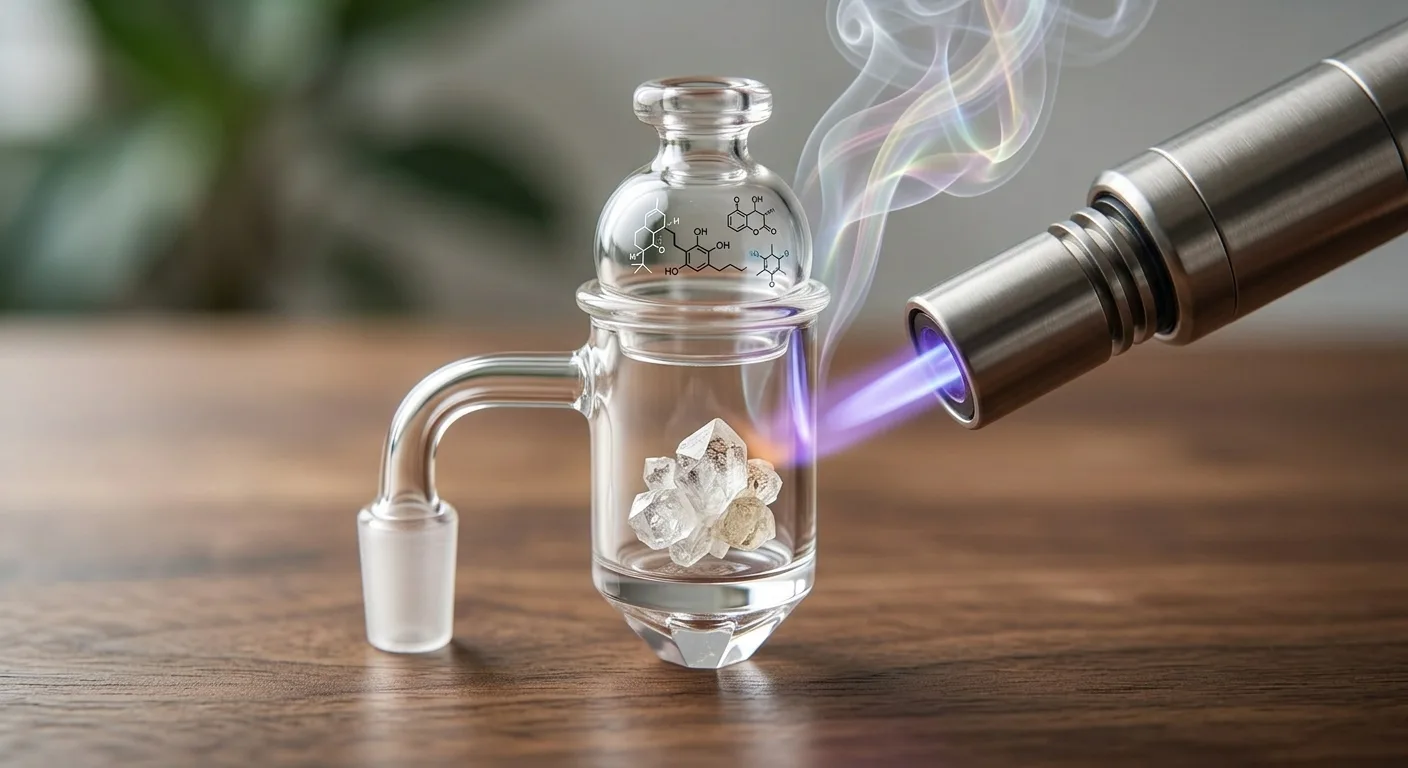
Cold-start dabbing means loading your concentrate into a room-temperature banger, capping it immediately, then applying heat gradually until vapour forms. The crucial difference: you're heating with the concentrate already inside, not dropping concentrate onto a pre-heated surface. This reversal eliminates the guesswork of traditional hot-start dabs where you torch the banger red-hot, wait 30 to 60 seconds for it to cool to an ideal temperature, then quickly load your dab before the window closes.
With a cold start, you control the temperature in real time by watching the concentrate melt and bubble. When you see vapour begin to form, you stop heating and inhale. The process is slower, more deliberate, and removes the anxiety of timing. There's no rush to drop your dab before the banger cools past the sweet spot, and there's no risk of touching molten quartz with a hot concentrate on the end of your tool.
The technique works because terpenes,the aromatic compounds responsible for flavour and part of the entourage effect,vapourize at lower temperatures than cannabinoids. Traditional hot dabs often superheat the banger well above 450°C during the initial torch phase, and even after cooling, residual heat can push temperatures into ranges that burn terpenes instead of vapourizing them. Cold-start dabbing keeps the entire heating curve in the optimal 150°C to 230°C zone where terpenes and cannabinoids vapourize without combusting.
Cold Start vs. Hot Start: The Real Difference
Hot-start dabs prioritize speed and cloud production. You heat the banger until it glows, let it cool briefly, drop the concentrate, and immediately cap. The result is a large, fast-forming vapour cloud that can feel harsh and often tastes slightly burnt, especially if your timing is off by even ten seconds. Hot starts waste terpenes in the initial flash and leave behind more residue because not all the concentrate vapourizes evenly.
Cold starts prioritize flavour and efficiency. Because you heat gradually, the concentrate liquefies first, spreads evenly across the banger floor, then vapourizes uniformly as temperature rises. You taste every terpene note,pine, citrus, fuel, berry,in sharp detail. The vapour is smoother, cooler, and less likely to trigger coughing. You also use less product because more of it vapourizes instead of pooling or burning onto the quartz. For anyone using premium extracts like live resin or diamonds, the cold-start method respects the quality you paid for.
Why Cold-Start Dabs Preserve Flavour Better
Terpene preservation is the single biggest advantage of cold-start dabbing. Terpenes are volatile organic compounds that give cannabis its smell and contribute to its effects. Each strain's unique profile,whether it's the myrcene-heavy earthiness of an indica or the limonene-bright citrus of a sativa,comes from its specific terpene blend. These compounds are fragile. Myrcene boils at around 167°C, limonene at 176°C, pinene at 155°C. When a banger sits at 300°C or higher, those terpenes don't vapourize,they combust, oxidize, or evaporate into the air before you inhale.
Cold-start dabbing solves this by keeping the entire temperature range low and controlled. You begin at room temperature, heat slowly, and stop the moment vapour forms. This gradual climb means terpenes vapourize in sequence as the temperature rises through their individual boiling points, rather than all burning off at once in a superheated flash. The result is a layered flavour experience: you taste the bright top notes first, then the deeper, resinous base notes as you continue inhaling. It's the difference between tasting a strain and tasting heat.
Live resin, live rosin, and sauce extracts benefit most from cold starts because they contain higher terpene percentages than distillate or shatter. These flavour-rich concentrates are produced specifically to preserve the plant's original terpene profile, so using a method that burns those terpenes off defeats the purpose. Cold-start dabbing is the extraction method's natural match,both aim to keep the plant's aromatic complexity intact from harvest to inhale.
Smoother, Cooler Vapour
Beyond flavour, cold starts produce physically smoother vapour. High-temperature dabs irritate the throat and lungs because you're inhaling air that's been superheated by contact with 300°C+ quartz. Even after the banger cools during the wait period, the initial vapour burst is still harsh. Cold-start vapour never reaches those extreme temperatures. By the time you're inhaling, the banger is warm,not scorching,and the vapour itself is dense but cool enough to avoid the coughing fit that defines many people's early dab experiences.
This makes cold-start dabbing more accessible for new users and more comfortable for anyone with sensitive lungs. If you've avoided concentrates because traditional dabs felt too harsh, the cold-start method removes that barrier. The experience is closer to a strong, flavourful vapourizer hit than the punch-to-the-chest intensity of a red-hot dab. For a detailed comparison of different concentrate types and their ideal consumption methods, read our guide on shatter vs wax vs live resin.
Step-by-Step: How to Do a Cold-Start Dab
The cold-start process is straightforward once you understand the rhythm. You'll need a standard quartz banger (flat-top works best), a carb cap, a dab tool, a butane torch, and your concentrate. The technique works with most extract types,live resin, diamonds, budder, crumble, rosin,but struggles with very stable, hard shatters that don't melt easily. Here's the exact process:
Step 1: Load the Concentrate
Scoop a dab-sized portion of concentrate onto your dab tool. For cold starts, smaller is better,think rice grain to small pea. Because the method is so efficient, you need less product to achieve the same effect as a larger hot dab. Place the concentrate directly into the centre of the cold banger floor. Don't spread it around or wipe it off the tool yet; just deposit it and set the tool aside. The concentrate should sit in a small mound in the middle of the bucket.
Step 2: Cap Immediately
Place your carb cap on top of the banger before you start heating. This is critical. The cap traps heat and creates the airflow restriction that helps vapour form evenly. If you wait to cap until after heating starts, you lose efficiency and risk uneven vapourization. With the cap on, the chamber is sealed and ready. You should see the concentrate sitting in the bottom through the cap if it's clear glass or quartz.
Step 3: Apply Heat from Below
Hold your torch under the banger bottom, keeping the flame tip about 2 to 5 centimeters away from the quartz. Move the torch in slow circles to distribute heat evenly. Don't focus the flame on one spot or you'll create a hot zone that burns the concentrate unevenly. Watch the concentrate inside through the cap. It will first liquefy and spread across the banger floor. Then, as temperature continues to rise, you'll see small bubbles form. This bubbling is the first sign that cannabinoids and terpenes are beginning to vapourize.
Continue heating gently. After 10 to 20 seconds (timing varies based on banger thickness and torch strength), you'll see vapour start to form inside the chamber. The moment you see visible vapour building, stop torching. Remove the heat source completely. The banger will continue to rise in temperature briefly due to retained heat, so stopping at first vapour prevents overshooting into harsh territory.
Step 4: Inhale Slowly
With the torch removed and the carb cap still on, begin inhaling slowly through the rig. The vapour should be thick, flavourful, and smooth. Don't rip it hard,slow, steady draws allow the vapour to cool slightly as it travels through the piece and give you better flavour perception. Continue inhaling until vapour production slows or stops. If you see concentrate still pooling in the banger, you can apply another brief 2 to 3 second heat pulse and inhale again, but most cold starts fully vapourize in one go.
Step 5: Clean While Warm
Immediately after finishing your dab, remove the carb cap and swab the inside of the banger with a cotton swab. The quartz will still be warm,not hot,and any residual concentrate will wipe away easily. This prevents buildup, keeps your banger clean, and preserves flavour for the next dab. If you skip this step, residue hardens, burns during the next heat cycle, and creates the burnt taste cold-start dabbing is designed to avoid. A clean banger is a flavourful banger.
Choosing the Right Concentrate for Cold-Start Dabs
While cold-start technique works with most extracts, some concentrates perform better than others. The method favours textures that melt easily and spread evenly across the banger floor. Live resin, budder, sauce, and diamonds with sauce are ideal because they liquefy quickly and vapourize uniformly. These extracts also contain the highest terpene content, so the flavour payoff of cold-start dabbing is most noticeable.
Sugar wax and crumble work well too. Their crystalline structure breaks down under gentle heat, and because they're less sticky than budder, they're easier to load without waste. Sugar wax especially benefits from cold starts because its granular texture can burn easily on a too-hot surface, but melts beautifully when heated gradually. Rosin,both flower and hash rosin,is another excellent match. Its full-spectrum, solventless profile shines when terpenes are preserved, and the cold-start method highlights the complexity that makes rosin premium.
Shatter is the one concentrate that struggles with cold starts. Its glass-like stability means it doesn't melt as readily, and if your piece is too thick, it may not fully vapourize before the banger cools. You can pre-warm shatter slightly with your fingers to soften it, but even then, a traditional hot dab often works better for very hard, stable shatters. For everything else,especially the flavour-forward extracts dispensaries market as top-shelf,cold-start dabbing is the best way to consume them.
Why Live Resin and Sauce Are Perfect for Cold Starts
Live resin is flash-frozen immediately after harvest, preserving terpenes that would otherwise degrade during drying and curing. The result is an extract with 5% to 15% terpene content,significantly higher than most other concentrates. When you cold-start live resin, you taste exactly what the strain smelled like in the grow room. The method matches the extract's intent: preserve everything, burn nothing.
Sauce takes this further. It's live resin that's been mechanised to separate into THC-A crystals (diamonds) and a viscous, terpene-rich liquid (the sauce). Cold-starting sauce gives you the best of both: the crystals melt into potent vapour while the surrounding terpenes vapourize at their ideal temperatures. The flavour is intense, layered, and clean. If you've invested in premium sauce or diamond extracts, using a cold-start method is the only way to fully appreciate what you bought. To understand more about how these concentrates are made and tested, check out our breakdown of how cannabis lab testing works.
Troubleshooting Common Cold-Start Mistakes
Cold-start dabbing is forgiving, but beginners still make a few predictable mistakes. The most common: overheating. It's tempting to keep torching until you see thick clouds, but that defeats the purpose. If you heat past first vapour, you're back in hot-dab territory,harsh, burnt-tasting, and terpene-depleted. The trick is patience. Stop heating the moment you see vapour form, even if it looks thin. Trust that the retained heat will continue producing vapour as you inhale.
Another frequent issue: uneven heating. If you hold the torch in one spot instead of moving it in circles, part of the banger gets much hotter than the rest. This creates a hot zone where concentrate burns while the rest barely vapourizes. Move the torch constantly, and keep the flame at a consistent distance from the quartz. Even heating is especially important with thicker bangers, which retain heat longer and can develop hot spots if torched carelessly.
Not Capping Before Heating
Some users forget to cap until after they start heating. Without the cap, heat escapes, the concentrate doesn't vapourize efficiently, and you waste both product and butane. The carb cap is not optional in cold-start dabbing,it's integral to the method. Always cap before you torch. If your cap doesn't seal well or your banger has an irregular top, upgrade to a flat-top banger and a snug-fitting directional or bubble cap. The investment pays off in flavour and efficiency.
Using Too Much Concentrate
Because cold starts are so efficient, a little goes a long way. New users accustomed to hot-dab portion sizes often load double what they need. The excess pools in the banger, doesn't fully vapourize, and has to be cleaned out. Start small,litreally the size of a grain of rice for most rigs. You can always take a second dab. You can't un-waste the concentrate already burning onto your quartz. Smaller dabs also keep the banger cleaner, which preserves flavour long-term.
Skipping the Post-Dab Swab
Not cleaning your banger immediately after a dab is the fastest way to ruin flavour and shorten your banger's life. Residue hardens as the quartz cools, and the next time you heat it, that residue burns and adds a harsh, burnt taste to your next dab. Keep cotton swabs next to your rig and swab the banger every single time while it's still warm. This takes five seconds and prevents the buildup that eventually turns quartz cloudy and unusable. Clean quartz = clean flavour.
Equipment Tips: What Works Best for Cold Starts
The cold-start method works on nearly any standard dab rig setup, but a few equipment choices make the experience smoother. Start with a quartz banger. Ceramic and titanium nails don't heat evenly enough for precise cold starts, and glass bangers are too fragile. Quartz heats predictably, retains just enough warmth for full vapourization, and cleans easily. Flat-top bangers are ideal because they seal better with carb caps, but bucket-style and angled bangers work fine too.
Banger thickness matters. Thinner quartz (2mm) heats faster, which is great for speed but requires more careful torch control to avoid overshooting temperature. Thicker quartz (4mm) heats slower and retains heat longer, giving you a more forgiving cold-start window but requiring a longer torch time. For beginners, 3mm is the sweet spot,fast enough to be convenient, thick enough to hold steady heat. If you're serious about flavour, invest in a quality American- or Canadian-made quartz banger. Cheaper imports often have impurities that affect taste and heat retention.
Carb Caps: Directional vs. Bubble vs. Standard
Your carb cap controls airflow and traps heat, so fit and function matter. Standard flat caps work, but directional caps,those with an angled airflow tube,improve vapour production by creating a vortex that moves concentrate around the banger floor. This ensures even vapourization and reduces pooling. Bubble caps (or spinner caps) do the same with a rounded design that seals tighter on certain banger styles. If your current cap wobbles or doesn't seal flush, upgrade. A proper seal makes cold starts noticeably more efficient.
Torches and Heat Sources
Any butane torch will work for cold starts, but a mid-sized torch (not a huge blazer, not a tiny pocket torch) gives you the best control. Large torches overheat quickly and make it hard to apply gentle, gradual heat. Tiny torches take forever and run out of fuel mid-dab. A standard kitchen or cigar torch with adjustable flame is perfect. Some users prefer e-nails or PID-controlled electronic rigs for cold starts because you can set a precise low temperature and let the device handle the heating. E-nails remove guesswork entirely, but they're an investment. For most users, a $20 butane torch and a clean quartz banger are all you need.
Why the Dab Community Recommends Cold Starts
Cold-start dabbing has become the default recommendation in concentrate-focused communities,subreddits, forums, YouTube channels,because it's both beginner-friendly and expert-approved. New dabbers appreciate that there's no timing anxiety or risk of burning themselves. Experienced users love the flavour clarity and efficiency. The method democratizes high-quality concentrate experiences: you don't need perfect technique or expensive equipment to get smooth, tasty dabs. You just need patience and a willingness to heat slowly.
The technique also aligns with the broader cannabis trend toward terpene preservation and full-spectrum experiences. As consumers become more educated about cannabinoids, terpenes, and the entourage effect, methods that respect the plant's natural complexity gain traction. Cold-start dabbing is part of that shift. It's a technique that prioritizes quality over convenience, flavour over cloud size, and respect for the product over rushing the process. That ethos resonates with the same crowd that seeks out live resin, rosin, and other premium extracts.
From a harm-reduction perspective, cold starts are also safer. Lower temperatures mean less risk of inhaling overheated vapour or creating harmful byproducts from burnt material. While more research is needed, the general principle holds: cooler vapour is gentler on your respiratory system. For medical users and anyone concerned about lung health, cold-start dabbing is a clear improvement over traditional high-temp methods. If you're new to concentrates entirely, our beginner's guide to cannabis concentrates covers all the basics before you take your first dab.
Frequently Asked Questions About Cold-Start Dabs
Heat until you see vapour begin to form inside the capped banger, usually 10 to 20 seconds depending on banger thickness and torch strength. Stop immediately when vapour appears. The key is watching the concentrate, not counting seconds.
Shatter works but isn't ideal. Its hard, stable texture doesn't melt as easily as budder or live resin, so you may need to heat longer or pre-soften it. Saucy, terpy concentrates perform much better with cold starts.
No. Any standard quartz banger works. Flat-top bangers seal better with carb caps, but bucket-style or angled bangers are fine. Avoid ceramic or titanium,quartz heats most evenly and cleanly for cold starts.
You're likely heating too long. Stop torching the moment you see vapour form. Burnt taste means the banger got too hot, which defeats the low-temp purpose of cold-start dabbing. Also ensure your banger is clean,residue from previous dabs burns and ruins flavour.
Yes. Because the concentrate melts and spreads evenly before vapourizing, more of it converts to vapour instead of pooling or burning onto the quartz. You'll use less product per session and get smoother, more flavourful hits.
Absolutely. If you see pooled concentrate after your first inhale, apply another quick 2 to 3 second heat pulse and inhale again. Just watch closely,reheating can push the temperature higher, so be gentle with the torch.
Conclusion: Cold-Start Dabbing for Better Flavour and Smoother Sessions
Cold-start dabbing is proof that slowing down improves the experience. By reversing the traditional hot-start method,loading first, heating second,you preserve the terpenes that define each strain's flavour and smooth out the harshness that turns many people away from concentrates. The technique is simple enough for first-timers, requires no special equipment beyond a standard quartz banger and carb cap, and delivers a noticeably cleaner, tastier dab every time. For anyone using premium extracts like live resin, sauce, or rosin, cold starts are the only method that fully honours the product's quality.
Whether you're new to concentrates or a seasoned dabber looking to refine your technique, mastering the cold-start method opens up a more flavourful, controlled, and enjoyable side of cannabis consumption. Heat slowly, watch for vapour, stop at first formation, and swab your banger clean. That's the entire process. The results,smooth, terpene-rich hits that taste exactly like the strain smells,speak for themselves.
Explore Premium Concentrates for Cold-Start Dabs
Ready to experience the full flavour of live resin, sauce, and rosin? Browse our selection of terpene-rich extracts perfect for cold-start dabbing.
Learn More