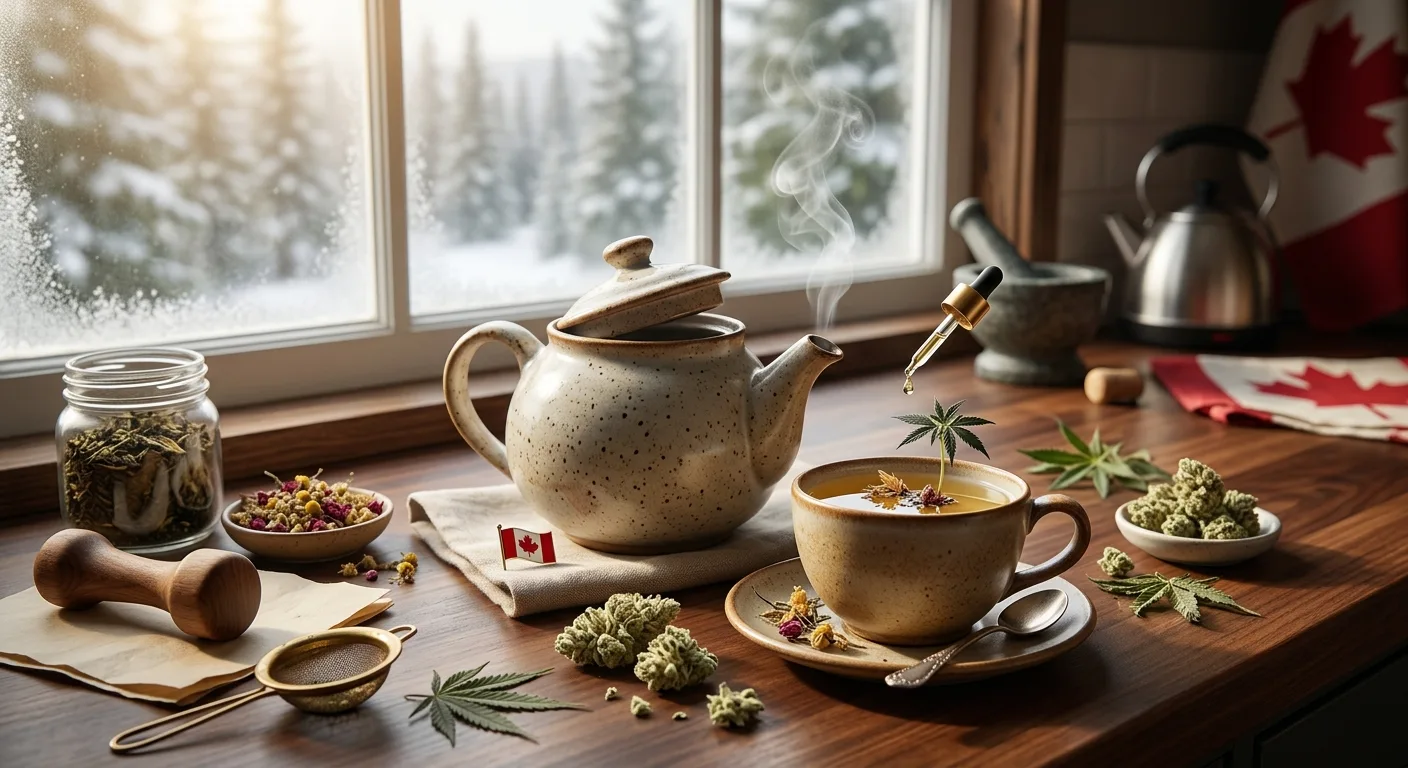
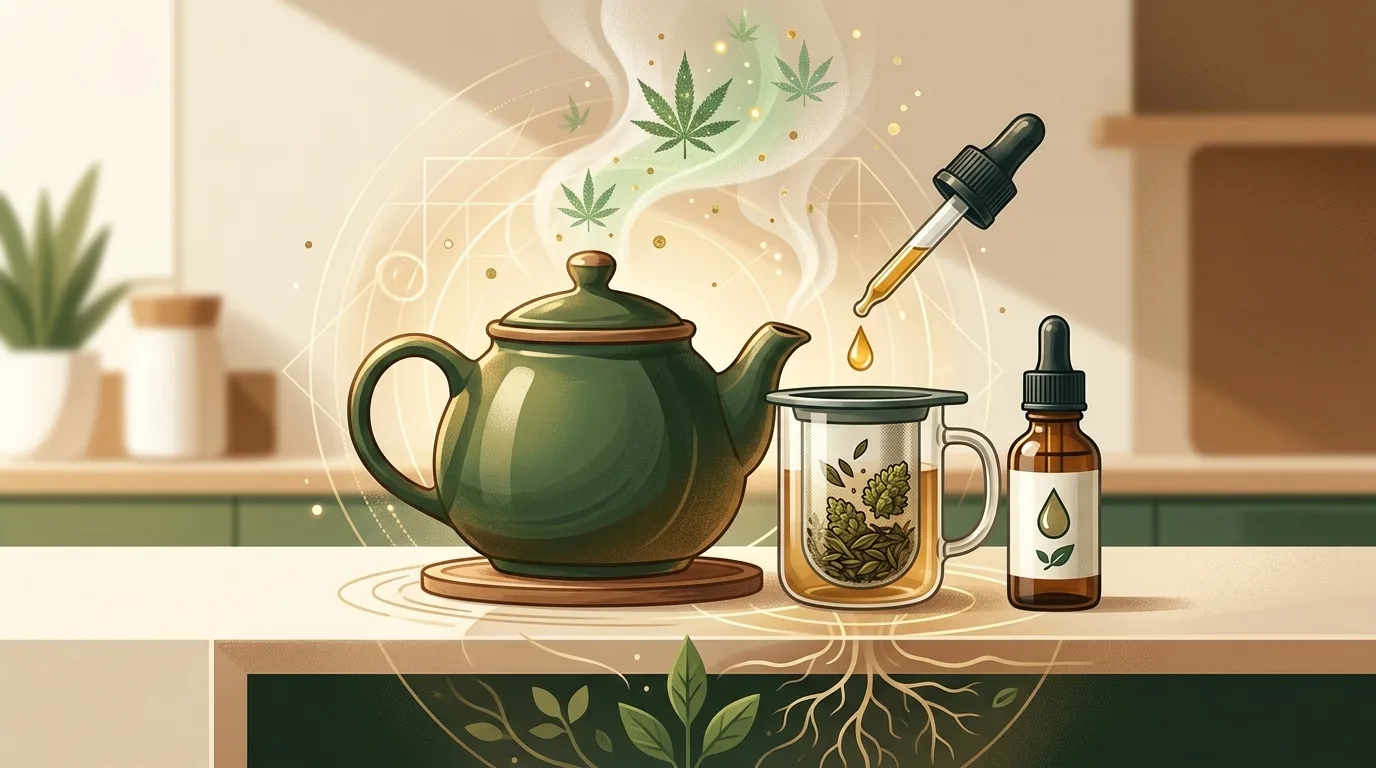
You've steeped the cannabis. You've waited. You've sipped. And... nothing happens. Sound familiar? The disappointing truth about homemade THC tea is that most people do it wrong. Cannabis doesn't magically dissolve in hot water the way your Earl Grey does, and if you're not accounting for cannabinoid solubility, you're essentially making expensive leaf water with almost zero psychoactive effect. The good news? Once you understand the science behind how to make THC tea work properly, you can create a reliable, dose-controlled alternative to edibles that hits differently than smoking or vaping.
THC tea has become increasingly popular among Canadian cannabis consumers who want a gentler, more ritualistic consumption method. But the chemistry of cannabinoids demands specific preparation techniques that most online recipes gloss over. This guide breaks down exactly what separates effective THC tea from disappointment in a mug, covering decarboxylation, fat-binding requirements, proper temperature control, and realistic dosing expectations. Whether you're brewing for sleep, pain management, or social relaxation, these techniques ensure your cannabinoids actually make it into your bloodstream instead of down the drain.
Why Water Alone Won't Extract THC: The Fat-Soluble Problem
The fundamental issue with making THC tea is molecular incompatibility. Cannabinoids including THC and CBD are lipophilic, which means they bind to fats and oils but resist dissolving in water. When you drop raw or even decarboxylated cannabis flower directly into boiling water without any fat carrier, you're asking a hydrophobic molecule to do something it chemically refuses to do. The THC stays locked in the plant matter, and when you strain out the solids and drink the liquid, you're consuming negligible amounts of the compounds you're after.
Think of it like trying to wash oil off your hands with water alone. No amount of hot water will make that grease disappear without soap acting as an emulsifier. Cannabis tea requires the same principle: you need a fat-based carrier to pull the THC from the plant material and keep it suspended in your beverage. This is why traditional cannabis tea recipes from cultures with long histories of medicinal use almost always incorporate butter, ghee, coconut oil, or full-fat milk. These aren't just flavour additions, they're chemically necessary components.
The most effective fat carriers for THC tea include coconut oil (high in medium-chain triglycerides that absorb efficiently), whole milk or cream (the milk fat percentage directly affects extraction capacity), butter or ghee (traditional but effective), and MCT oil (flavourless and highly bioavailable). Even a single tablespoon of full-fat coconut milk can make the difference between an active cup and wasted cannabis. The fat doesn't just extract the THC during brewing, it also helps your digestive system absorb the cannabinoids after consumption, serving double duty in bioavailability.
Decarboxylation: The Non-Negotiable First Step
Before your cannabis ever touches hot water, it needs to undergo decarboxylation. Raw cannabis flower contains THCA, the acidic precursor to THC that produces no psychoactive effects. Heat converts THCA into active THC through a process that removes a carboxyl group from the molecule. Simply steeping raw flower in hot tea water will not decarboxylate it sufficiently, even at boiling temperatures, because the process requires sustained heat at specific temperature ranges for optimal conversion.
Proper decarboxylation happens in a 220-245°F (105-118°C) range for 30-45 minutes. The most reliable method is oven decarboxylation: grind your cannabis moderately fine (not powder), spread it evenly on parchment-lined baking sheet, and bake at 240°F for 40 minutes. Your kitchen will smell strongly of cannabis, which is normal and indicates the terpenes and cannabinoids are activating. After cooling, this decarbed flower is ready to infuse into your fat carrier before being added to tea.
Some enthusiasts attempt to decarboxylate during the tea-making process itself by simmering cannabis in milk or butter for extended periods. While this can work, it's less precise and risks either under-decarbing (leaving THCA unconverted) or over-cooking (degrading THC into CBN, which is more sedative and less psychoactive). Pre-decarbing gives you control and consistency, especially important when you're trying to achieve reliable dosing.
The Three-Step Process for Effective THC Tea
Making THC tea that actually works requires a specific sequence: decarboxylate your cannabis, infuse it into a fat carrier, then combine that infusion with your tea base. This three-step approach ensures maximum cannabinoid activation and extraction. Skipping or combining steps is the primary reason homemade cannabis tea fails to deliver expected effects. Each phase serves a distinct chemical purpose in transforming raw flower into an orally bioavailable beverage.
Step One: Decarboxylate Your Cannabis
Start with 0.5 to 1 gram of cannabis flower per serving, depending on your tolerance and the potency of your starting material. If your flower tests at 20% THC, one gram contains approximately 200mg of THC. After decarboxylation converts the THCA, you're working with roughly 180-190mg of active THC (there's always some loss during heating). For most users, a single serving should use 0.25-0.5 grams to achieve moderate effects in the 50-100mg range.
Grind your measured cannabis to a medium consistency, similar to what you'd use for a joint. Spread it on a parchment-lined baking sheet in a thin, even layer. Preheat your oven to 240°F and bake for 40 minutes. Set a timer because over-decarbing degrades THC into less desirable cannabinoids. The colour will shift from bright green to a darker, brownish-green when properly decarbed. Let it cool completely before handling, as the material will be dry and crumbly.
Step Two: Create Your Fat Infusion
This is where THC extraction actually happens. For a single serving, heat 1-2 tablespoons of your chosen fat carrier in a small saucepan over low heat. Coconut oil is popular because it's shelf-stable, has a neutral-to-pleasant flavour, and contains medium-chain triglycerides that enhance cannabinoid absorption. Add your decarboxylated cannabis to the warm fat and maintain a gentle simmer (around 160-180°F) for 20-30 minutes, stirring occasionally.
Temperature control matters here. Too hot and you'll degrade the THC you worked to activate. Too cool and extraction will be incomplete. A candy thermometer helps maintain the sweet spot. You'll see the fat take on a greenish tint as chlorophyll and cannabinoids leach from the plant material. After the infusion period, strain the mixture through a fine-mesh strainer or cheesecloth, squeezing the plant material to extract every drop of infused oil. What remains is your cannabinoid-loaded fat carrier ready to add to tea.
For those who prefer a less involved process, you can make larger batches of cannabis-infused coconut oil or butter in advance using the same method with scaled-up quantities. Store the finished infusion in an airtight container in the refrigerator where it will keep for several weeks. When you want tea, simply melt a tablespoon of your pre-made infusion and add it to your beverage, streamlining the process significantly.
Step Three: Combine Infusion with Your Tea Base
Brew your tea of choice as you normally would. Herbal teas like chamomile, mint, or rooibos pair well with cannabis and won't overpower the earthy cannabis notes. Bring water to appropriate temperature for your tea type, steep for the recommended time, then remove the tea bag or strain out loose leaves. Now add your cannabis-infused fat while the tea is still hot. The heat helps the oil integrate more smoothly.
Here's the visual reality: oil and water don't mix, even with stirring. Your cannabis coconut oil will float on the surface in a slick layer. This is normal and expected. For better integration and a more pleasant drinking experience, many people add a splash of milk (dairy or plant-based), honey, or use a milk frother to create an emulsion. The milk's proteins act as natural emulsifiers, helping distribute the oil throughout the liquid. Some cannabis tea enthusiasts use a handheld immersion blender for 10-15 seconds to create a more uniform, latte-like consistency.
Flavour adjustments matter because cannabis-infused fat has a distinct earthy, sometimes bitter taste that not everyone enjoys. Honey, maple syrup, vanilla extract, cinnamon, or chai spices can mask or complement the cannabis flavour. Adding a small amount of lecithin powder (available at health food stores) also improves emulsification and may slightly enhance THC bioavailability by helping it form smaller droplets that absorb more readily.
Dosing THC Tea: Why Precision Matters
Oral cannabis consumption, whether through edibles or infused beverages, produces significantly different effects than smoking or vaping. The THC passes through your digestive system and liver, where it's metabolized into 11-hydroxy-THC, a compound that crosses the blood-brain barrier more efficiently and produces stronger, longer-lasting psychoactive effects. This means 10mg of THC in tea can feel considerably more intense than 10mg inhaled, and the effects last 4-8 hours instead of 2-3.
Calculating your dose starts with knowing your cannabis potency. If you're using flower without test results, assume 15-20% THC for mid-grade and 20-25% for premium flower. One gram of 20% THC flower contains 200mg THC. After decarboxylation you retain roughly 90%, leaving you with about 180mg. If you use 0.5 grams in your infusion, that's 90mg THC total. Consuming the entire infusion means a 90mg dose, which is quite strong for anyone without significant edible tolerance.
For beginners, start with 5-10mg THC per serving. This means using 0.1-0.15 grams of 20% THC flower for your entire tea preparation. Experienced users comfortable with higher-dose edibles might use 0.25-0.5 grams (50-100mg THC). The onset time for THC tea ranges from 30 minutes to 2 hours depending on your metabolism, recent food intake, and individual digestive efficiency. Effects peak around 2-3 hours after consumption and taper gradually over the following hours.
Variables That Affect Your Experience
Empty stomach versus full stomach dramatically impacts onset and intensity. Consuming THC tea on an empty stomach produces faster onset (45-60 minutes) but potentially more intense effects. Drinking it after a meal slows absorption (90-120+ minutes) but creates a gentler, more gradual experience. Your body's fat content and metabolism also play roles in how efficiently you process oral THC, which is why two people drinking identically prepared tea can have noticeably different experiences.
The type of fat carrier influences absorption rates too. Coconut oil's medium-chain triglycerides absorb faster than longer-chain fats, potentially shortening onset time slightly. Some users report that adding a small amount of sunflower or soy lecithin to their infusion improves consistency and bioavailability, though scientific evidence for this practice in cannabis preparation remains limited and anecdotal.
Temperature of consumption matters less than you might think once the infusion is complete. Hot, warm, or even iced cannabis tea will deliver the same dose as long as the fat carrier remains incorporated. Some people prefer making concentrated cannabis-infused coconut oil "shots" that they add to any temperature beverage, giving them flexibility to enjoy their dose in cold brew coffee, smoothies, or traditional hot tea without repeating the infusion process each time.
Common Mistakes That Waste Your Cannabis
The most frequent error is skipping decarboxylation and expecting THCA-rich raw flower to produce psychoactive effects. While raw cannabis has therapeutic properties related to THCA and other cannabinoids, it won't get you high. If you've ever made tea from raw flower and felt disappointed, this was almost certainly why. The molecular structure of THCA doesn't fit the same brain receptors as THC, making it essentially inactive for recreational purposes no matter how much you consume.
Using insufficient or no fat carrier is the second major mistake. Water temperature, steeping time, and stirring won't overcome the fundamental chemistry that makes THC fat-soluble and water-resistant. Even using low-fat milk (1-2% fat content) dramatically reduces extraction efficiency compared to whole milk or cream. If you're trying to keep calories low, a single tablespoon of MCT oil adds about 120 calories but ensures your cannabinoids actually extract and remain bioavailable.
Over-boiling your infusion degrades THC into CBN and other degradation products. While CBN has sedative properties some users enjoy, it's not the experience most people want from THC tea. Keep your infusion at a gentle simmer (around 160-180°F) rather than a rolling boil. If you can't maintain precise temperature control, err on the side of lower heat for longer time rather than higher heat for shorter duration.
Straining too early or too aggressively also reduces potency. Give your cannabis adequate time in contact with the fat carrier, the full 20-30 minutes recommended. When straining, gently press or squeeze the plant material to extract the infused oil, but don't squeeze so hard that you push chlorophyll and plant particulates through your strainer, which adds bitterness without adding cannabinoids. The balance is extracting the oil thoroughly while leaving the plant solids behind.
Storage and Reheating Considerations
If you make a larger batch of cannabis-infused fat carrier, proper storage prevents degradation and maintains potency. Store in an airtight, opaque container in the refrigerator where most infused oils remain stable for 2-3 weeks. Freezing extends this to several months, though it may affect texture. Light and heat are cannabinoid enemies, so dark, cool storage is essential for preserving your work.
Reheating previously made THC tea is perfectly safe and doesn't significantly degrade potency as long as you don't bring it to a hard boil. Gentle rewarming on the stove or in the microwave maintains the infusion. If the oil has separated during storage (normal for cooled beverages), re-emulsify by stirring vigourously, adding a splash of milk, or using a frother before drinking. The cannabinoids remain active regardless of whether the emulsion is perfect.
Beyond Basic Tea: Advanced Preparation Methods
Once you've mastered the standard three-step process, several advanced techniques can improve consistency, flavour, or convenience. Sous vide decarboxylation and infusion offers precise temperature control that prevents degradation. Place ground cannabis in a vacuum-sealed bag and submerge in a 203°F water bath for 90 minutes for decarboxylation. Then add your fat carrier to the same bag with the decarbed flower and cook at 185°F for 2-4 hours for extraction. The sealed environment contains all terpenes and aromatics that would otherwise evaporate, creating a more robust flavour profile.
Alcohol tincture methods provide another route to water-soluble cannabis beverages. While not technically tea, glycerin or ethanol-based tinctures can be added to hot or cold beverages. Vegetable glycerin tinctures are made by soaking decarbed cannabis in food-grade glycerin for several weeks, shaking daily. The glycerin extracts cannabinoids and mixes more readily with water than oil, creating a clearer beverage. Dosing is easier to control with tinctures since you can measure precise drops, though the extraction process takes much longer than direct fat infusion.
Commercial water-soluble THC powders use nano-emulsification technology to create cannabinoid particles small enough to remain suspended in water. These products offer convenience and faster onset (some claim effects in 15-20 minutes) but come at premium prices. For DIY enthusiasts, adding sunflower lecithin and using an immersion blender creates a home version of nano-emulsification, though particle sizes won't be as small as industrial processes achieve. The practical benefit is a more homogeneous beverage that doesn't separate as quickly.
Flavour Pairing and Recipe Variations
Cannabis tea doesn't have to taste medicinal. Chai-style THC tea works exceptionally well because the strong spices (cinnamon, cardamom, ginger, cloves) complement and partially mask cannabis earthiness. Brew strong chai concentrate, add cannabis-infused coconut milk, and sweeten with honey for a dessert-like beverage. The spices' aromatic compounds also contain terpenes that may create subtle entourage effects with cannabis terpenes.
Matcha THC lattes combine two plant medicines with synergistic effects. The L-theanine in matcha promotes calm focus that pairs interestingly with THC's effects, and the matcha's bitterness harmonizes with cannabis flavour better than delicate teas. Whisk matcha powder with hot water, add your cannabis-infused coconut oil and milk, froth everything together, and sweeten to taste. The result tastes intentional rather than like you're trying to hide something.
For sleep and relaxation, combine indica-heavy cannabis infusions with naturally sedating herbs like chamomile, valerian root, passionflower, or lavender. Some users report that the combined plant compounds create more pronounced relaxation than cannabis alone, though scientific validation for these specific combinations remains limited. As with choosing cannabis strains for sleep, individual response varies significantly, so experimentation with small doses is wise.
Safety, Tolerance, and Responsible Consumption
Oral cannabis consumption carries different risks than inhalation. The delayed onset means you won't feel effects for potentially 90+ minutes, creating temptation to "take more because it's not working yet." This is how people end up uncomfortably high for hours. The golden rule for THC tea (and all edibles) is: start low, go slow, and wait at least two hours before considering additional doses. Unlike smoking where you can stop when desired effects arrive, once you've swallowed THC tea, you're committed to the full duration.
Building tolerance to oral cannabis happens faster than many users expect. Someone who drinks 10mg THC tea daily for two weeks will likely need 15-20mg to achieve the same effects by week three. This tolerance escalation isn't necessarily problematic, but it does mean your carefully measured doses will need periodic adjustment. Taking tolerance breaks (several days to a week without consumption) resets sensitivity and prevents the diminishing returns that come with chronic use.
Interactions with medications deserve consideration. THC can potentiate sedatives, blood thinners, and medications processed by the liver's cytochrome P450 enzyme system. If you take prescription medications regularly, consult with a healthcare provider familiar with cannabis before incorporating THC tea into your routine. The long duration and potentially intense effects of oral cannabis make medication interactions more concerning than quick-onset, shorter-acting inhalation methods.
When THC Tea Might Not Be Right For You
People with digestive issues, particularly those affecting fat absorption, may find oral cannabis unreliable. Conditions like Crohn's disease, celiac disease, or gallbladder problems can significantly impact how efficiently your body processes fat-carried cannabinoids. This doesn't mean THC tea is impossible, but it does mean effects may be inconsistent or weaker than expected, and you might need higher doses than someone with optimal digestive function.
Individuals new to cannabis should approach THC tea with particular caution. The extended duration means a negative experience (anxiety, paranoia, excessive sedation) lasts much longer than it would from smoking. Most cannabis educators recommend that complete beginners start with 2.5-5mg doses, wait several sessions to understand their response, then increase gradually. The patience required for this approach frustrates some users, but it prevents the overwhelming experiences that turn people off cannabis entirely.
Situations requiring quick sobering-up make THC tea inappropriate. Unlike alcohol, there's no way to reverse cannabis intoxication once it starts. If you might need to drive, work, or handle responsibilities within 8 hours of consumption, THC tea isn't the right choice. The long tail of effects means you could feel fine 4-5 hours in but still have impaired reaction time and judgment. Plan consumption for evenings or days when you have no obligations and nowhere to be.
Comparing THC Tea to Other Consumption Methods
Understanding where THC tea fits in the cannabis consumption landscape helps you decide when it's the best option. Compared to smoking or vaping, tea offers zero respiratory impact, much longer duration (4-8 hours versus 2-3), and slower, gentler onset. The trade-off is losing the immediate feedback that inhalation provides. You can't titrate your dose puff by puff, so precision in preparation becomes critical.
Against traditional edibles like gummies or chocolates, THC tea offers several advantages. It's naturally sugar-free (before you add sweeteners), lower in calories, and feels more medicinal and intentional than eating candy. The warm liquid can be soothing in ways solid edibles aren't, making tea particularly appealing for nausea, digestive issues, or bedtime routines. However, commercially produced edibles offer exact dosing printed on packaging, something homemade tea can only approximate even with careful calculation.
Compared to commercial THC beverages, homemade tea is dramatically cheaper but requires more effort and accepts less precision. A bottle of professionally made THC drink might contain exactly 10mg per serving with nano-emulsification for 20-minute onset. Your homemade tea costs a fraction as much using your own flower but takes 30-45 minutes of active preparation time and produces effects that take 60-90 minutes to start. For regular users, learning to make effective THC tea at home represents significant cost savings over time despite the convenience premium of commercial options.
Cost Analysis: Home Preparation Versus Alternatives
A single gram of mid-grade cannabis flower in Canada costs approximately $7-12 depending on quality and source. That gram, properly decarbed and infused, can produce 4-8 servings of THC tea at moderate doses (25-50mg each). Per-serving cost lands around $1.50-3.00 for the cannabis, plus minimal amounts for coconut oil and tea. Commercial THC beverages typically cost $5-12 per serving, making homemade tea roughly one-third the price with equivalent effects.