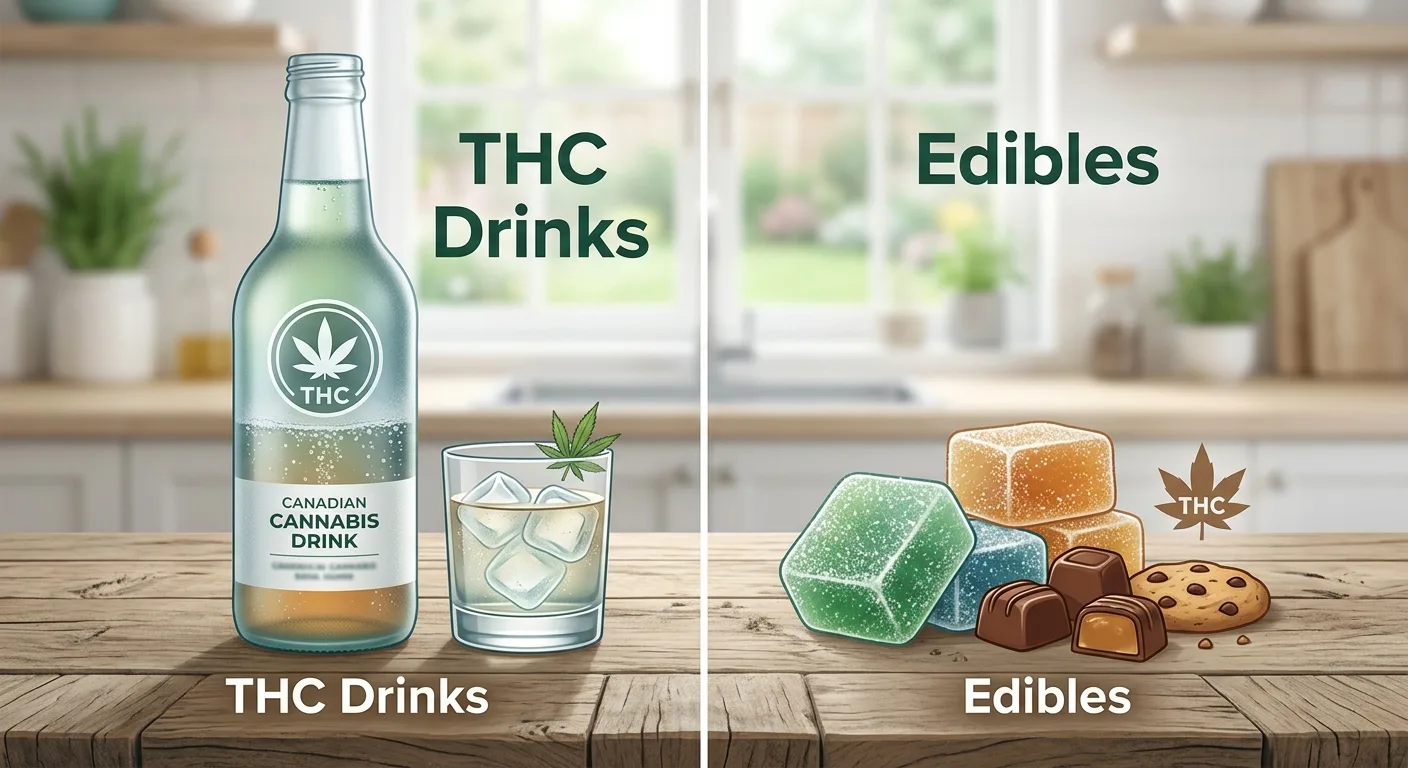
You're standing in front of a cannabis menu wondering whether to grab a THC-infused beverage or stick with traditional gummies. Both promise a smokeless high, but the experience they deliver couldn't be more different. While edibles have dominated the ingestible cannabis market for years, THC drinks are rapidly gaining ground in Canada, and for good reason: they offer something edibles fundamentally cannot match,predictable, faster-acting effects that feel closer to having an alcoholic drink than eating a brownie.
The choice between THC drinks and edibles isn't about which one is "better." It's about understanding how dramatically different their onset times, duration, and social contexts really are. A cannabis beverage might hit in 15-30 minutes and taper off within three hours, making it ideal for controlled social occasions. An edible can take 90 minutes to kick in but will anchor you to the couch for six hours or more. This guide breaks down every practical difference,backed by user experience and emerging science,so you know exactly which format fits your plans.
The Comparison Table: THC Drinks vs Edibles at a Glance
Before we dive into the science and nuance, here's the honest comparison that matters most to real users:
| Factor | THC Drinks | Traditional Edibles |
|---|---|---|
| Onset Time | 15-30 minutes (nanoemulsion tech) | 45-90 minutes (digestion required) |
| Peak Effects | 30-60 minutes after onset | 2-3 hours after consumption |
| Total Duration | 2-4 hours typical | 4-8 hours common |
| Absorption Path | Sublingual + stomach (dual route) | Liver metabolism (11-hydroxy-THC) |
| Dosing Control | Sippable over time (micro-adjustable) | Fixed dose per piece |
| Calories | 10-50 per serving (often low-cal) | 80-200+ per serving (sugar/fat carriers) |
| Social Context | Mimics drinking culture (shareable) | Snack-like, less ritual |
| Best For | Controlled social events, dinner parties, concerts | Long movie nights, sleep aid, extended relaxation |
This table reveals the fundamental truth: THC drinks behave more like alcohol alternatives, while edibles remain the marathon format for extended effects. The differences stem from how your body processes each form, which we'll unpack next.
How THC Drinks Work: The Science Behind Faster Onset
THC drinks leverage nanoemulsion technology to bypass the slow digestive process that makes traditional edibles so unpredictable. Here's what actually happens when you crack open a cannabis beverage.
Nanoemulsion: Breaking Down the Absorption Barrier
Cannabis manufacturers use ultrasonic waves or high-pressure homogenization to shatter THC molecules into nanoparticles,typically 10 to 200 nanometers in size. These microscopic droplets are then suspended in water using food-safe emulsifiers. The result? THC that your body can absorb much faster than the fat-soluble compounds in traditional edibles.
Regular THC is hydrophobic (water-fearing), meaning it doesn't mix well with your blood and digestive fluids. Nanoemulsified THC particles are coated in a way that makes them water-compatible, allowing them to slip through your stomach lining and into your bloodstream within minutes rather than hours. Some absorption even begins in your mouth through sublingual membranes if you hold the liquid briefly before swallowing.
The Dual Absorption Pathway
Unlike solid edibles that must travel through your entire digestive tract, THC drinks offer two entry points. First, partial sublingual absorption occurs in your mouth and under your tongue,the same route used by tinctures. Second, the nanoemulsified particles pass through your stomach lining more readily than chunks of brownie or gummy candy ever could.
This dual pathway explains why users often report feeling initial effects within 15 to 20 minutes, with full onset by 30 minutes. That's three to four times faster than the typical edible experience. The trade-off? The effects don't last as long because your liver isn't converting standard THC into 11-hydroxy-THC, the more potent metabolite responsible for edibles' legendary intensity and duration.
Bioavailability: What Your Body Actually Uses
Bioavailability refers to the percentage of consumed THC that actually reaches your bloodstream. Traditional edibles typically have 4-12% bioavailability due to first-pass metabolism in your liver, where much of the THC gets broken down before it can produce effects. Nanoemulsified THC drinks can achieve bioavailability rates of 20-30% or higher, meaning more of the cannabinoid you consume actually works.
This improved efficiency means a 10mg THC drink might feel closer in intensity to a 15-20mg traditional edible, even though the labelled dose is lower. It's not magic,it's just more of the active compound making it into your system intact.
How Traditional Edibles Work: The Liver's Long Game
When you eat a cannabis gummy or brownie, you're committing to a completely different pharmacological journey. Understanding why edibles hit harder and last longer comes down to one organ: your liver.
First-Pass Metabolism and 11-Hydroxy-THC
After you swallow an edible, it travels through your stomach into your small intestine, where THC is absorbed into your bloodstream. But here's the catch: blood from your intestines flows directly to your liver before circulating to the rest of your body. This is called first-pass metabolism, and it's where the magic happens.
Your liver's enzymes convert delta-9-THC (the standard form in cannabis) into 11-hydroxy-THC, a metabolite that's significantly more psychoactive and better at crossing the blood-brain barrier. This is why edibles often feel more intense and more body-focused than smoking or vaping the same amount of THC. You're not experiencing the same compound,you're experiencing a more potent cousin that your body created during digestion.
Why the Wait Is So Long
The 45-90 minute onset window for edibles isn't a bug, it's the inevitable result of how digestion works. Your stomach must break down the gummy matrix or chocolate carrier, your intestines must absorb the released THC, and your liver must perform its metabolic conversion. All of this takes time, and the timeline varies wildly based on what else is in your stomach, your metabolism speed, and even your genetics.
This unpredictability is edibles' biggest weakness in social contexts. You might feel nothing for 75 minutes, decide you need more, take a second dose, and then have both hit within 20 minutes of each other. This is how "greening out" typically happens with edibles,impatience during the onset period.
Why Edibles Last So Long
The flip side of liver metabolism is duration. Because 11-hydroxy-THC is produced gradually as your liver processes the THC, and because it takes hours for your body to clear these metabolites, edibles deliver effects that can easily stretch to six or eight hours. Some users report residual effects the next morning, especially with higher doses.
This marathon duration makes edibles ideal when you want sustained relief or have no obligations for the rest of the evening. But it's exactly why they're poorly suited for controlled social drinking scenarios or situations where you might need to sober up within a predictable window.
Session Length and Social Fit: Choosing the Right Format for the Occasion
The practical differences between THC drinks and edibles become clearest when you map them onto real-life scenarios. Here's how the timing and duration of each format shapes where they actually fit.
THC Drinks: The Social Substitute
Cannabis beverages shine in situations where you'd traditionally have a beer, cocktail, or glass of wine. Their 2-4 hour duration and relatively fast onset make them suitable for events where you need predictable timing: dinner parties, concerts, sporting events, or afternoon social gatherings where you want to be functional by bedtime.
The sippable format also mimics drinking culture in a way edibles never can. You can crack a THC soda at the start of a backyard barbecue, nurse it over 45 minutes, and gauge your effects in near-real-time. If you feel good after half the can, you can save the rest for later. This kind of micro-adjustable dosing is impossible with a gummy,once you've eaten it, you're committed to whatever dose was in that piece.
For Canadians looking for an alcohol alternative, THC drinks deliver the ritualistic aspects of having a beverage in your hand without the hangover, empty calories, or multi-day recovery period. They fit seamlessly into social settings where cannabis consumption might otherwise feel conspicuous or awkward.
Traditional Edibles: The Extended Experience
If your goal is sustained effects with minimal effort, edibles remain unbeatable. They're ideal for long movie marathons, overnight pain management, help with insomnia, or solo evenings where you want hours of relaxation without needing to re-dose.
The delayed onset also works in your favour when timing isn't critical. Take a low-dose edible 90 minutes before bed, and you'll be comfortably elevated right as you're ready to sleep. Use them on a lazy Sunday afternoon when you have nowhere to be, and the extended duration becomes a feature rather than a bug.
Edibles also remain the most discreet consumption method for situations where drinking a cannabis beverage would draw attention. A gummy in your pocket doesn't require explanation, refrigeration, or any visible consumption ritual. For travel within Canada, medical users, or people who prefer privacy, the portability of solid edibles is unmatched.
Hybrid Scenarios: Combining Both Formats
Experienced users sometimes combine drinks and edibles strategically. For example, you might take a 5mg edible at the start of an evening out, knowing it will kick in during the second half of your night, while also sipping a 5mg THC drink earlier to bridge the gap. This layered approach requires careful planning and a solid understanding of your tolerance, but it can extend a pleasant experience across an entire evening without the peaks and valleys of re-dosing.
Just remember: when you mix formats, you're stacking doses. The liver-metabolized effects from the edible will feel different than the nanoemulsified absorption from the drink, making it harder to predict the combined intensity. Start low with both if you're experimenting.
Dosing, Calories, and Practical Considerations
Beyond onset and duration, several practical factors influence which format makes sense for your lifestyle and goals.
Dosing Flexibility and Control
THC drinks offer superior dosing control because you can stop mid-beverage. A 10mg can consumed over 30 minutes lets you assess effects in near-real-time and decide whether to finish it. Edibles require you to commit to the full dose the moment you swallow, with no ability to course-correct if you realize you've taken too much.
This difference matters enormously for new users or anyone trying to dial in their ideal dose. The ability to sip and wait removes much of the guesswork that makes edibles intimidating for beginners. Microdosing becomes trivially easy with a drink,just have a few sips and see how you feel.
Caloric and Sugar Content
Most THC drinks are formulated as low-calorie alternatives, often containing 10-50 calories per serving. They use sugar substitutes or minimal sweeteners, making them suitable for people watching their intake. Traditional edibles, especially gummies and chocolates, typically carry 80-200+ calories per dose because they rely on sugar and fat as carrier mediums for THC.
For regular users, these calories add up. Someone having a 200-calorie chocolate edible four times a week is consuming an extra 800 calories weekly from cannabis alone. Switching to drinks can eliminate this hidden calorie source without sacrificing effects. This isn't about diet culture,it's about making informed choices when the two options deliver similar experiences.
Flavour and Palatability
Cannabis edibles often struggle with flavour. The plant material or distillate used in production can leave earthy, bitter, or chemical notes that manufacturers try to mask with aggressive sweetness. Quality varies enormously, and many users avoid certain edibles purely because of taste.
THC drinks have made bigger strides in flavour development, with many brands employing beverage scientists to create genuinely tasty products. You'll find cannabis sodas, sparkling waters, teas, and even cannabis-infused craft beverages that taste indistinguishable from their non-infused counterparts. The liquid format makes it easier to distribute flavouring agents evenly and mask any cannabis taste through carbonation or acidity.
Portability and Convenience
Edibles win on portability. A small tin of gummies fits in any pocket and doesn't require refrigeration, opening tools, or cleanup. THC drinks usually need to stay cold (or at least don't improve with warmth), take up more space, and require disposal of cans or bottles afterward.
For camping trips, festivals, or travel within Canada, edibles remain the more practical choice. But for home use or situations where you have access to a cooler and trash receptacle, drinks offer a more refined experience. The format you choose often comes down to context as much as preference.
Tolerance, Frequency, and Long-Term Use Patterns
How THC drinks and edibles affect your tolerance over time is an under-discussed but important consideration, especially for regular users.
Tolerance Development: Are They Different?
Both formats build tolerance through the same mechanism,regular activation of your endocannabinoid receptors,but the metabolic pathways differ enough that some users report slightly different tolerance profiles. The 11-hydroxy-THC produced from edibles may create a tolerance pattern distinct from inhaled or nanoemulsified THC, though research in this area remains limited.
Anecdotally, heavy edible users sometimes find that switching to drinks temporarily restores sensitivity, and vice versa. This could be placebo, or it could reflect genuine differences in how your body adapts to each metabolite. What's certain is that daily use of either format will eventually require tolerance breaks or escalating doses to maintain effects.
Daily Use Considerations
For people using cannabis daily for medical reasons or lifestyle preference, drinks offer a cleaner integration into routines that involve socializing or meals. Having a THC beverage with dinner feels more natural than eating gummies at the table, and the shorter duration means you're not carrying effects into the next morning.
Edibles work better for daily users who need sustained overnight relief or who prefer a "set it and forget it" approach to dosing. Take your evening edible at a consistent time, and your body will adapt to the routine, making effects more predictable even if onset times remain variable.
Cycling Between Formats
Some frequent users deliberately rotate between drinks, edibles, inhalation, and other formats as a form of tolerance management. The theory,not yet validated by rigorous research,is that varying your consumption method prevents your body from becoming too efficient at metabolizing any single form of THC. Whether this actually works or simply provides psychological variety is open to debate, but many experienced consumers swear by format rotation.
Cost Analysis: Which Format Delivers Better Value?
Price matters, especially for regular users. Here's how THC drinks and edibles compare on a cost-per-dose basis in the Canadian market.
Price Per Milligram
Traditional edibles typically offer better value on a straight milligram-per-dollar calculation. A package of gummies might deliver 100mg total THC for $15-25, working out to $0.15-0.25 per milligram. THC drinks often cost $5-10 per 10mg serving, or $0.50-1.00 per milligram,significantly more expensive.
However, this math ignores bioavailability. If drinks deliver 20-30% bioavailability versus edibles' 4-12%, you're actually absorbing 2-3 times more of the THC you paid for. A 10mg drink with 25% bioavailability (2.5mg reaching your bloodstream) might feel similar to a 20mg edible with 10% bioavailability (2mg absorbed), even though the edible had twice the labelled dose.
Hidden Costs: Time and Predictability
The hidden cost of edibles is unpredictability. If you take a 10mg gummy that doesn't hit hard enough, you've wasted that dose plus 90 minutes of time waiting to find out. With drinks, you can assess and adjust within 30 minutes, reducing wasted doses and frustrating trial-and-error sessions.
For new users or anyone dialing in their dosage, this time cost is real. A few bad edible experiences,where you either took too much and had an uncomfortable evening or took too little and felt nothing,can easily waste more money than the premium you'd pay for drinks' faster feedback loop.
Volume Buying and Sales
Both formats see frequent sales at licenced retailers. Edibles are easier to stock up on during promotions because they have longer shelf lives and take up less refrigerator space. Drinks usually have expiration dates within months rather than years, making bulk buying less practical unless you have consistent consumption patterns.
For occasional users, buying drinks as needed makes more sense. For daily users, finding a favourite edible brand and buying in bulk during sales maximizes value,just ensure you have proper storage to prevent degradation.
Real User Scenarios: Routing by Occasion
Let's map the drinks-versus-edibles decision onto actual situations where Canadian consumers make this choice. These scenarios synthesize everything we've covered into practical guidance.
Dinner Party Host (Choose: THC Drinks)
You're hosting six friends for dinner and want to offer cannabis options alongside wine. THC drinks are the clear choice here. They fit the social context, guests can control their intake throughout the evening, and the 2-4 hour duration means everyone will be sober enough to drive home or call a ride without lingering effects into the next day. Stock 5-10mg options so guests can choose their dose level.
Solo Movie Marathon (Choose: Traditional Edibles)
You have nowhere to be, three movies queued up, and you want sustained effects for the next five hours. Traditional edibles are perfect. Take a 10-20mg gummy (adjusted to your tolerance) at the start of movie one, and you'll coast through the entire marathon without needing to re-dose. The long duration that's a liability in social contexts becomes your biggest asset here.
Concert or Festival (Choose: THC Drinks, Carefully)
Live events favour drinks for their predictable timing. You can finish a cannabis beverage during the opener and be at peak effects for the headliner, with gradual comedown during the encore. Edibles risk hitting too early (boring), too late (wasted on the car ride home), or unexpectedly during a bad moment. Just verify the venue's rules,some festivals allow sealed beverages while others don't.
Sleep Aid (Choose: Traditional Edibles)
If cannabis helps you sleep, edibles are more practical than drinks. Take your dose 60-90 minutes before bed, and you'll drift off as effects peak, with sustained relief through the night. Drinks would require taking them right at bedtime, and their shorter duration means you might wake up as effects wear off. For overnight use, the longer metabolic pathway works in your favour.