You open a jar you haven't touched in a while, grab a bud, and instead of that slightly sticky squeeze you're expecting, it practically turns to dust between your fingers.
Congratulations. Your weed is dry.
The good news? Dry flower isn't automatically ruined. If you're wondering how to rehydrate dry weed, there are a few ways to put some moisture back into it and make it less harsh to smoke.
The bad news? Rehydration isn't time travel.
You can restore moisture. You can't magically bring back terpenes that have already evaporated, reverse THC degradation, or turn badly stored flower back into the fresh, aromatic bud you originally bought.
So let's talk about what actually works, what we'd skip, and how to tell when your weed is past the point of saving.
First, Why Does Weed Dry Out?
Cannabis flower naturally contains moisture after it's harvested, dried, and cured.
Properly stored flower retains enough of that moisture to keep the buds slightly springy without making them damp. Leave the same flower exposed to dry air for long enough, though, and moisture gradually escapes.
And Canadian homes can be brutal for this.
Toronto winters mean heated indoor air, and heated indoor air can get seriously dry. Leave your flower in an improperly sealed bag or container and that environment can pull moisture out faster than you might expect.
Other common causes include:
Poor storage: Loose plastic bags and containers that aren't airtight allow moisture to escape.
Opening the container constantly: Every time you open your stash, you're exchanging the controlled environment inside for whatever humidity happens to be in the room.
Heat: Warm storage conditions can accelerate deterioration and aren't doing your terpenes any favours either.
Time: Even properly stored cannabis doesn't stay exactly the same forever.
Gently squeeze a bud. Properly stored flower should have a little give. If it immediately crumbles into powder or the smaller stems snap with almost no resistance, your cannabis has probably become overly dry.
Can You Actually Rehydrate Dry Weed?
Yes, within reason.
Rehydrating cannabis means introducing a controlled amount of moisture back into the flower.
The important word is controlled.
You aren't trying to make your buds wet. You're trying to bring the moisture level closer to where properly stored cannabis should be.
Do it correctly and dry, brittle flower can become softer and easier to grind. The smoking experience may also feel less harsh.
But here's the part some "weed hacks" conveniently leave out.
Moisture can come back. Lost quality can't.
If your flower has spent months drying out in a warm, sunny location, adding humidity doesn't reverse everything that happened during that time.
That distinction matters.
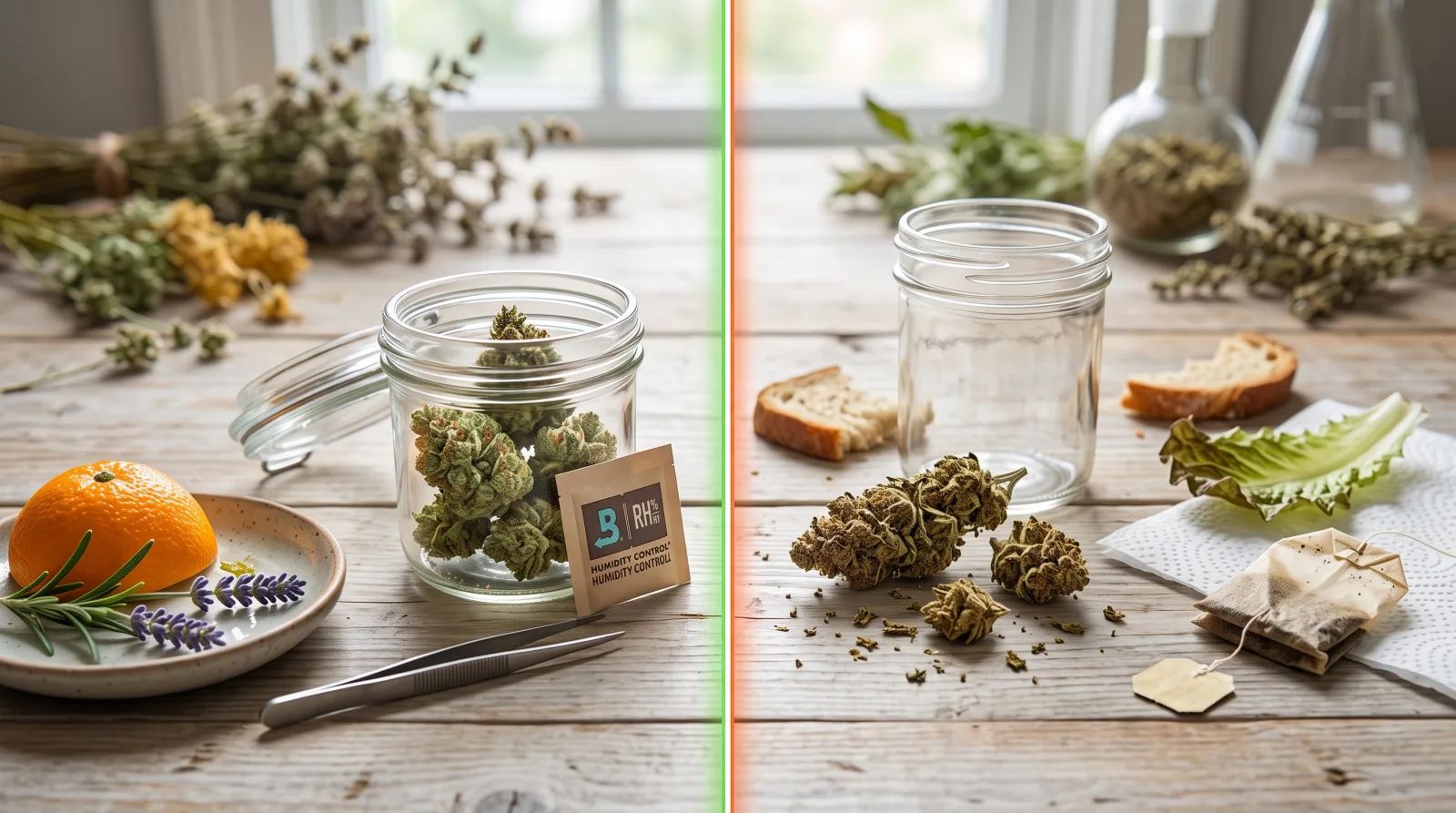
The Best Method: Use a Humidity Pack
If the flower is worth saving, this is where we'd start.
Two-way humidity packs are designed to help maintain a specific relative humidity inside a sealed container. Instead of blindly adding moisture, they help regulate the environment.
The process is simple.
Put your dry cannabis in an airtight glass jar. Add an appropriately sized cannabis humidity pack. Close the jar and leave it alone.
Check the flower periodically rather than opening the container every twenty minutes to see if something magical has happened.
Depending on how dry the flower is and how much you're trying to restore, the process can take time.
That's fine.
Slow and controlled beats fast and soggy.
Humidity packs are especially useful because they don't involve putting wet food directly beside your cannabis, and they can continue helping regulate storage conditions after the flower improves.
The goal isn't to make dry cannabis feel wet overnight. Gradually restoring moisture in a controlled environment is safer than aggressively adding water and creating conditions where mould can grow.
What About the Orange Peel Trick?
This is probably the most famous home remedy for dry weed.
Put a small piece of orange peel in your jar, close it, wait, and let the moisture from the peel transfer into the cannabis.
Does it work?
Technically, yes.
Would we choose it over a humidity pack?
Probably not.
Fresh citrus peel contains plenty of moisture, so dry flower can absorb some of it relatively quickly. The problem is that you're introducing an uncontrolled source of moisture and organic material into the same container as your cannabis.
Leave it in too long and you've created a much friendlier environment for mould.
The peel can also affect the smell of your flower. If you've got a strain with a terpene profile you actually like, making every bud smell vaguely like an orange isn't necessarily an upgrade.
If you're determined to try the peel method, use a very small piece and treat it as a short-term intervention, not something you leave inside the jar for days.
Check your flower frequently and remove the peel as soon as the buds regain some flexibility.
Can You Use Bread Instead?
Another old-school trick is placing a small piece of bread in the container.
Same basic concept.
Bread contains moisture. Dry cannabis absorbs some of it.
And again, we're not huge fans.
You're placing perishable food in an enclosed container with something you're planning to consume.
Humidity packs exist specifically to manage moisture without introducing bread crumbs, flavours, and additional organic material into your stash.
Could bread work in a pinch?
Sure.
Is it our recommended method?
No.
Lettuce Is Better Than Citrus... But Still Not Ideal
You may also see people recommending a small piece of lettuce.
The argument is that lettuce contains plenty of water but doesn't have the strong aroma of orange or lemon peel, so it's less likely to change how your cannabis smells.
That's reasonable.
But the same fundamental problem remains: you're introducing fresh organic material and uncontrolled moisture.
If you have access to a proper humidity pack, use the tool designed for the job.
Sometimes the boring answer really is the better answer.
Don't Spray Water Directly Onto Your Weed
This one deserves its own section.
Don't grab a spray bottle and mist your buds.
It seems logical: weed is dry, water makes things wet, problem solved.
Except you're not trying to create wet cannabis.
Spraying water directly onto flower can create uneven moisture. The outside of a bud may become damp while the inside remains dry, and excessively moist areas create exactly the conditions you don't want around cannabis.
The same applies to dipping buds in water.
Please don't.
You're trying to restore humidity, not wash your flower.
How Long Does Rehydrating Weed Take?
There isn't one exact timeline because it depends on the method, quantity of cannabis, how dry the flower has become, container size, and surrounding conditions.
A fresh peel may transfer moisture relatively quickly.
A humidity pack is generally more gradual.
Don't judge success by speed.
Judge it by the flower.
Pick up a bud and gently squeeze it. You're looking for a little flexibility and resilience rather than something that immediately crumbles or feels suspiciously damp.
Once the texture has improved, keep the cannabis properly stored so you don't end up repeating the entire process next week.
What Rehydration Can Actually Fix
This is where expectations matter.
Rehydrating dry cannabis can improve:
Texture: Buds may become less brittle and crumbly.
Grinding: Properly hydrated flower usually grinds more consistently instead of becoming dust.
Handling: Flower becomes easier to work with when rolling or packing a bowl.
Smoking experience: Extremely dry cannabis burns quickly and can feel harsh. Restoring appropriate moisture may make it more pleasant to consume.
Those are real improvements.
But rehydration has limits.
What Rehydration Can't Bring Back
Imagine leaving a piece of bread uncovered until it goes completely stale and then adding some moisture.
You can change the texture.
You haven't made it freshly baked again.
Cannabis works somewhat similarly.
Terpenes are volatile aromatic compounds responsible for much of a strain's smell and flavour. If they've already evaporated during poor storage, adding moisture won't recreate them.
The same principle applies to age-related cannabinoid degradation.
A humidity pack doesn't rewind the chemistry of your flower.
So if your weed smells dramatically weaker than when you bought it, tastes flat, and has been sitting improperly stored for a very long time, rehydrating it may improve the physical texture without restoring the original experience.
That's why prevention beats rescue.
Every time.
When Should You Just Throw Dry Weed Away?
Dry doesn't automatically mean unsafe.
Mould is different.
Before trying to rescue old flower, actually inspect it.
Watch for unusual fuzzy or web-like growth, suspicious white or grey patches that don't resemble normal trichomes, unpleasant musty smells, or other obvious signs that something isn't right.
If you suspect mould, don't try to "fix" the cannabis by drying it further or adding a humidity pack.
Let it go.
Never attempt to rescue cannabis that appears mouldy or smells unusually musty. Rehydration is for overly dry flower, not contaminated flower. When you're unsure about the safety of old cannabis, replacing it is the smarter option.
There's also a quality point where rescue simply isn't worth the effort.
If you've found a forgotten bag that's been sitting open for an extremely long time and the flower has almost no aroma, terrible texture, and questionable quality, a little extra moisture isn't going to perform miracles.
Sometimes your stash has reached retirement age.
Give it the dignity it deserves.
How to Stop Your Weed From Drying Out Again
The easiest way to rehydrate dry weed is not needing to.
Storage makes a massive difference.
Use an Airtight Container
A properly sealed glass jar is hard to beat.
It limits unnecessary air exchange and gives you a much more stable environment than a loosely folded plastic bag.
Keep It Somewhere Cool and Dark
Cannabis doesn't need a view.
Direct sunlight and unnecessary heat can accelerate degradation. Store your flower somewhere cool, dark, and away from heat sources.
A cupboard or drawer generally makes more sense than a sunny windowsill.
Consider a Humidity Pack
Humidity packs aren't only for rescuing dry flower.
They're arguably more useful for preventing the problem in the first place.
Use the correct size for the amount of cannabis you're storing and replace the pack when necessary.
Don't Open Your Jar Constantly
We understand.
It smells good.
But repeatedly opening your container exchanges the environment inside the jar with the air in your home. During a dry Toronto winter, that's not particularly helpful.
Take what you need and close it again.
Buy an Amount You'll Actually Use
Buying more flower can make sense economically, but only if you can store it properly and consume it while the quality is still where you want it.
Freshness matters.
If you prefer rotating between strains, smaller quantities may give you a better experience than keeping one giant stash around forever.
If your current flower has officially crossed from "dry" into "not worth saving," you can browse our [flower selection](/shop/flower) and start fresh, preferably with a proper storage jar waiting this time.
Frequently Asked Questions
The most controlled method is placing dry cannabis in an airtight container with an appropriately sized two-way humidity pack. Give it time and check the flower periodically until it regains some flexibility without becoming damp.
A small piece of orange peel can transfer moisture to dry cannabis, but it can also affect the flower's aroma and introduce too much moisture if left inside too long. A proper humidity pack provides more controlled results and is generally the better option.
It depends on how dry the cannabis is, how much you're storing, and the method used. Fresh food methods may transfer moisture quickly, while humidity packs work more gradually. Focus on achieving a slightly flexible texture rather than trying to rehydrate the flower as quickly as possible.
No. Rehydration can restore some moisture and improve texture, but it can't recreate terpenes that have already evaporated or reverse other quality loss caused by age, heat, light, or poor storage.
Cannabis being dry doesn't automatically make it unsafe, although the experience may be harsher and less flavourful. However, old flower should be inspected for mould, unusual growth, or musty odours. Cannabis suspected of being mouldy should not be consumed.
Directly spraying cannabis with water isn't recommended because it can create uneven wet spots and excessive moisture. Controlled humidity is preferable to making the flower itself wet.
The Bottom Line on Rehydrating Dry Weed
If you're trying to figure out how to rehydrate dry weed, keep it simple.
An airtight container and a proper humidity pack are the most controlled place to start. Orange peels, bread, and lettuce can transfer moisture, but they're harder to control and introduce fresh organic material into your stash.
More importantly, know what you're actually fixing.
Rehydration can make brittle cannabis softer, easier to grind, and potentially less harsh to smoke.
It cannot restore terpenes that disappeared months ago. It can't reverse cannabinoid degradation. And it definitely can't rescue mouldy weed.
The better strategy is prevention.
Store your flower in an airtight container, keep it somewhere cool and dark, manage humidity appropriately, and buy quantities you can realistically keep fresh.
Because bringing dry weed back is possible.
Keeping good weed from drying out in the first place is much easier.
If your old stash is beyond saving, explore our cannabis flower selection and start fresh,then store it properly this time.Time for Fresh Flower?