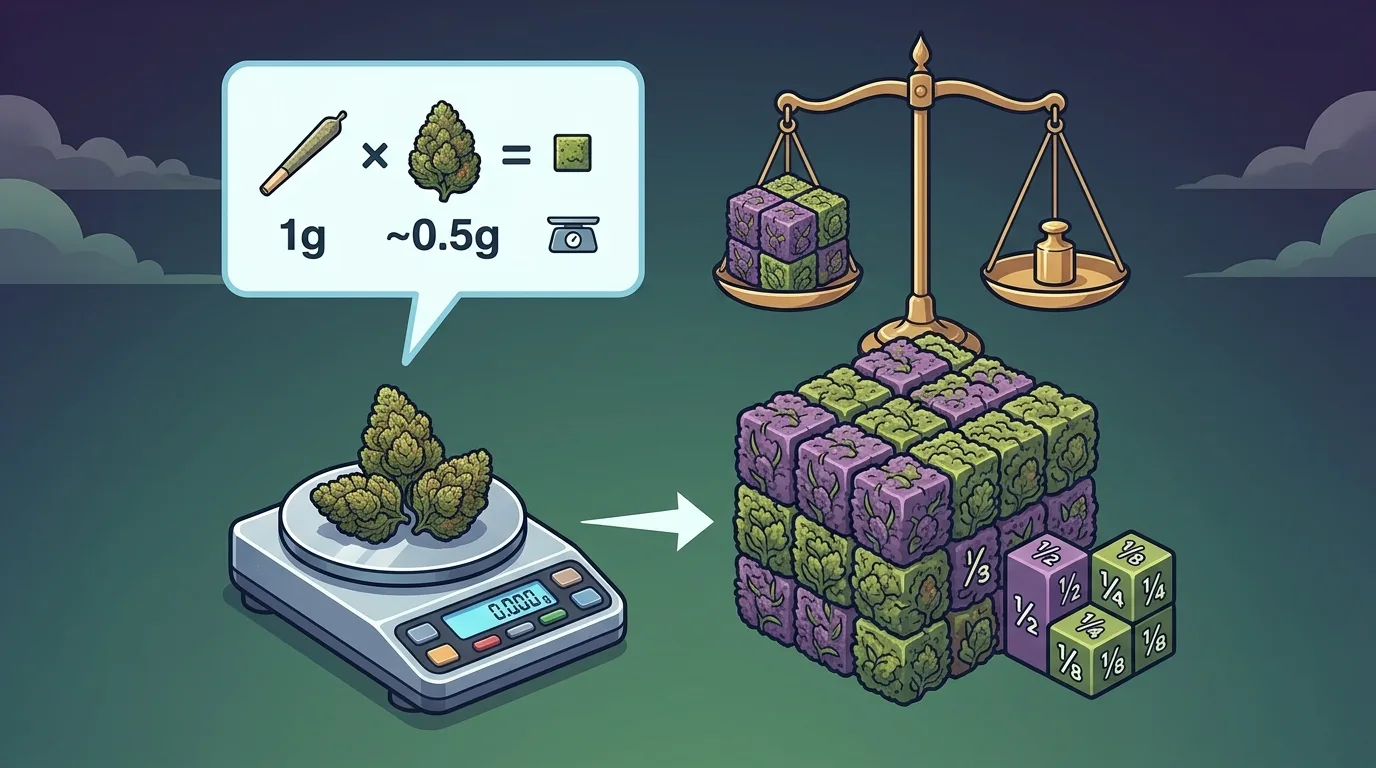
If you've ever stood in front of a budtender,or browsed an online menu,and felt confused about whether to order a gram, an eighth, or a quarter, you're not alone. Cannabis measurements blend metric and imperial systems in ways that baffle even experienced consumers. The simple answer? There are 28 grams in one ounce of weed. But that's just the beginning of understanding how cannabis is measured, priced, and sold across Canada.
Whether you're comparing prices, planning your monthly supply, or simply trying to decode what "3.5g" actually looks like, this guide breaks down every cannabis measurement you'll encounter. We'll cover the math, the slang, the visual cues, and the practical considerations that help you make smarter purchasing decisions.
The Fundamental Conversion: Ounces to Grams Explained
Cannabis retail in Canada operates in a measurement twilight zone. Legally, everything is sold by the gram,our metric system standard. Yet consumers and industry insiders still reference eighths, quarters, half ounces, and full ounces. These imperial measurements have deep roots in cannabis culture and remain the most common way people discuss quantities.
One ounce equals exactly 28.3495 grams, but the cannabis industry universally rounds this to 28 grams for simplicity. This rounding creates tiny discrepancies if you're buying multiple ounces, but for practical purposes, 28 grams is the standard conversion you'll see everywhere from online dispensaries to retail storefronts.
Why Cannabis Uses Imperial Measurements
The prevalence of ounce-based terminology traces back to pre-legalization markets, particularly influences from American cannabis culture. Before Canada's legal framework emerged in 2018, most cannabis transactions followed these established conventions. Even though Health Canada regulations require metric labelling, the cultural vocabulary persists because it's deeply embedded in how people think about and discuss cannabis quantities.
This dual system means you need to understand both measurement types. Product labels show grams, but conversations with other consumers,and many online forums,default to eighths and quarters. Fluency in both systems helps you navigate menus, compare prices effectively, and understand exactly what you're purchasing.
The Math Behind Common Quantities
Breaking down an ounce into smaller increments follows straightforward division. A quarter ounce equals 7 grams (28 ÷ 4). An eighth equals 3.5 grams (28 ÷ 8). A half ounce comes to 14 grams (28 ÷ 2). These fractions represent the most common purchase sizes across Canadian dispensaries.
Some retailers also offer "half-quarters" (1.75 grams) or other non-standard amounts, but these are less common. The standard progression most consumers encounter runs: 1 gram, 3.5 grams (eighth), 7 grams (quarter), 14 grams (half ounce), and 28 grams (full ounce). Many dispensaries also offer bulk options at 2 ounces (56 grams) or more for consumers seeking better per-gram pricing.
Breaking Down Every Cannabis Weight (From Gram to Ounce)
Understanding the full spectrum of cannabis measurements helps you budget, plan consumption, and identify the best value for your needs. Each increment serves different consumption patterns and offers distinct price advantages.
1 Gram: The Single Serving
One gram represents the smallest standard purchase. Visually, it's roughly the size of a large grape or walnut,enough to roll 1-2 joints depending on your rolling style, or pack a bowl 2-3 times. The per-gram cost is highest at this increment, but it's ideal for trying new strains without commitment or for infrequent consumers.
Many experienced users keep several single grams of different strains on hand for variety. This approach costs more overall but offers flexibility to match your cannabis choice to your mood, activity, or time of day without maintaining large quantities of multiple strains.
3.5 Grams: The Eighth
The eighth remains the most popular purchase size for regular consumers. At 3.5 grams, it typically provides enough cannabis for 5-7 joints or 7-10 bowl sessions, lasting casual users about a week. Per-gram pricing drops significantly at the eighth level, making it the sweet spot between affordability and freshness.
When budtenders mention "an eighth," they're always referring to 3.5 grams. This measurement is so standard that many dispensaries price their entire menu structure around it. You'll often see better deals on eighths than on 2-gram or 4-gram purchases, reflecting industry-wide pricing conventions.
7 Grams: The Quarter Ounce
A quarter ounce doubles the eighth at 7 grams. For moderate daily consumers, this quantity typically lasts 1-2 weeks. The per-gram price continues dropping at this level, though the discount isn't always proportional,some dispensaries offer minimal savings between eighths and quarters.
Quarters work well for consumers who've found strains they love and want to stock up without committing to larger quantities. This size balances value with freshness concerns, as 7 grams consumed over two weeks maintains quality when properly stored.
14 Grams: The Half Ounce
Half ounces represent serious value territory for regular consumers. At 14 grams, you're looking at 20-25 joints worth of cannabis, or enough for 3-4 weeks of daily consumption for moderate users. The per-gram cost drops considerably,often 20-30% less than single-gram pricing.
This quantity requires proper storage to maintain freshness. Cannabis kept in airtight containers away from light and heat remains potent for months, but improper storage at this quantity can lead to dried-out, less effective product. Half ounces make sense when you've identified a strain that works perfectly for your needs and you're committed to using it regularly.
28 Grams: The Full Ounce
A full ounce represents the maximum single purchase many dispensaries offer without requiring bulk order arrangements. At 28 grams, you're purchasing approximately a month's supply for daily consumers, though this varies dramatically based on individual consumption patterns.
The per-gram savings at the ounce level can be substantial,sometimes 40-50% less than gram pricing. For consumers who found their preferred strain and use cannabis regularly, ounce purchases offer the best value. However, you're committing to a single strain for an extended period, so confidence in your choice is essential.
Visual Guide: What Each Measurement Actually Looks Like
Weight tells only part of the story. Cannabis density varies dramatically between strains, growing methods, and curing techniques. A gram of dense, compact indica might look half the size of a gram of light, fluffy sativa. Understanding visual cues helps you assess whether you're receiving the correct amount and quality.
Density Variables That Affect Appearance
Indoor-grown cannabis tends to be denser than outdoor flower. Indica-dominant strains typically produce tighter, more compact buds than sativa-dominant varieties. Properly cured cannabis appears fuller and more robust than over-dried flower. These factors mean identical weights can look dramatically different.
A gram of dense indica might consist of a single medium-sized nugget, while a gram of fluffy sativa could be 2-3 smaller buds. Neither is "wrong",they're simply different phenotypes with distinct growing characteristics. Learning to recognize these differences helps you understand what you're receiving without immediately assuming short weight.
Container Reference Points
Most cannabis comes packaged in clear containers or sealed bags. A gram fills roughly one-quarter of a standard 10mL container. An eighth (3.5g) typically fills a container about halfway to two-thirds full, depending on bud density. A quarter ounce fills most standard containers completely, while half ounces and full ounces require larger packaging.
These visual benchmarks help you quickly assess quantities when shopping. If your eighth arrives in a massive container that's barely covered at the bottom, the buds are likely extremely fluffy or potentially under-weight. Conversely, if a quarter ounce barely fits in what should be a standard container, you've received particularly dense flower.
The Stem Factor
All cannabis flower includes some stem weight. Small stems are unavoidable and represent minimal weight impact. However, large stems can constitute 10-15% of total weight in poorly trimmed product. Quality dispensaries minimize stem weight through proper trimming, but it's worth noting when comparing prices and quantities.
Premium flower typically features careful trimming that removes excessive stem material while preserving trichome-covered sugar leaves. Budget options may include more stem weight. When evaluating value, consider not just per-gram cost but also the usable flower you're actually receiving.
Price Structures: How Per-Gram Costs Scale
Cannabis pricing follows predictable patterns based on quantity, with per-gram costs decreasing as purchase size increases. Understanding these structures helps identify genuine value and avoid paying premium prices for modest quantities.
Typical Price Scaling in Canadian Markets
Single grams typically range from $7-15 depending on quality tier. Eighths (3.5g) often price at $25-45, bringing per-gram costs to $7-13. Quarters (7g) usually run $45-80, averaging $6-11 per gram. Half ounces (14g) fall between $80-140, or roughly $5-10 per gram. Full ounces start around $120 and can exceed $300 for premium flower, averaging $4-11 per gram.
The best value typically emerges at the ounce level, where per-gram costs drop most significantly. However, this requires upfront capital and commitment to a single strain. Many consumers find quarters or half ounces offer the best balance between savings and flexibility.
Quality Tier Considerations
Not all ounces are created equal. A $120 ounce ($4.29/g) represents budget tier product,typically machine-trimmed, potentially older stock, or lower-THC strains. Mid-tier ounces ($150-200) offer better quality, fresher product, and higher potency. Premium ounces ($200+) feature craft cultivation, careful curing, and peak cannabinoid profiles.
The "best deal" depends on your priorities. Budget ounces work perfectly for edible production or consumers who prioritize quantity over premium experiences. Premium ounces justify their cost for consumers who value exceptional terpene profiles, unique genetics, or the highest potency available.
Bulk Purchasing Advantages
Many dispensaries offer multi-ounce deals that push per-gram costs even lower. Two-ounce deals, three-ounce bundles, or quarter-pound (4 oz) packages can bring costs below $3 per gram for budget tiers. These bulk options appeal to heavy consumers, medical patients, or those who process cannabis into concentrates or edibles.
Before committing to bulk purchases, ensure you understand proper storage methods that maintain freshness over extended periods. Even at excellent prices, degraded cannabis that's lost potency and terpenes represents poor value.
Practical Applications: Choosing the Right Quantity
The "right" amount depends entirely on your consumption patterns, budget, and preferences. Several factors should influence your quantity decisions beyond simple per-gram pricing.
Consumption Patterns and Purchase Planning
Occasional consumers (1-2 times weekly) typically find grams or eighths most practical. These quantities remain fresh through their consumption period and allow strain variety without waste. Weekly consumers (3-5 times) often gravitate toward eighths or quarters, balancing value with freshness. Daily consumers generally benefit most from half ounces or full ounces, where volume discounts make the most impact.
Track your consumption for 2-3 weeks to establish accurate patterns. Many people overestimate or underestimate their usage, leading to either waste from over-purchasing or frequent reordering that negates bulk savings.
Strain Experimentation vs. Committed Favourites
If you're exploring new strains, smaller quantities make sense despite higher per-gram costs. Buying an ounce of a strain you've never tried risks disappointment and waste if it doesn't match your preferences. Start with a gram or eighth of new genetics, then scale up to larger quantities once you've confirmed compatibility.
For established favourites, buying the largest quantity you'll consume before freshness concerns arise makes financial sense. Many regular consumers maintain one or two strains they purchase in ounce quantities while keeping smaller amounts of experimental strains for variety.
Storage and Freshness Realities
Properly stored cannabis maintains quality for months, but this requires airtight containers, cool temperatures, and darkness. If you lack ideal storage conditions, smaller quantities consumed quickly will deliver better experiences than larger amounts that degrade.
Consider your actual storage setup before buying bulk. A half ounce kept in a kitchen drawer where light and temperature fluctuate will degrade faster than an eighth stored properly. The "value" of bulk pricing evaporates if half your purchase loses potency before you consume it.
Budget and Cash Flow Considerations
Ounce purchases require significant upfront capital,often $150-250 or more. While the per-gram savings justify this for regular consumers, not everyone has the cash flow to allocate large amounts to cannabis at once. There's no shame in buying eighths or quarters if that's what your budget accommodates.
Some consumers find success splitting bulk orders with trusted friends, dividing both the cost and the product. This approach captures bulk savings while reducing individual financial burden and storage requirements. Just ensure everyone involved understands legal sharing limitations in your jurisdiction.
Common Questions About Cannabis Measurements
Beyond the basic conversion, several practical questions emerge when navigating cannabis measurements and purchases. Understanding these nuances helps you shop more confidently and avoid common pitfalls.
Why Don't All Dispensaries Offer Every Quantity?
Inventory management, packaging costs, and regulatory requirements influence which quantities dispensaries stock. Some focus on eighths and ounces as their primary offerings, skipping quarters or half ounces. Others offer granular options across the entire spectrum. This variation reflects individual business models rather than regulatory restrictions.
Online dispensaries typically offer more quantity options than physical retail locations because they don't face the same space and display constraints. Mail-order services can maintain larger inventories and offer more flexible quantity combinations.
Is It Better to Buy Multiple Eighths or One Ounce?
The answer depends on whether you prioritize value or variety. One ounce of a single strain always costs less than eight individual eighths. However, eight different eighths provide variety and experimentation opportunities that a single ounce cannot. Many consumers split the difference, buying a half ounce or ounce of their go-to strain while keeping an eighth or two of alternatives.
Do Weights Include Packaging?
No. Legal cannabis must be sold by net weight, meaning the flower alone without container weight. If you purchase 3.5 grams, you should receive 3.5 grams of cannabis, not 3.5 grams total including the jar. Reputable dispensaries calibrate scales to account for packaging weight automatically.
How Much Variance Is Acceptable?
Health Canada allows minimal variance in packaged cannabis weights, but hand-weighed orders at physical dispensaries may vary slightly. Most quality operations aim for slight overage (28.3-28.5g for an ounce) to ensure they never deliver under-weight. Variances beyond 0.5 grams on larger quantities warrant clarification with your provider.
Can You Mix and Match Strains in Bulk Orders?
Some dispensaries offer "mix and match" ounces where you select multiple strains (typically in eighth or quarter increments) that combine to equal an ounce, receiving bulk pricing across the total. This option provides variety at closer to bulk rates, though usually not quite as cheap as a single-strain ounce.
What's the Legal Purchase Limit in Canada?
Federal regulations set public possession limits at 30 grams (slightly more than one ounce) of dried flower per person. You can purchase and possess up to this amount in public. At home, no possession limit exists. Some provinces have additional regulations, but 30 grams represents the standard public limit across Canada.
A half ounce contains exactly 14 grams of cannabis. This quantity typically lasts moderate daily consumers 2-3 weeks and offers significant per-gram savings compared to smaller purchases while remaining manageable for storage and freshness.
A quarter ounce equals 7 grams. This is half of a half ounce (14g) or double an eighth (3.5g). Quarters represent a popular middle-ground purchase size for regular consumers seeking value without committing to large quantities.
Technically, one ounce equals 28.3495 grams, but the cannabis industry universally rounds to 28 grams for simplicity. All dispensaries in Canada use 28 grams as the standard ounce measurement, making this the practical conversion you'll encounter in real purchases.
One gram typically yields 1-2 standard joints depending on your rolling style. Smaller, personal-sized joints might stretch one gram to 3 joints, while larger group-sized rolls might consume an entire gram. Variables include rolling paper size, density of packing, and personal preferences.
New consumers should start with single grams or eighths (3.5g) of different strains. This allows experimentation to find preferred effects without overcommitting financially. Once you identify strains you enjoy, scaling up to quarters or half ounces becomes more cost-effective.
Duration varies dramatically based on consumption frequency. Daily consumers might use an ounce in 2-4 weeks, while occasional users could stretch the same amount over several months. Proper storage in airtight containers away from light and heat maintains quality throughout this period.
Making Smarter Cannabis Purchases
Understanding cannabis measurements extends beyond simple math,it's about recognizing value, planning consumption, and making informed decisions that align with your needs and budget. The fundamental conversion of 28 grams per ounce serves as your baseline, but practical application requires considering quality tiers, storage capabilities, consumption patterns, and financial planning.
The cannabis market offers extraordinary variety in both products and purchase options. Whether you're buying single grams to experiment with new genetics or committing to full ounces of proven favourites, knowing exactly what you're purchasing and how quantities compare empowers better decisions. Per-gram pricing drops significantly as quantities increase, but the "best deal" always depends on your individual circumstances rather than price alone.
Most importantly, don't let measurement confusion prevent you from exploring your options confidently. Every experienced consumer started exactly where you are now, learning these measurements through practice and experience. Start with smaller quantities as you develop preferences, then scale up as you identify the strains and purchase sizes that work best for your lifestyle.
Ready to Find Your Ideal Quantity?
Browse our complete selection of premium cannabis in every measurement from single grams to bulk ounces. Quality flower, transparent pricing, and delivery across Canada.
Shop Cannabis NowThe measurement system might blend metric and imperial in confusing ways, but the underlying principle remains simple: understand what you're buying, pay attention to per-gram costs across quantities, and purchase amounts that match your consumption timeline. With this knowledge in hand, you're equipped to navigate any dispensary menu with confidence and find the value that works for you.