Backwoods are one of the most popular wraps for rolling blunts, but they're also one of the trickier ones to work with. They're made from a single natural tobacco leaf, so they're thicker and less uniform than rolling papers or pre-cut blunt wraps, and they tear easily if the leaf is too dry.
Once you know how the leaf is put together, rolling one becomes much easier. In this article, we'll walk through the natural-leaf method step by step, from preparing the leaf to sealing it, and cover how to fix the most common problems, such as tears, uneven burning and loose rolls.
Backwoods are tobacco products, so this guide is for adults 19 and older.
What You'll Need
-
A Backwoods cigar. Fresh, slightly flexible leaves are much easier to work with than dry ones.
-
1 to 2 g of cannabis. Backwoods hold more than a typical joint, so most people use at least 1 g.
-
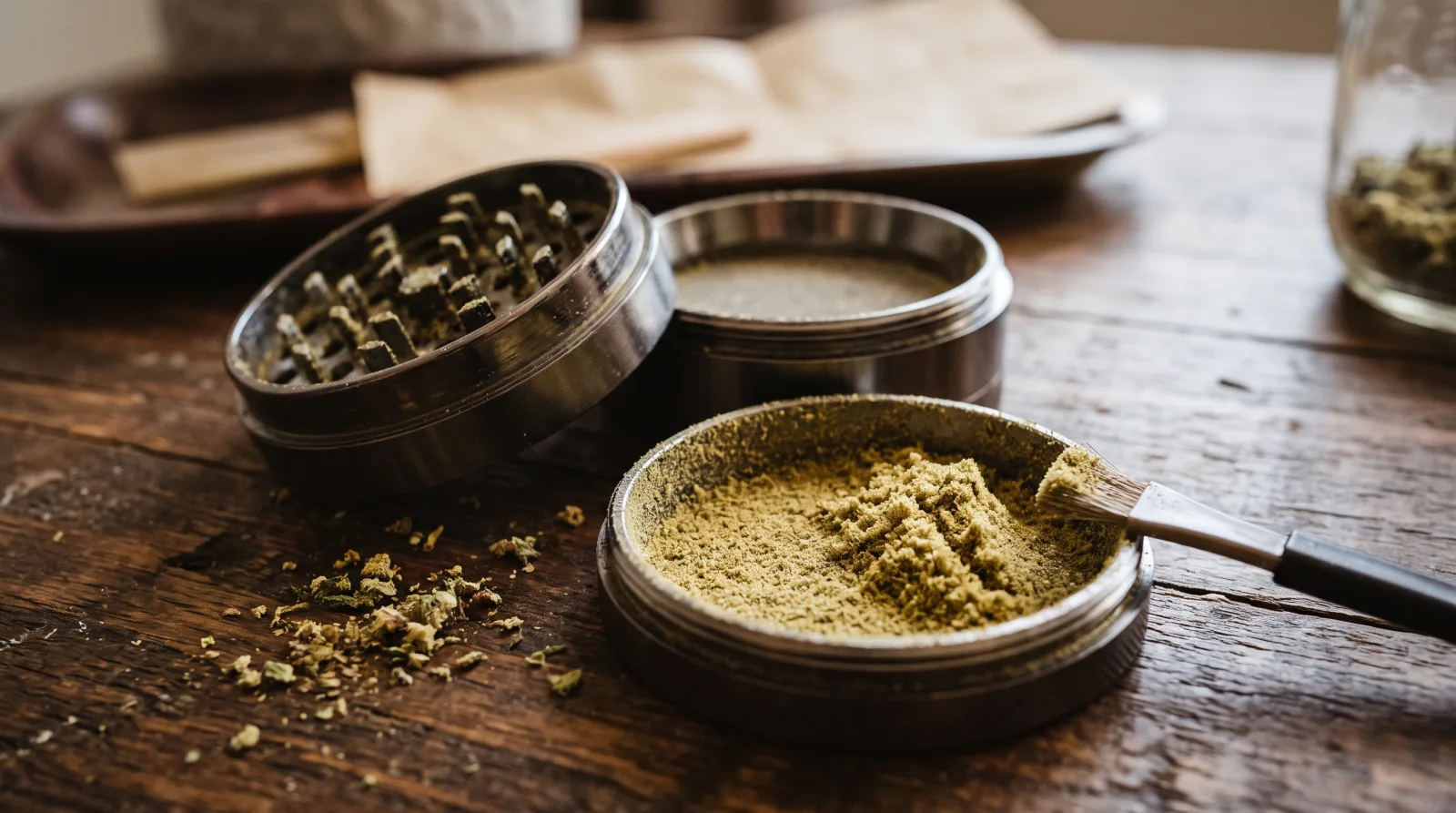
A grinder. A medium grind burns more evenly than a very fine or very coarse one.
-
A clean, flat surface. A rolling tray or clean table helps you keep track of loose flower.
-
A small amount of water. You'll use it to soften the leaf if needed and to seal the roll.
How a Backwood Is Made
Understanding the structure helps you unroll it without tearing it. A Backwoods cigar has three parts:
-
The outer wrapper, a single leaf wound around the cigar in a spiral. This is the part you'll keep and roll with.
-
The binder, a thinner inner sheet that holds the tobacco in place.
-
The filler, the loose tobacco inside.
The natural-leaf method removes the filler and binder and uses only the outer wrapper, which gives you the classic Backwoods look and slow burn.
How to Roll a Backwood
-
Check the leaf. Gently squeeze the cigar. If it feels stiff or cracks, the leaf is too dry to unroll safely. Place it in a sealed bag with a slightly damp paper towel, without letting the two touch, for 10 to 15 minutes. You can also leave it in a steamy bathroom for a few minutes. Never soak the leaf directly, as it will become too fragile to roll.
-
Find the edge of the wrapper. Hold the cigar by the narrow mouth end. Look at the open end for the edge of the outer leaf, which spirals along the length of the cigar.
-
Unroll the leaf. Gently lift the edge with your fingertip and slowly unwind the leaf in a spiral toward the mouth end. Go slowly, especially around the middle, where the leaf is thinnest. Stop before you reach the mouth tip, so the rounded end stays intact.
-
Remove the filler and binder. Empty out the tobacco, then peel away the thin binder sheet. Keep a small piece of the binder aside in case you need to patch a tear later.
-
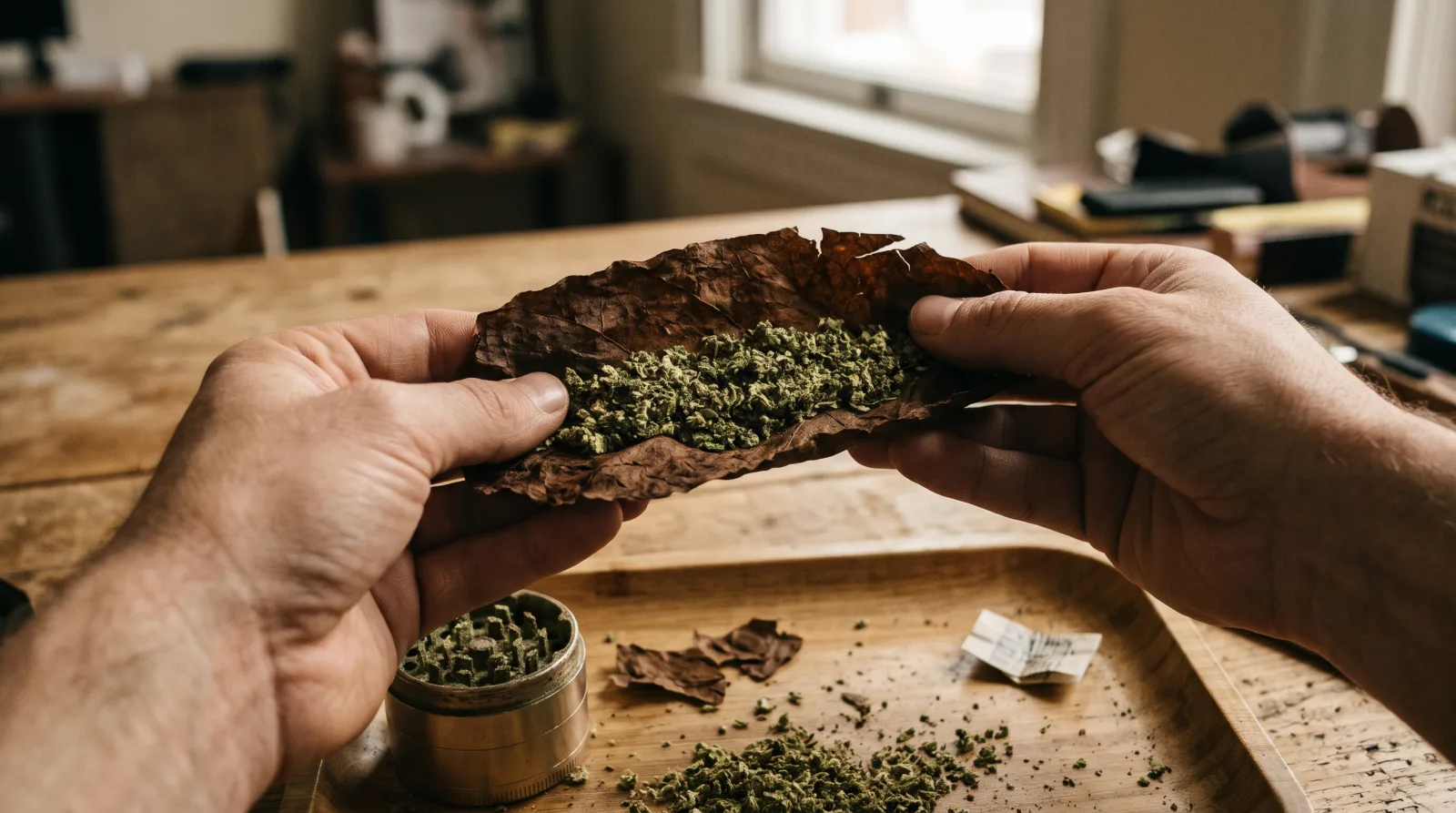
Lay the leaf flat. Smooth the wrapper on your surface, with the smoother side facing down so it will end up on the outside of the roll.
-
Add your cannabis. Spread the ground flower evenly along the leaf, starting near the mouth tip. Keep the layer even from end to end, since thin spots burn faster.
-
Tuck the edge. Starting at the mouth end, fold the edge of the leaf over the flower and tuck it underneath. This first tuck sets the shape of the whole roll, so take your time with it.
-
Roll in a spiral. Continue rolling along the length of the leaf, following the same spiral it was wrapped in originally. Overlap each turn slightly and keep steady, even pressure.
-
Seal the seam. Lightly moisten the final edge of the leaf with a fingertip dipped in water, then press it down along the seam. Use only a little moisture; too much will make the leaf soft and slow to dry.
-
Let it dry. Leave the roll for a few minutes so the seal sets. Some people pass a lighter flame quickly along the outside, a few centimetres away, to dry it faster. Keep the flame moving to avoid scorching the leaf.
When you light it, toast the end evenly by rotating it in the flame before you take the first draw. An evenly lit start helps prevent uneven burning.
Common Problems and How to Fix Them
The Leaf Keeps Tearing
Tears usually happen because the leaf is too dry. Rehydrate it before trying again, as described in step 1.
Small tears can often be sealed by pressing the edges together with a little moisture. For larger tears, moisten a piece of the binder you set aside and press it over the tear as a patch. Let it dry before lighting.
It Burns Unevenly
When one side burns faster than the other, it's called a run or canoeing. It's usually caused by uneven packing or an uneven light.
To slow the fast side, dab a little moisture on the leaf just ahead of where it's burning. Rotating the blunt as you smoke also helps it burn more evenly.
The Roll Is Too Loose
A loose roll burns quickly and can collapse. If it feels soft or hollow, gently pack it down by tapping the mouth end on a flat surface, or use a thin tool to press the flower down from the open end. If it's still loose, unroll it and roll again with a little more pressure.
It's Hard to Draw From
If you can barely pull air through it, the roll is too tight or the flower is ground too finely. Gently roll it between your fingers to loosen it. Next time, use a medium grind and slightly less pressure when rolling.
It Keeps Going Out
Backwoods leaves are thick, so they need a steady, even burn. Make sure the end is fully lit before your first draw, and take regular pulls so the ember doesn't die out.
A Note on Tobacco and Nicotine
Backwoods are tobacco cigars. Even after you remove the filler, the outer leaf is still tobacco and contains nicotine, so every Backwoods blunt delivers nicotine along with THC. Ontario public health guidance notes that using cannabis and tobacco together increases the risk of addiction to both, along with the risk of cancer and heart and lung disease.
If you'd prefer to avoid nicotine, a hemp wrap gives you a similar size and slow burn without tobacco. The differences between joints, spliffs and blunts are worth knowing before you choose.
Storing Backwoods
Keep Backwoods in their resealable pack and store them somewhere cool and away from direct sunlight. A pack that's left open dries out quickly, which makes the leaves harder to unroll. If a pack has dried out, rehydrate individual cigars before rolling rather than the whole pack at once.
Getting Started
Rolling a Backwood takes some practice, but most of the difficulty comes from the leaf. Keep it moist, unroll it slowly, roll in the leaf's natural spiral and use a light touch when sealing.
If you're ready to try it, you can browse Backwoods and add a pack to your next flower order. A grinder makes the medium grind easier to get right.