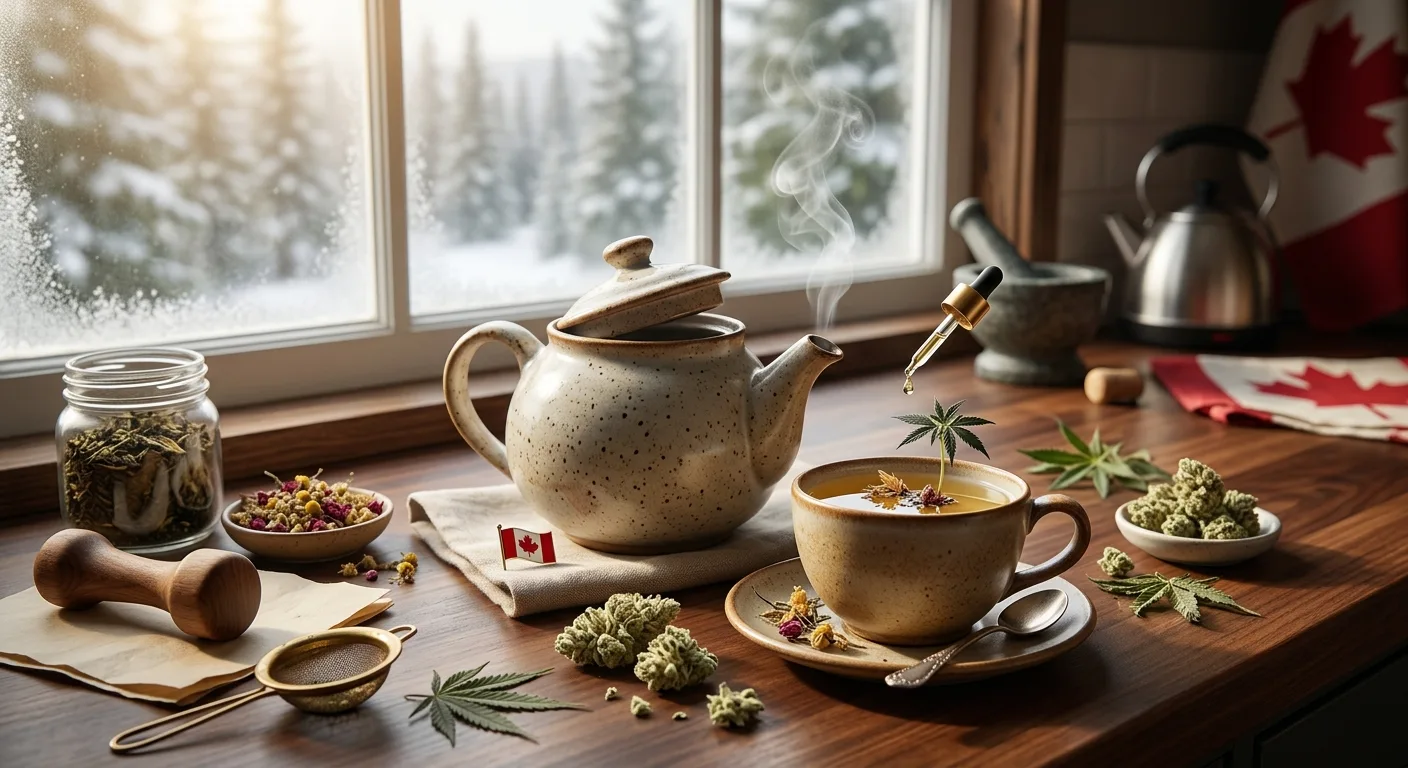
You brewed a cup of THC tea, waited an hour, felt nothing, and assumed the cannabinoids were wasted. That scenario plays out in kitchens across Canada every week, not because THC tea is ineffective, but because most people skip the one step that makes it actually absorb: adding fat. Without it, cannabinoids remain locked in the plant matter, never making it into your bloodstream. This guide walks you through the full-steep, fat-required method that turns THC tea from wishful thinking into a reliable, gentle onset experience.
THC is fat-soluble, not water-soluble. That single fact determines whether your tea delivers or disappoints. The good news is that once you understand the chemistry and adjust your technique, cannabis tea becomes one of the most forgiving, customizable formats in your toolkit. We will cover water temperature, steep time, fat selection, dosing pacing, and troubleshooting tips so your next cup delivers exactly what you expect.
Why THC Does Not Dissolve in Water Alone
Cannabinoids bind to fat molecules, not water molecules. When you steep decarboxylated cannabis in plain hot water, you extract flavour compounds and some minor water-soluble terpenes, but the THC itself remains largely trapped in the plant material. The brew might taste herbal or earthy, but it will not produce the psychoactive effects you are after.
This is not a flaw in your flower or your kettle. It is basic chemistry. Oil and water do not mix without an emulsifier or a carrier, and THC behaves like an oil. To extract and absorb cannabinoids through tea, you need to introduce a fat source that binds the THC, then carries it through your digestive system where it can be metabolized and enter your bloodstream.
The Role of Decarboxylation Before Brewing
Raw cannabis contains THCA, the non-psychoactive acid precursor to THC. Heat converts THCA into THC through a process called decarboxylation, which is why smoking, vaping, and baking all produce active effects. For tea, you must decarboxylate your flower before steeping. Boiling water is not hot enough or sustained enough to fully decarb.
To decarb cannabis for tea, grind your flower coarsely, spread it on a parchment-lined baking sheet, and bake at 110°C to 120°C for 30 to 40 minutes. The material should turn lightly golden and smell toasted. Let it cool before adding it to your brew. Skip this step and your tea will lack potency, no matter how long you steep or how much fat you add.
Choosing the Right Fat Carrier for Your Tea
The fat you select determines how smoothly THC integrates into your tea and how efficiently your body absorbs it. Common options include whole milk, coconut milk, butter, coconut oil, and MCT oil. Each has trade-offs in flavour, texture, and bioavailability.
Whole Milk or Cream
Whole milk contains enough fat to bind cannabinoids while blending seamlessly into most tea varieties. Use at least two tablespoons per cup, more if you prefer a creamier texture. Dairy fat also slows gastric emptying slightly, which can extend onset time but smooth out the come-up. If you are lactose-intolerant, oat milk with added fat or full-fat coconut milk works as well.
Coconut Oil or Butter
Coconut oil and butter deliver higher fat concentrations per teaspoon, making them ideal for smaller servings or higher-dose tea. Start with half a teaspoon and adjust based on desired strength. Both float on the surface unless emulsified with a blender or frother, which some drinkers find off-putting. A pinch of lecithin helps the fat disperse, though it is optional.
MCT Oil
Medium-chain triglyceride oil is flavourless and liquid at room temperature, making it a neutral carrier that does not alter the taste of your tea. Some users report faster onset with MCT due to quicker liver processing, though this varies. Use the same amount you would use with coconut oil, starting conservatively.
Avoid skim milk, almond milk, or plain water. These lack sufficient fat to extract cannabinoids effectively. If you use a plant-based milk, confirm it is full-fat or add a separate oil.
The Full-Steep Method: Time, Temperature and Technique
Once your cannabis is decarboxylated and your fat selected, the brewing process itself is straightforward. The goal is to steep long enough to allow cannabinoids to transfer from plant matter into the fat-infused liquid, without boiling so hard that you degrade terpenes or create an unpleasant burnt flavour.
Water Temperature
Aim for water between 85°C and 95°C, just below a rolling boil. This range extracts cannabinoids without scorching delicate terpenes. If you do not have a thermometer, bring your water to a boil, then let it sit for one minute before pouring. Avoid microwaving tea directly, as uneven heating can create hot spots that degrade cannabinoids.
Steep Time
Steep your decarbed cannabis and fat together for at least 15 minutes, ideally 20 to 30 minutes. Longer steeps increase extraction efficiency, but diminishing returns kick in after 45 minutes. Cover your mug or teapot to retain heat and prevent evaporation. Stir occasionally to keep the plant material submerged and in contact with the fat.
Straining and Serving
After steeping, strain the plant matter through a fine-mesh sieve, cheesecloth, or tea strainer. Squeeze gently to extract remaining liquid without forcing bitter plant fibres into your cup. Sweeten with honey or sugar if desired, add a tea bag for flavour, and sip slowly. The cannabinoids are now bound to the fat, ready for absorption once they reach your digestive tract.
Dosing THC Tea for Predictable Effects
Tea delivers cannabinoids through the same digestive pathway as edibles, meaning onset takes 30 to 90 minutes and effects last four to eight hours. Because of this delay, newcomers often overdo it by sipping a second cup before the first one lands. Pacing is critical.
Starting Dose for Beginners
If you are new to cannabis beverages, start with 2.5 to 5 milligrams of THC in a single cup. For reference, a cannabis strain at 20% THC contains roughly 200 milligrams per gram. Decarbing and brewing extract about 70% to 80% of available cannabinoids, so 0.05 grams of 20% flower yields approximately 7 to 8 milligrams of THC when fully extracted. Measure carefully, especially if using high-potency strains.
Experienced User Range
Regular consumers with established tolerance may prefer 10 to 20 milligrams per serving. This range produces noticeable relaxation, mild euphoria, and body warmth without overwhelming sedation. Always account for the delayed onset and avoid redosing within two hours. Unlike smoking, you cannot titrate effects in real time with tea.
Calculating Dose from Flower
To calculate dose, multiply the weight of your decarbed cannabis by its THC percentage, then multiply by 0.75 to account for extraction efficiency. For example, 0.1 grams of 25% THC flower yields roughly 18.75 milligrams of THC in your tea. Use a milligram scale for accuracy, especially when experimenting with new strains or preparing multiple servings.
For those who prefer a ready-made option, some cannabis retailers offer pre-dosed THC drink mixes or infused syrups that simplify dosing. These are not necessary, but they eliminate guesswork for users who want consistent results without calculating flower potency.
Onset, Duration and What to Expect
THC tea behaves like a slow-release edible. The fat-bound cannabinoids travel through your stomach and into your small intestine, where they are absorbed into the bloodstream and metabolized by the liver. This produces 11-hydroxy-THC, a more potent metabolite than the THC absorbed through smoking.
Onset Timeline
Most users feel initial effects within 45 to 90 minutes. Onset depends on stomach contents, metabolism, and fat type. Drinking tea on an empty stomach accelerates absorption but may intensify effects. Sipping tea with a light meal moderates the come-up and extends the peak slightly. Plan accordingly if you have time-sensitive commitments later in the day.
Peak and Plateau
Peak effects typically arrive two to three hours after consumption and can last another two to four hours before tapering. The plateau is gradual and less abrupt than smoking, making tea ideal for sustained relaxation, creative work, or evening wind-down. Because of the extended duration, avoid operating vehicles or heavy machinery for at least six hours after drinking.
Why Tea Feels Different Than Smoking
The liver metabolism of THC into 11-hydroxy-THC creates a body-focused, sedative-leaning experience compared to the head-focused clarity of inhaled cannabis. Even sativa-dominant strains can feel more physically relaxing when consumed as tea. If you want a functional daytime beverage, dose conservatively and choose strains known for uplifting terpene profiles like limonene or pinene.
Troubleshooting Common THC Tea Problems
Even with proper technique, tea brewing can produce inconsistent results until you dial in your process. Here are the most common issues and how to fix them.
No Effects After Two Hours
If you feel nothing after 120 minutes, the most likely culprits are insufficient fat, incomplete decarboxylation, or underdosing. Verify that you added at least two tablespoons of whole milk or half a teaspoon of oil per cup. Check that your flower was baked long enough to turn golden. Recalculate your dose to confirm you used enough cannabis. Rarely, some individuals have liver enzyme variations that slow THC metabolism significantly, though this is uncommon.
Effects Too Intense
If your tea hits harder than expected, you likely overdosed or underestimated extraction efficiency. The only remedy is time, hydration, and a calm environment. Eating fatty food can slow additional absorption if you are mid-peak. For future brews, halve your dose and extend your wait time before considering a second serving. Greening out from tea is rare but follows the same management as edible overconsumption.
Bitter or Harsh Flavour
Over-steeping, water that is too hot, or poorly trimmed flower can create bitterness. Reduce steep time to 15 minutes, lower water temperature to 85°C, and use quality flower free of excess leaf or stem. Adding herbal tea bags like chamomile, peppermint, or ginger masks cannabis flavour without interfering with cannabinoid absorption. Honey and lemon also help.
Oily Surface Film
Visible oil floating on top indicates insufficient emulsification. Use a milk frother, immersion blender, or whisk to integrate the fat more thoroughly. Alternatively, switch to whole milk or cream, which naturally emulsifies better than pure oil. The film does not reduce potency, but it can be unpleasant to drink.
Enhancing Your Tea with Complementary Ingredients
Beyond fat and cannabis, you can layer flavours and effects with herbs, spices, and terpene-rich additions that enhance both taste and therapeutic benefits. These do not replace the fat carrier, but they make the ritual more enjoyable and can modulate how the THC feels.
Chamomile and Lavender
Both herbs contain linalool, a terpene also found in cannabis that promotes relaxation and sleep. Adding a chamomile tea bag or dried lavender to your steep amplifies sedative effects without increasing THC dose. This combination works especially well for evening tea intended to support rest.
Ginger and Turmeric
Ginger aids digestion and may speed gastric emptying slightly, potentially reducing onset time. Turmeric contains curcumin, which has anti-inflammatory properties and pairs well with the body-focused effects of THC tea. Both add a warming, spicy note that complements earthy cannabis flavour.
Lemon and Honey
Lemon juice brightens the brew and provides vitamin C, while honey adds natural sweetness and minor antimicrobial benefits. Neither ingredient affects cannabinoid absorption, but they improve palatability for users who dislike the vegetal taste of steeped flower. Use raw honey if possible for maximum flavour complexity.
Peppermint and Limonene-Rich Strains
Peppermint tea or fresh mint leaves add a cooling sensation and can settle an uneasy stomach. Pairing these with limonene-dominant cannabis strains creates an uplifting, mentally clear tea experience rather than a sedative one. This combination is better suited for daytime or creative sessions.
Safety, Storage and Legal Considerations
THC tea is a food product once brewed, and it requires the same care as any perishable edible. Store brewed tea in the refrigerator in a sealed container for up to three days. Cannabinoids remain stable when refrigerated, but flavour and texture degrade beyond 72 hours. Reheat gently on the stovetop or in a microwave, stirring to re-emulsify any separated fat.
Label any stored tea clearly and keep it out of reach of children and pets. Because tea looks identical to regular herbal brews, accidental ingestion is a real risk in shared households. Use opaque containers or add a visible marker to prevent confusion.
Under Canadian law, adults 19 or older may possess and consume cannabis products at home, including homemade infusions. Transporting THC tea in public or across provincial lines follows the same restrictions as flower or edibles. Do not offer cannabis tea to anyone under the legal age or without their informed consent about dosage and effects.
Comparing THC Tea to Other Cannabis Formats
Tea occupies a unique middle ground between the rapid onset of smoking and the prolonged effects of traditional edibles. Understanding how it stacks up against other formats helps you decide when to reach for a mug instead of a vape or gummy.
Tea vs Smoking or Vaping
Smoking and vaping deliver THC directly to the lungs and bloodstream within minutes, allowing real-time titration and immediate relief. Tea takes an hour or more to kick in and cannot be adjusted once consumed. However, tea avoids respiratory irritation, produces no smoke or vapour smell, and delivers longer-lasting effects ideal for sustained relaxation or sleep support. For users seeking a gentler, smoke-free alternative with extended duration, tea is superior.
Tea vs Edibles
Both tea and solid edibles are digested and metabolized the same way, producing similar onset and duration. The key difference is versatility. Tea can be sipped slowly over 20 minutes, giving you a staggered absorption curve that some find smoother than eating a single gummy. You can also dilute or sweeten tea to taste, whereas a pre-dosed edible is fixed. For users who prefer control over flavour and pacing, tea offers more flexibility.
Tea vs Tinctures
Sublingual tinctures bypass the digestive system, providing faster onset and more predictable dosing. Tea requires digestion, making it slower but longer-lasting. Tinctures are easier to dose precisely in milligram increments, while tea requires calculation from flower. Choose tinctures for fast relief and precision, tea for ritual and extended effects. Some users combine the two, using a tincture for immediate relief and tea to sustain effects through the evening.
Final Brewing Tips for Consistent Results
Consistency comes from controlling variables. Use the same strain, decarb temperature, fat type, and steep time until you find a formula that works, then replicate it. Keep notes on dose, onset, and subjective effects so you can adjust intelligently rather than guessing. Small changes in fat amount or steep duration can shift potency noticeably.
Invest in a kitchen scale that measures to 0.01 grams if you plan to brew regularly. Eyeballing cannabis amounts leads to unpredictable doses and wasted material. A thermometer and timer eliminate the guesswork around water temperature and steep duration, both of which directly affect extraction efficiency.
Finally, do not skip the fat. It is the single most critical factor in making THC tea work. Without it, you are steeping expensive flower for nothing more than placebo and plant flavour. Add milk, oil, or butter every single time, and you will never wonder why your tea did not deliver.
Explore Our Cannabis Selection
Looking for quality flower to brew your next batch of THC tea? Browse our selection of premium strains perfect for infusion.
Shop CannabisFrequently Asked Questions About THC Tea
Yes, already-vaped bud (AVB) has been partially decarboxylated and can be used for tea. It will be less potent than fresh decarbed flower, so increase the amount by about 50% to compensate. AVB often tastes more bitter, so consider masking the flavour with herbal tea or honey.
Brewed THC tea remains potent for up to three days when refrigerated in a sealed container. Cannabinoids are stable at low temperatures, but flavour and fat emulsion degrade beyond 72 hours. For longer storage, consider making cannabutter or infused oil separately and adding it to fresh tea as needed.
Yes, THC consumed through tea is metabolized the same as smoked or eaten cannabis and will produce positive results on standard drug tests. Detection windows vary but can extend up to 30 days for heavy users. If you are subject to workplace or legal testing, avoid all THC products including tea.
Absolutely. The same brewing method works for CBD-dominant flower, producing non-intoxicating tea with potential anti-inflammatory and calming effects. Ensure your CBD flower is decarboxylated and steeped with fat for maximum absorption. Some users blend THC and CBD flower for a balanced <a href=
Onset time for tea and solid edibles is similar, but individual digestion speed, stomach contents, and fat type can vary absorption. Tea sipped slowly may also deliver cannabinoids in waves rather than all at once. If your tea consistently takes longer than 90 minutes, try drinking on a lighter stomach or using MCT oil for faster liver processing.
Alcohol does not accelerate THC absorption and can intensify intoxication unpredictably. Mixing cannabis and alcohol increases the risk of nausea, dizziness, and overconsumption. If you want faster onset, consider a sublingual tincture or <a href=
Conclusion: Making THC Tea Work Every Time
THC tea is not complicated, but it does require respect for the science. Decarboxylate your flower fully, steep with enough fat to bind the cannabinoids, and give your body time to absorb and metabolize the dose. Skip any of those steps and you will waste material and time. Follow them and you unlock a gentle, long-lasting format that fits into your routine as smoothly as morning coffee or evening chamomile.
Start conservatively with dosing, especially if you are new to edibles or have unpredictable tolerance. The delayed onset makes it easy to overdo it, and there is no fast-forward button once the tea is down. But once you find your sweet spot, cannabis tea becomes a reliable tool for relaxation, pain relief, sleep support, or creative focus without the harshness of smoke or the sugar load of gummies.
Experiment with fats, flavours, and strains until you find a recipe you look forward to. Keep notes, measure carefully, and remember that consistency comes from controlling variables. Whether you are brewing to unwind after work, manage chronic discomfort, or simply explore a new way to enjoy cannabis, the fat-and-time method outlined here will deliver results every single time.